On 22/9, Doctor Nguyen Bao Dung, Operations Manager of the Orthopedic Trauma Department at Hoc Mon Regional General Hospital, reported that a patient, who had undergone bone fixation surgery on both lower legs and ankles with pins, plates, and screws, sought to have the hardware removed after nearly four years.
Examinations and X-rays confirmed good bone healing, making the patient eligible for hardware removal surgery. However, during the procedure, doctors discovered significant bone overgrowth, which had tightly encased nearly all the pins, plates, and screws. Some screws stripped when attempts were made to remove them, making conventional tools useless. The surgical team utilized C-arm fluoroscopy to precisely locate the devices throughout the operation.
Doctors carefully dissected the bone overgrowth. They then used specialized tools to drill around the screw heads and bases, meticulously extracting each device while minimizing damage to healthy bone. The surgery successfully removed all pins, plates, and screws without causing any new cracks or fractures, and the patient made a good recovery.
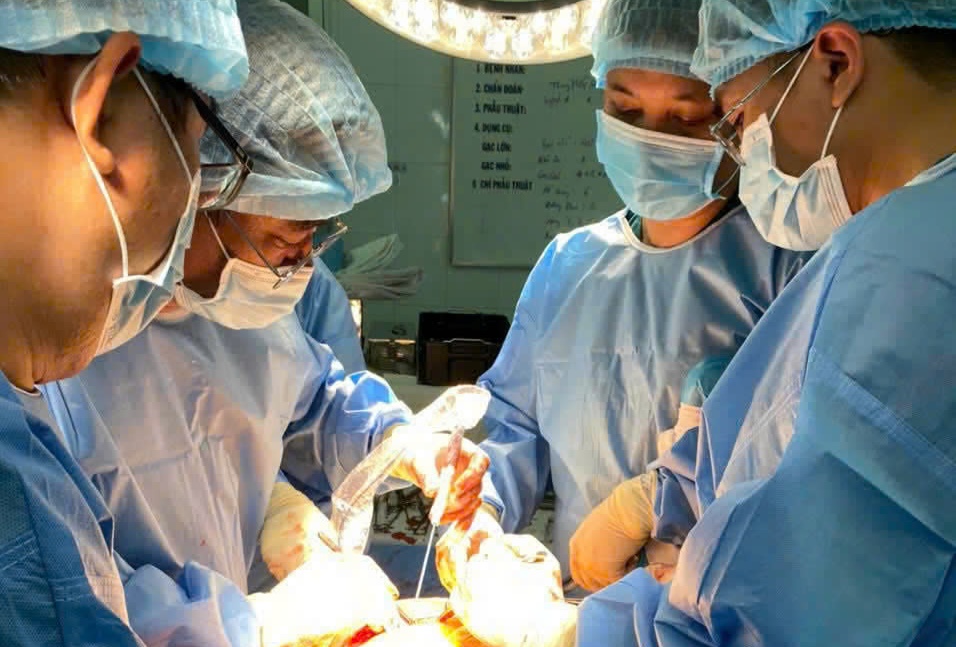 |
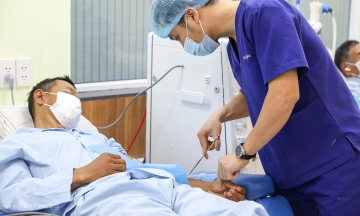
Doctors at Hoc Mon Regional General Hospital operate on the patient. *Photo: Hospital provided* |
Doctor Dung explained that many patients, experiencing no pain and resuming normal mobility after fracture surgery, often neglect follow-up appointments or remain unaware of the appropriate time for hardware removal. The optimal timing for hardware removal varies, depending on factors such as the fracture's location and severity, the type of implanted device, the degree of bone healing, and the individual's overall health and personal needs.
Not all cases necessitate the removal of pins, plates, and screws. However, if removal is indicated but significantly delayed, bone overgrowth can fully encase the hardware, complicating the surgical procedure. Screws may become stuck or stripped, and pins or plates can be difficult to extract, raising the risk of damage to healthy bone, cracking, or re-fracture. Conversely, premature removal, before the bone has achieved stable healing, can compromise mechanical support at the fracture site, increasing the risk of displacement, delayed union, nonunion, or re-fracture.
Smaller implants, such as Kirschner pins, may be considered for removal after about 3-6 months. Plates, screws, or intramedullary nails are typically removed after about 1-2 years. These timelines are merely guidelines and should not be rigidly applied. Doctors must conduct thorough examinations and review X-rays to accurately assess the extent of bone healing before making a definitive decision.
Following hardware removal, the bone still requires a period of recovery. Screw placement sites leave residual holes in the bone. For the first 2-3 months, patients should avoid heavy lifting, strenuous activities, contact sports, and prevent falls. Regular follow-up examinations and scheduled X-rays are essential to monitor the healing process.
Patients who have undergone bone fixation surgery should maintain their treatment records, be aware of the specific type of hardware implanted, and adhere to scheduled follow-up appointments. Any decision regarding the removal of pins, plates, or screws must be made by a specialist doctor after a thorough assessment, not based on the duration the hardware has been in place or simply the absence of pain.
Le Phuong