Sweet potato leaves are a familiar sight on many family dinner tables. Doctor Truong Gia Minh, from the Department of Genetics and Eugenic at Taipei Veterans General Hospital, Taiwan, noted that the more one learns about this vegetable, the more surprises it reveals.
Rich in nutrients, sweet potato leaves play an active role in stabilizing blood sugar, protecting the cardiovascular system, preventing cancer, caring for eyesight, and nourishing the skin, earning them the title of superfood.
In a post shared on his personal page, Doctor Truong stated that sweet potato leaves are affordable, delicious, and possess superior nutritional value. Initially, this vegetable was only used as a common source of fiber, but later research discovered it holds a range of valuable benefits, including anti-inflammatory, antioxidant, and blood sugar lowering properties.
To date, in-depth scientific studies confirm that sweet potato leaves can stimulate the body to naturally secrete the GLP-1 hormone, which is the core mechanism employed by popular weight loss injections today.
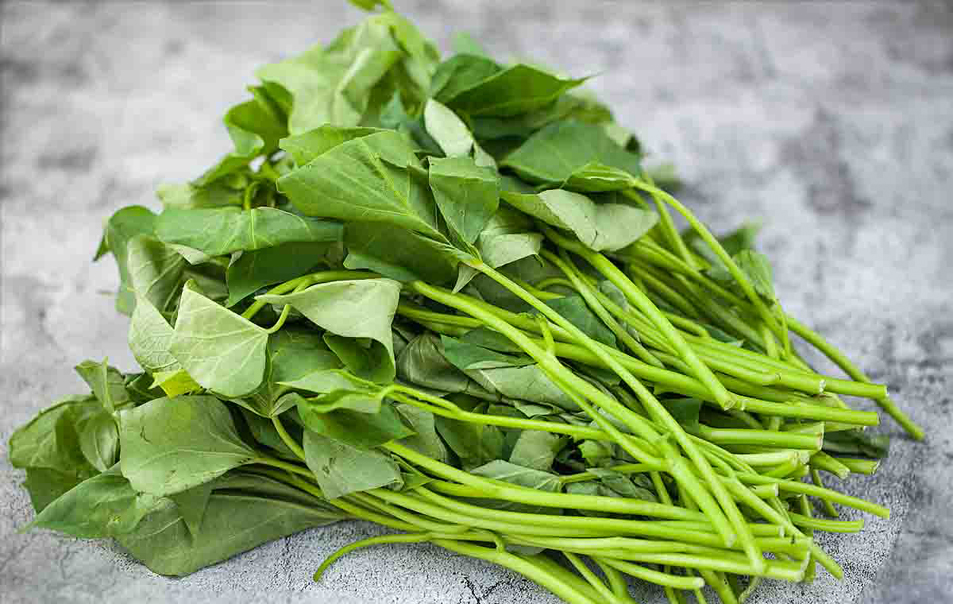 |
Anh minh hoa: Oh my food Recipes
Doctor Truong explained that weight loss injections work by introducing a GLP-1-like structure into the body to mimic the hormone secreted by the intestines. This slows gastric emptying, increases satiety, stabilizes blood sugar, and reduces appetite to achieve weight loss and blood sugar control. While this method offers rapid effects, it carries potential unwanted side effects such as nausea, gastrointestinal discomfort, and muscle mass reduction.
Conversely, research indicates that caffeoylquinic acids, particularly chlorogenic acid, abundant in sweet potato leaves, can stimulate intestinal L cells to increase GLP-1 production. This means the body does not need external stimuli; it can naturally activate its internal cells to secrete the hormone. This endogenous mechanism is gentler, causes no side effects, and is suitable for long-term maintenance.
Beyond promoting GLP-1 secretion, sweet potato leaves contain many beneficial small molecules. These include anthocyanins, which help the body fight free radicals, slow the aging process, and stabilize blood vessels and brain nerve signals. Chlorogenic and dicaffeoylquinic acids provide strong antioxidant, anti-inflammatory, and anti-tumor capabilities.
Notably, this vegetable also contains a unique storage protein found in sweet potatoes, showing great potential in combating cancer, relieving stress, and inhibiting the activity of tumor-promoting enzymes.
The combination of lutein and beta-carotene in sweet potato leaves helps protect vision, boost the immune system, and nourish skin and the respiratory system's mucous membranes. A rich source of minerals like potassium, magnesium, iron, and calcium supports nerve-muscle transmission, promotes blood formation, and maintains bone stability. Furthermore, the abundant fiber and soluble polysaccharides in sweet potato leaves nourish beneficial gut bacteria, stabilize blood sugar levels, and slow the body's digestion and absorption processes.
Doctor Truong affirmed that the synergy of these components makes sweet potato leaves a comprehensive nutritional vegetable, possessing anti-glycation, anti-cancer, heart protective, liver detoxifying, vision enhancing, and anti-aging properties.
In addition, numerous research reports published in the journal Molecules in 2021 and the journal Foods in 2024 demonstrate that the nutrients in sweet potato leaves are not only beneficial but also possess high biological activity and excellent stability. This transforms the familiar vegetable into an ideal natural source of functional ingredients for daily health care needs.
 |
Bac si Dai Loan Truong Gia Minh. Anh: Liao Jui-hsiang
Binh Minh (According to China Times)