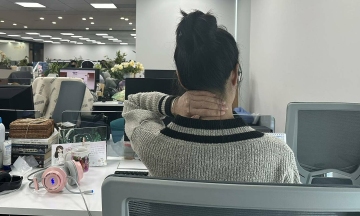
Ms. Hoa has a history of hypertension and type 2 diabetes, for which she takes prescribed medication. About one year ago, she began experiencing bone and joint pain, poor appetite, and weight loss, leading her to take an additional, unknown powdered medicine.
One week ago, she experienced fatigue and insomnia, prompting her to seek examination at Tam Anh General Hospital TP HCM. Doctor Do Vu Ngoc Anh, from the Cardiology 1 Department at the Cardiovascular Center, reported that the patient exhibited symptoms of Cushing's syndrome, including facial swelling, thin and reddened skin, and fat accumulation in the neck and upper back. Her blood sugar and blood pressure levels were unstable, occasionally reaching 170/120 mmHg. Doctors diagnosed her with secondary adrenal insufficiency, attributing it to uncontrolled, prolonged corticoid use.
The adrenal glands are endocrine organs located above the two kidneys. Their outer layer, the adrenal cortex, produces hormones like cortisol and aldosterone. These hormones play a crucial role in regulating blood pressure, metabolizing sugar, salt, and water, and managing the body's stress response. A deficiency in cortisol can lead to fatigue, loss of appetite, nausea, low blood pressure, and electrolyte imbalance, potentially escalating to acute adrenal insufficiency.
 |
Doctor Ngoc Anh checks the patient's health before discharge. Photo: Tam Anh General Hospital |
Doctor Ngoc Anh checks the patient's health before discharge. Photo: Tam Anh General Hospital
Doctor Huynh Thanh Kieu, Head of Cardiology 1 at the Cardiovascular Center, explained that prolonged corticoid use elevates exogenous glucocorticoid levels in the blood, which then suppresses the hypothalamus-pituitary-adrenal axis. When the pituitary gland reduces its secretion of ACTH (adrenocorticotropic hormone) over an extended period, the adrenal cortex's activity diminishes, leading to gradual atrophy and a decreased ability to produce endogenous cortisol.
Doctor Kieu stated, "Unknown powdered medications are often illicitly mixed with corticoids to provide rapid pain relief and anti-inflammatory effects, which can mislead patients into believing they are effective treatments." The abuse of corticoids can lead to serious conditions such as Cushing's syndrome, hypertension, diabetes, osteoporosis, stomach ulcers, infections, and adrenal insufficiency.
Furthermore, abruptly stopping medication after prolonged use, as Ms. Hoa did, is dangerous because the body has not had time to recover its natural cortisol production. Therefore, corticoids must be gradually tapered according to a doctor's guidance.
Doctors prescribed antihypertensive medication, controlled her blood sugar with insulin injections, and provided fluid replacement for dehydration. She also received corticoid replacement therapy, which was then gradually tapered before complete cessation to allow her body to adapt. Two days later, her blood sugar and blood pressure were under control, she felt less fatigued, had no more nausea, her appetite improved, and she was discharged.
Doctor Ngoc Anh advised against self-medicating with corticoid-containing drugs or those of unknown origin. Corticoids should only be used as prescribed and under the supervision of a doctor. Patients experiencing symptoms such as rapid weight gain, edema, muscle weakness, fatigue, loss of appetite, or low blood pressure should seek prompt medical evaluation at a hospital.
Thu Ha
*Patient's name has been changed
| Readers can submit questions about cardiovascular disease here for doctors to answer. |