Chemical peeling, also known as skin resurfacing, is a procedure that uses active ingredients at specific concentrations to remove dead skin cells from the skin's surface. This process promotes new skin regeneration, reduces hyperpigmentation, and helps stabilize acne. This method is often recommended for addressing back acne, post-acne hyperpigmentation, and rough skin texture.
Gradually removing the skin layer that contains dark pigments helps the skin become brighter and more even-toned. The regeneration of new cells also fades dark spots and improves skin smoothness. Beyond reducing post-acne hyperpigmentation, chemical peels deeply cleanse pores, eliminate excess oil and blockages, thereby lowering the risk of new acne formation. Medium or deep peels can stimulate collagen production, leading to firmer skin and improved texture.
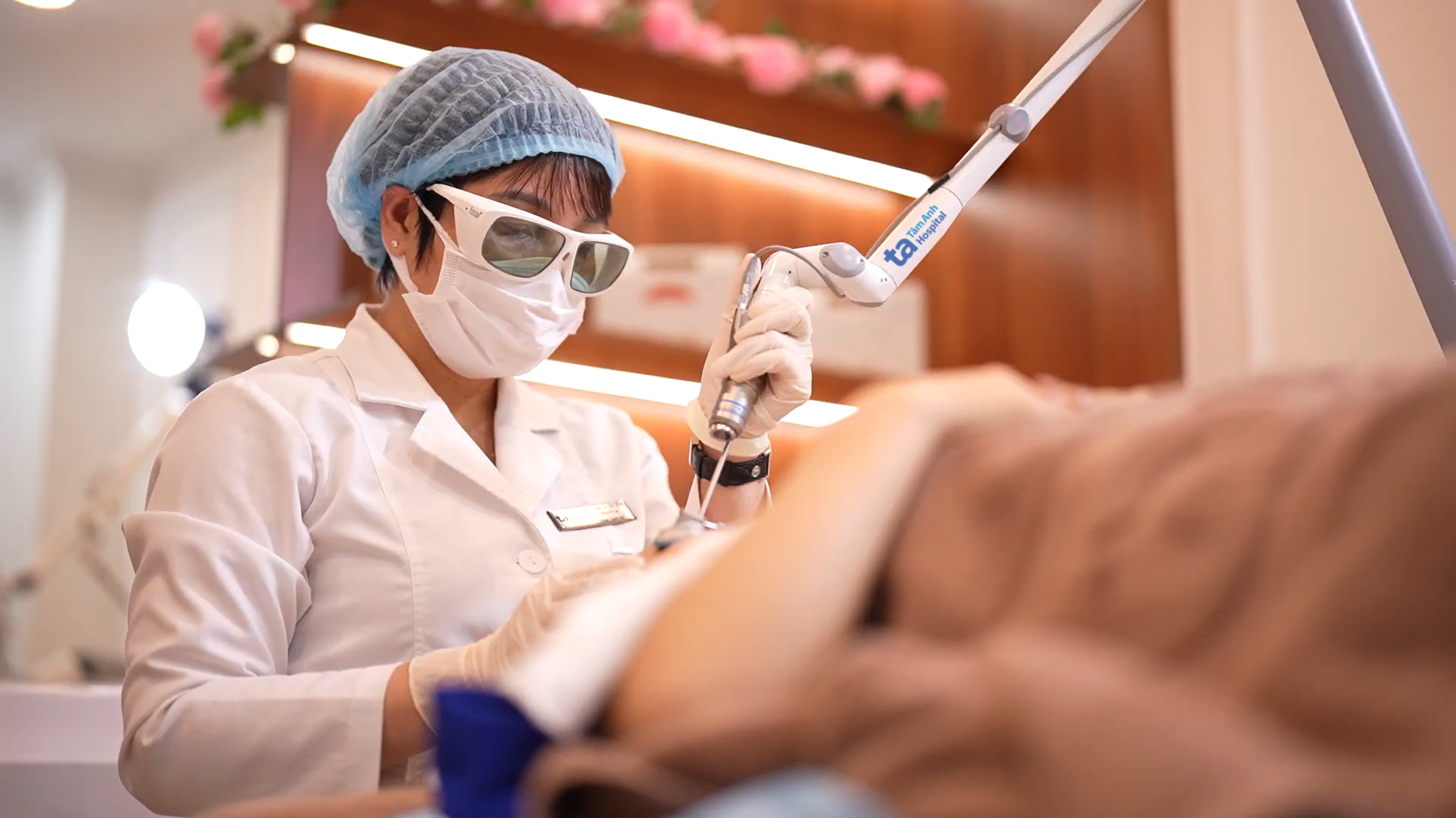 |
Dr. Hong is performing a chemical peel for a patient using a Fotona device. Illustration: Tam Anh General Hospital.
Back chemical peels are suitable for individuals experiencing mild to moderate acne, uneven skin tone, post-acne hyperpigmentation, or rough skin. It is crucial that the treatment area is free from infection, virus, or other inflammatory skin conditions such as allergies or irritation.
Depending on the patient's skin condition, doctors select appropriate active peeling ingredients. These may include: glycolic acid, lactic acid, mandelic acid, jessner solution, or trichloroacetic acid (TCA). Glycolic acid accelerates skin regeneration, while lactic acid provides gentle exfoliation and hydration. TCA is typically used for more pronounced concerns like acne scars or pigment disorders.
While at-home chemical peels may offer a slight improvement for dull or less smooth skin, they are generally ineffective for moderate to severe back acne, persistent hyperpigmentation, or deep acne scars. Attempting self-peeling at home carries significant risks, including irritation and post-inflammatory hyperpigmentation, especially if the wrong active ingredient, incorrect concentration, or improper technique is applied.
Following a back chemical peel, adherence to proper aftercare instructions is crucial for optimal skin recovery and to minimize complications. During the first 1-3 days, the treated skin may exhibit mild redness and a stinging sensation, similar to a sunburn. During this initial stage, it is advisable to use gentle cleansing and moisturizing products, while avoiding harsh or irritating cleansers.
From day 3-7, the skin typically begins a light peeling process as new cells replace old ones. It is important not to pick or forcibly peel off the flaking skin, as this can damage the skin and increase the risk of hyperpigmentation or scarring. By day 7-14, a new layer of skin forms, resulting in a brighter and smoother surface. Continued adequate moisturizing and strict sun protection are essential during this period.
Skin usually recovers completely within 1-2 weeks, depending on the type of active peeling ingredient used. The treated back area often becomes more even-toned, smoother, and post-acne hyperpigmentation is noticeably reduced. The effectiveness of the treatment can continue to improve in the subsequent weeks, varying with each individual's skin response.
Chemical peeling is a safe procedure when performed with correct indications, appropriate active ingredient selection, proper technique, and diligent post-peel care. Some common side effects during recovery include temporary redness, mild swelling, or peeling. Less frequently, patients may experience increased or decreased skin pigmentation, or even scarring, particularly if aftercare is inadequate or the procedure is performed by an unqualified facility.
For individuals considering a back chemical peel, it is strongly recommended to consult a dermatologist. A specialist can properly examine and assess your skin condition, then select the most suitable active ingredients and concentrations. Procedures performed by a team of appropriately trained doctors, combined with specialized treatment products, optimize the effectiveness in improving acne and hyperpigmentation, while minimizing the risk of irritation or complications.
Dr. Dam Thi Thuy Hong
Head of Aesthetics Department
Tam Anh General Hospital Hanoi