Answer:
Chest pain when breathing deeply can be a sign of lung disease, but this is not always the case. To determine the cause, a doctor needs to understand the exact location, nature, and type of pain, whether it radiates to other areas, when it started, and any accompanying symptoms.
If the pain significantly increases with deep breaths, coughing, or sneezing, doctors often suspect conditions related to the pleura or lung tissue. When a patient has pneumonia, pleurisy, or pleural effusion, the membrane surrounding the lungs becomes irritated. Each deep breath causes the two pleural layers to rub against each other, leading to a sharp, stinging pain that radiates to the apex of the lung on the same side.
If chest pain is accompanied by fever, cough, phlegm, shortness of breath, or prolonged fatigue, it could indicate other respiratory conditions such as pneumonia, pulmonary tuberculosis, or lung abscess. Therefore, patients should seek medical attention early for an X-ray or CT scan of the chest if necessary.
 |
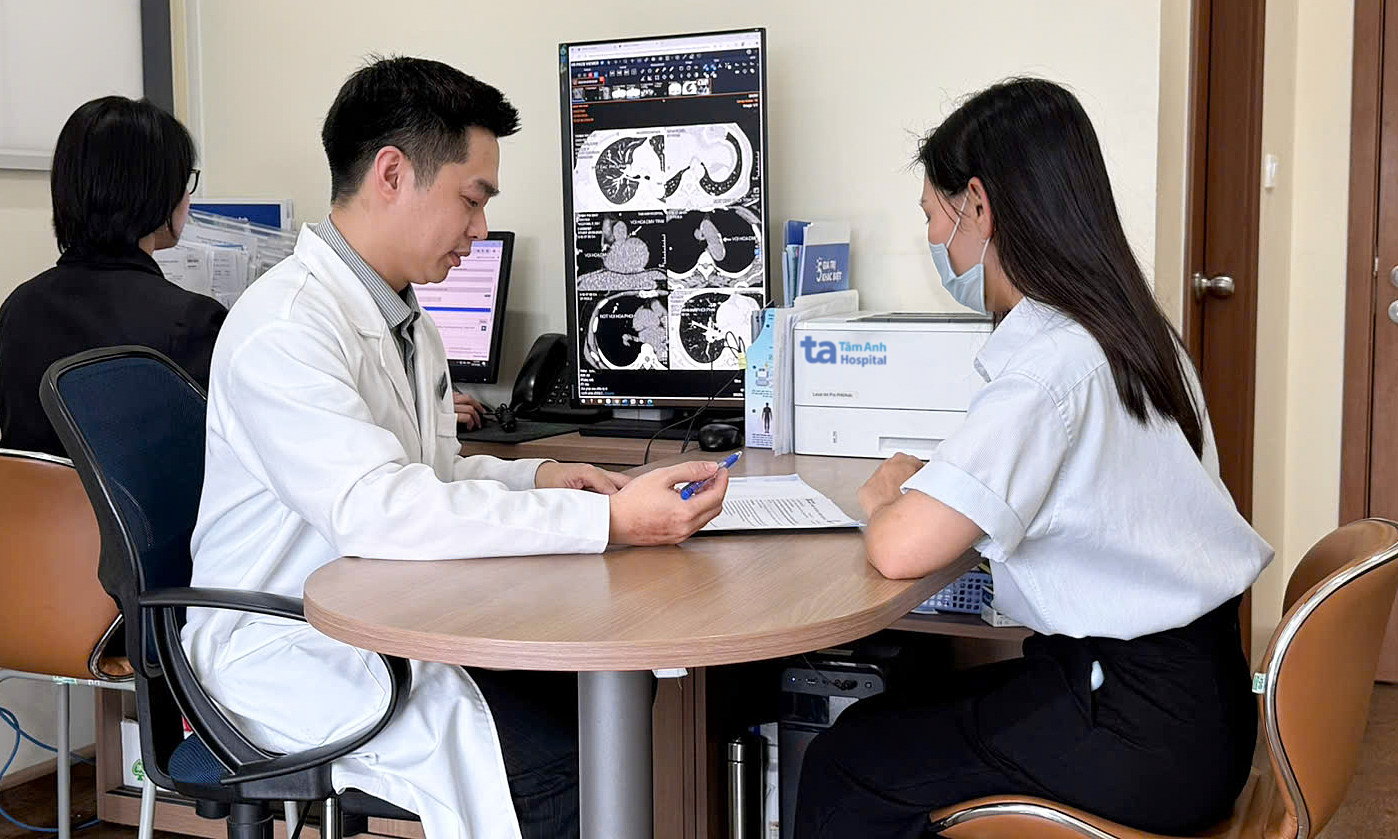
Doctor Phong listening to a patient's lungs during a health check-up. Illustration: Tam Anh General Hospital |
In reality, many people experience only costochondritis, intercostal muscle strain after strenuous activity, prolonged coughing, or chest trauma. These conditions also cause considerable pain when breathing deeply or twisting the body, but the pain is usually localized to one spot and worsens when pressure is applied to the affected area.
More serious conditions, such as pulmonary embolism, can also cause sudden chest pain upon inhalation, accompanied by severe shortness of breath, rapid heart rate, or coughing up blood. This is an emergency that requires immediate transportation to a hospital.
Conversely, if the pain is constricting or feels like a heavy pressure behind the sternum, radiating to the left shoulder or arm, and does not change much with breathing, doctors may suspect cardiovascular conditions like angina or myocardial infarction.
Patients should not self-diagnose chest pain when breathing deeply as a lung or heart condition. It is crucial to be examined by a doctor, who will listen to the lungs, assess cardiovascular health, and order appropriate tests to determine the correct cause.
If the pain is persistent, recurs frequently, or is accompanied by fever, cough, shortness of breath, coughing up blood, bluish lips, or extreme fatigue, patients should consult a respiratory specialist. Early detection helps ensure effective treatment and prevents overlooking dangerous conditions that require urgent intervention.
Doctor Ma Thanh Phong
Head of Respiratory Unit, Department of General Internal Medicine
Tam Anh General Hospital, Ho Chi Minh City
| Readers can submit questions about respiratory illnesses here for a doctor's answer |