One year ago, Thanh, then 16, experienced seizures while having a fever. He was diagnosed with generalized epilepsy caused by meningitis and received treatment at another hospital, but saw little improvement. After three similar seizures, he sought examination at Tam Anh General Hospital Ho Chi Minh City in August 2025.
Doctor Nguyen Anh Dung, Head of the Thoracic and Vascular Surgery Department at Tam Anh General Hospital Ho Chi Minh City, noted Thanh's blood pressure was 180/100 mmHg (normal 120/80 mmHg). He found the right carotid artery had a segment over 90% narrowed and partially dilated. The left carotid artery was 70-80% narrowed, not due to atherosclerosis. Its narrowest point measured about 2,5 mm in diameter, compared to a normal 6-7 mm.
"The patient's carotid artery was severely narrowed, with the lumen almost reduced to a very small slit for blood flow", Doctor Dung stated.
Laboratory tests and whole-body vascular CT scans further revealed the right renal artery was 90-95% narrowed and the superior mesenteric artery was 90-95% narrowed. Based on these findings, doctors diagnosed Thanh with Takayasu arteritis. This rare form of vasculitis affects 1-2 people per 1 million, primarily females under 40, and is most common in adolescents and young adults.
This condition develops when the immune system mistakenly attacks the walls of large arteries, causing chronic inflammation. This can lead to thickening and loss of elasticity in the arterial walls, resulting in narrowing, blockage, or dilation.
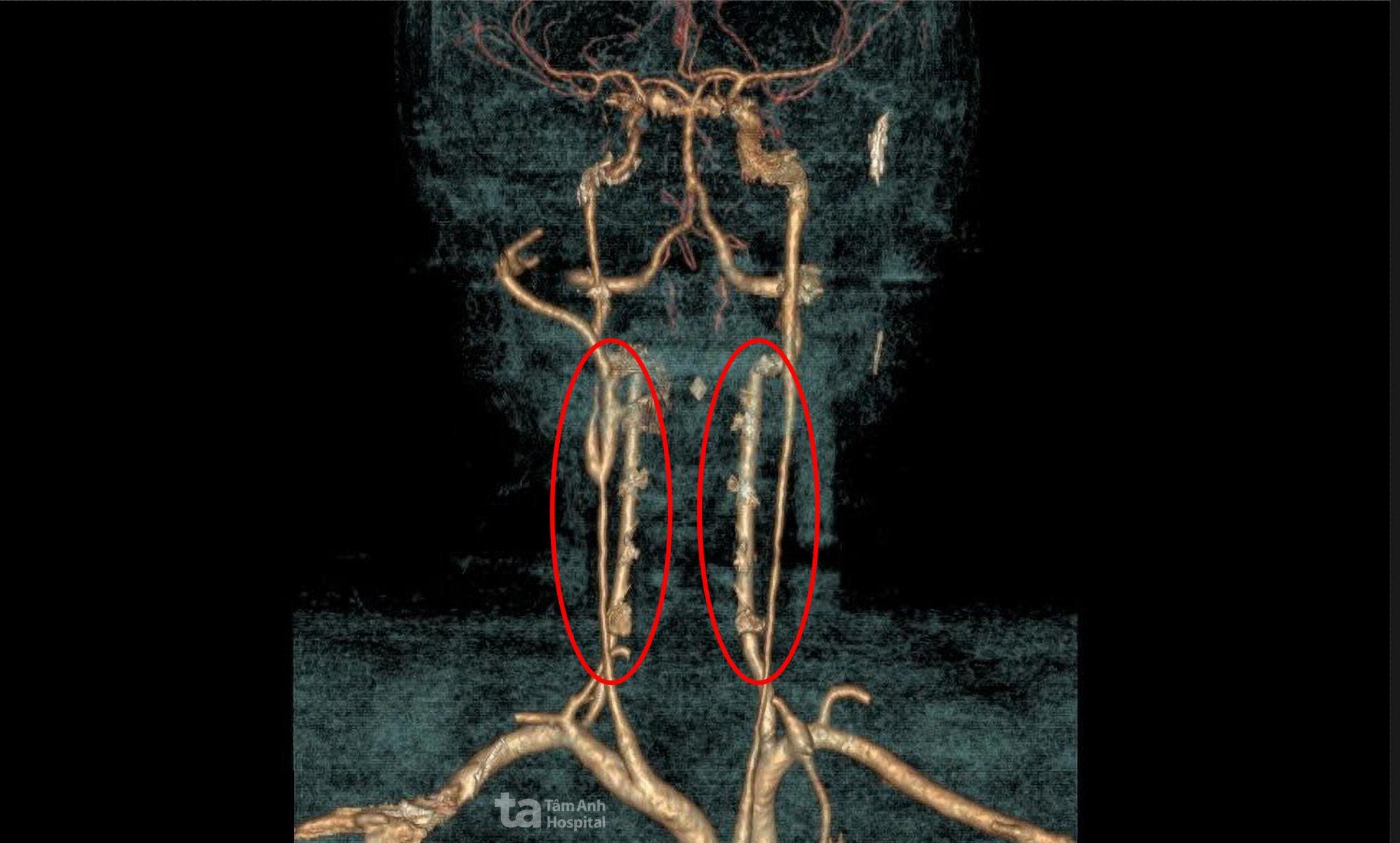 |
A CT scan revealed severe narrowing in multiple sections of the patient's carotid artery branches, significantly reducing blood flow to the brain. *Tam Anh General Hospital*
Takayasu arteritis commonly affects the aorta and its major branches, including the carotid and renal arteries. Early symptoms are non-specific, such as fever, fatigue, weight loss, body aches, or arthritis, making the condition easy to overlook or misdiagnose.
Doctor Dung explained that Thanh's carotid artery damage significantly reduced blood flow to his brain. His episodes of dizziness, loss of consciousness, and seizures were likely related to cerebral ischemia caused by the severe vascular narrowing.
The medical team decided to revascularize Thanh's carotid artery to restore blood flow to his brain. Surgeons performed bypass surgery, utilizing a healthy segment of Thanh's own vein as a graft. This bypass connected across the obstructed carotid artery segment, allowing oxygen-rich blood to flow past the narrowed areas and nourish the brain.
Thanh recovered well, was alert, and no longer experienced dizziness or headaches. He was discharged after three days and continues to take prescribed medication. Doctors plan to address the narrowed segments of his right renal artery and superior mesenteric artery once his overall health stabilizes.
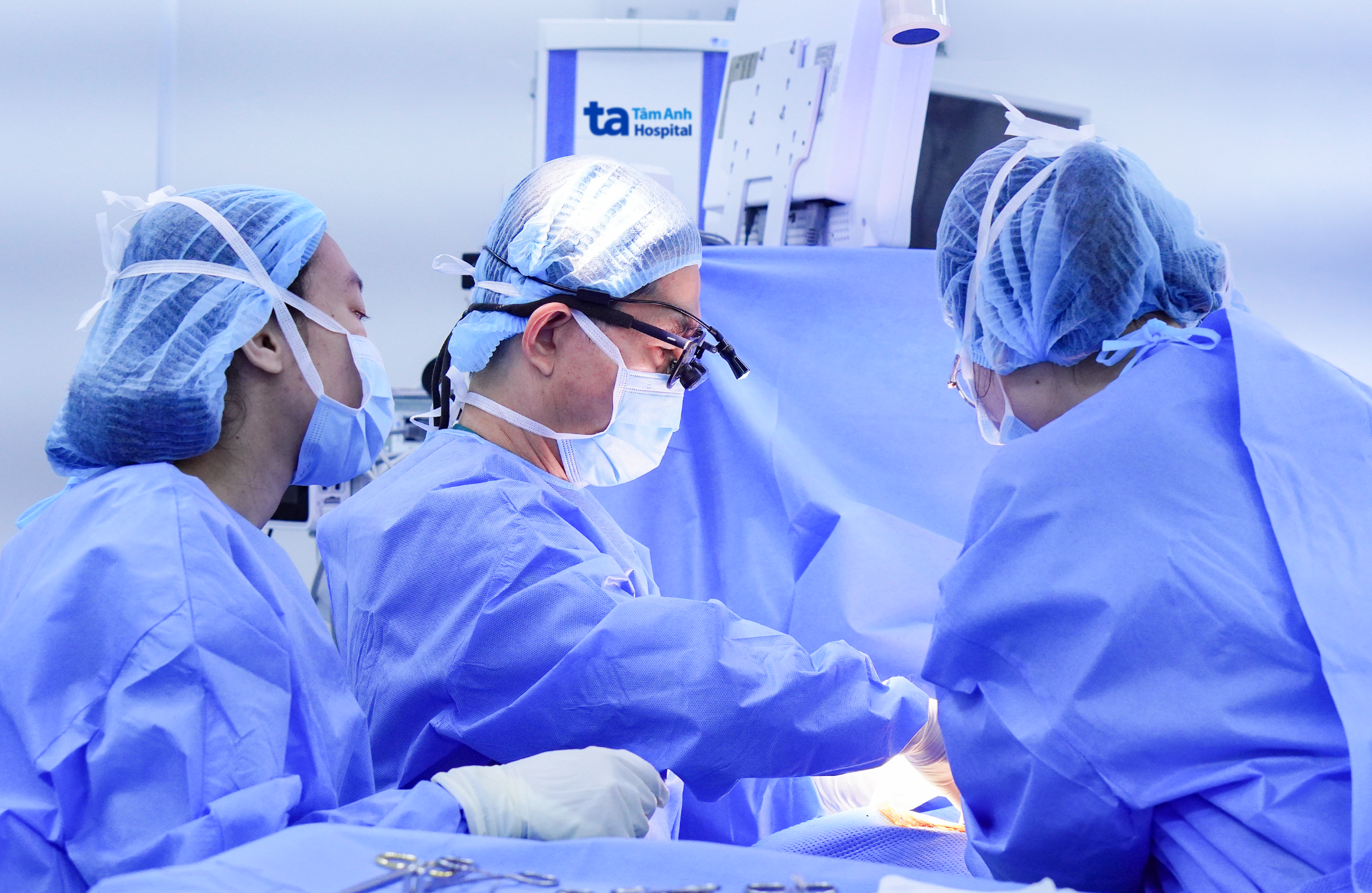 |
Doctor Dung (center) and his team performed carotid artery bypass surgery on the patient. *Tam Anh General Hospital*
Takayasu arteritis typically progresses through two distinct stages. The systemic stage presents with non-specific symptoms like prolonged fever, fatigue, weight loss, or body aches. As the disease advances to the vascular damage stage, more pronounced signs emerge, including hypertension, a weak pulse, significant blood pressure disparities between the arms or legs, limb pain or weakness, dizziness, fainting, headaches, chest pain, and shortness of breath. Early diagnosis is crucial for controlling inflammation before severe vascular damage occurs, thereby reducing the risk of cardiovascular and cerebral complications.
Doctor Dung emphasized that with early detection and treatment, the 10-year survival rate for Takayasu patients can reach 85-90%.
Young individuals experiencing persistent, unexplained symptoms, particularly prolonged fever, fatigue, and weight loss, accompanied by headaches, dizziness, fainting, high blood pressure, or a noticeable blood pressure difference between the arms or legs, should seek medical attention promptly. Should abnormal neurological signs emerge, such as weakness or paralysis, one-sided body numbness, speech difficulty, or loss of consciousness, the patient requires immediate medical transport to a healthcare facility.
Thu Ha
*Patient's name has been changed
| Readers can submit questions about cardiovascular disease here for doctors to answer. |