Doctor Tran Quoc Hoai, a specialist in thoracic and vascular surgery at Tam Anh General Hospital Ho Chi Minh City, reported that the patient was admitted with weakness on her left side, severe dizziness, and a right hemisphere cerebral infarction. This is a serious condition that occurs when blood flow to the right cerebral hemisphere is reduced or completely stopped, often due to a blood clot or atherosclerotic plaque blocking a blood vessel. Without timely treatment, patients can suffer brain necrosis due to lack of oxygen and glucose, leading to disability or death.
The doctor prescribed internal medicine treatment with thrombolytic drugs and ordered brain CT and carotid vertebral artery CT scans to identify the cause of the stroke. Results showed 80-90% stenosis in both carotid arteries.
Carotid artery stenosis is a common cause of stroke, yet it is often overlooked, leading to delayed treatment. The carotid arteries are major branches originating from the thoracic aorta, running along both sides of the neck to supply blood to the brain. Carotid artery stenosis occurs when the inner wall of the blood vessel thickens due to atherosclerotic plaque. When plaque ruptures or severely narrows the vessel, blood flow to the brain is blocked, causing an ischemic stroke.
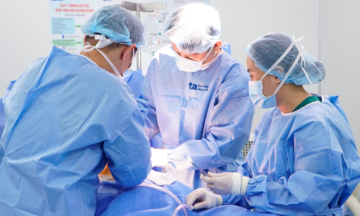
Doctor Nguyen Anh Dung, head of the Thoracic and Vascular Surgery Department at Tam Anh General Hospital Ho Chi Minh City, noted a significant challenge in Ms. Tam’s right carotid artery surgery: the need to temporarily clamp the artery while addressing the lesion. During this time, the main pathway for blood to the right side of the brain was absent, relying entirely on collateral circulation. To ensure adequate blood supply to the brain during surgery, anesthesiologists maintained the patient’s systolic blood pressure above 140 mmHg. Additionally, the team required equipment to measure brain tissue oxygen to monitor cerebral perfusion at each stage and adjust as needed.
After about one hour, doctors completely removed the calcified atherosclerotic plaque. The vessel wall was then sutured with a vascular patch, widening the narrowed lumen and restoring blood flow to the brain. Two days after surgery, Ms. Tam’s dizziness resolved, her mobility improved, and she was discharged. Once her health stabilizes, doctors will perform a similar intervention on her left carotid artery.
 |
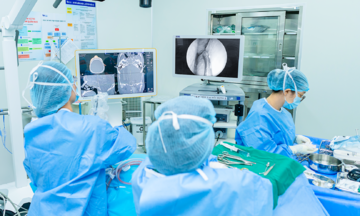
Doctors perform carotid endarterectomy on a patient. Photo: Duy Duong |
Doctor Dung explained that most patients with high blood pressure believe regular follow-ups and medication can prevent stroke. However, carotid stenosis is difficult to detect because the disease often presents no symptoms, making it easily mistaken for other common conditions. Symptoms only appear when the carotid artery lumen is severely narrowed or blocked, which is also when a stroke occurs. The risk of cerebrovascular accident is reduced by over 50% if individuals with more than 70% carotid artery stenosis undergo carotid endarterectomy. Therefore, regular check-ups help in timely detection and treatment. Individuals with risk factors such as being over 50 years old, having high blood pressure, dyslipidemia, smoking, diabetes, obesity, or a sedentary lifestyle should undergo regular cardiovascular screening.
During seasonal transitions, the risk of stroke increases significantly. If you experience suspected signs of carotid artery stenosis, such as limb weakness, numbness, or paralysis; blurred or blind vision in one eye for a few seconds or minutes; difficulty speaking, confusion, or difficulty swallowing, you should seek immediate medical attention.
Thu Ha
*Patient's name has been changed
| Readers can submit questions about cardiovascular disease here for doctors to answer. |