On 10/7, a representative from the National Hospital for Tropical Diseases announced that a patient with a history of hypertension and diabetes for many years had not been taking her medication regularly. Approximately two weeks before her admission, she experienced toothache and headache, prompting her to visit a medical facility for a wisdom tooth extraction.
Three days later, the left cheek area became severely swollen and painful, spreading rapidly. Despite being transferred to a higher-level hospital for incision and drainage of the inflamed area and 5 days of antibiotic treatment, her condition did not improve.
The patient became disoriented and developed a high fever. Upon transfer to a provincial hospital, she experienced septic shock, widespread cellulitis in the maxillofacial region, coma, and hypotension, requiring emergency intubation before being transferred to the National Hospital for Tropical Diseases.
Doctor Nguyen Thi Huan, from the Intensive Care Center, stated that the patient was admitted in a critically ill condition, with a fever of 40 degrees Celsius, generalized edema, dry lips, and a coma. Her left cheek had a 10 cm abscess, which was necrotic and exuded foul-smelling pus. Laboratory tests indicated a severe infection. CT scans of the lungs and jaw revealed multiple widespread abscesses.
The patient was diagnosed with cellulitis, necrotic abscesses in the cheek and pharynx, and sepsis caused by *Streptococcus constellatus* (a bacterium residing in the oral cavity and upper respiratory tract), complicated by multi-organ failure, with suspected meningitis.
"This is a very serious emergency, directly life-threatening", the doctor stated. The patient received high-dose broad-spectrum antibiotics, respiratory support, and intensive resuscitation. Subsequently, necrotic tissues were debrided to limit the spread of necrosis and control the source of infection.
After 9 days of intensive treatment, the patient gradually regained consciousness. However, she then faced a new complication: left pneumothorax, suspected to be due to a ruptured lung abscess, which prolonged her treatment and necessitated close monitoring.
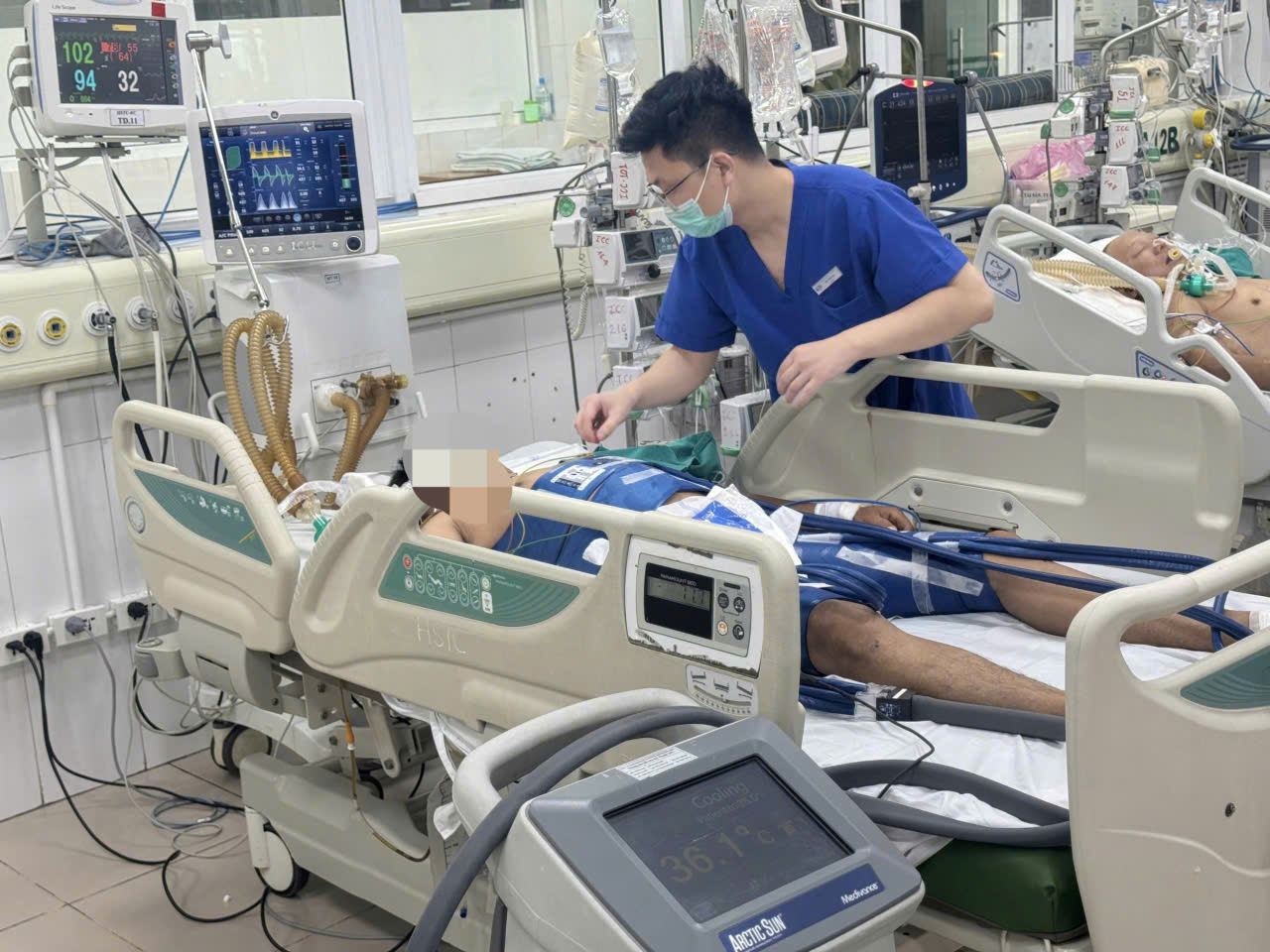 |
Doctors treating the patient. Photo: Hospital provided |
Doctors advise that individuals with chronic diseases, especially diabetes, face an increased risk of infection if their conditions are not well-controlled. This can lead to slow wound healing and a higher likelihood of severe complications.
For elderly patients with multiple underlying conditions, even minor oral lesions can serve as entry points for bacteria, causing widespread infection and potentially life-threatening septic shock. Patients with chronic diseases, particularly the elderly, must adhere to treatment to control blood sugar and blood pressure before undergoing any procedure, including tooth extraction. They should also fully inform their doctors about their medical history to allow for risk assessment and the selection of appropriate treatment plans.
Thuy Quynh