Early exercise and cardiovascular rehabilitation after surgery improve exertion capacity, circulation, and respiration. Patients also experience better sleep and reduced post-operative anxiety.
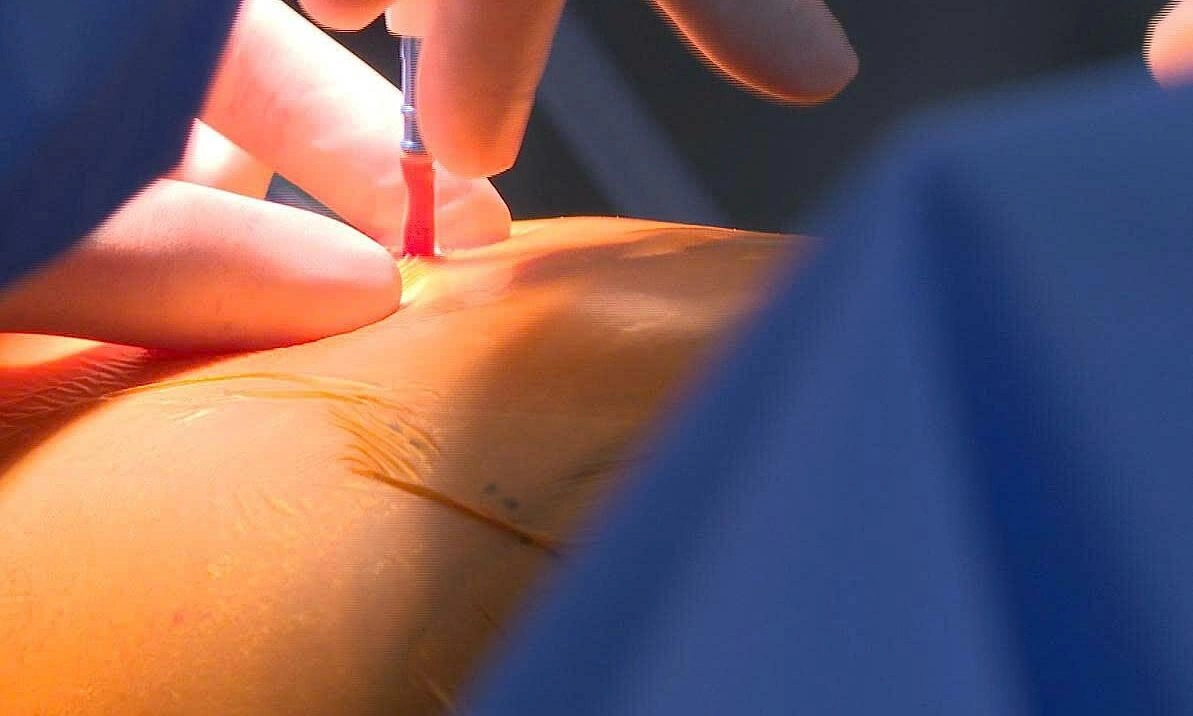
Master, Doctor, Level II Specialist Huynh Hoang Khang, Head of Cardiovascular Surgery, Interventional Cardiology Center, Tam Anh General Hospital TP HCM, states that in the past, heart surgery was typically performed through a 15-20 cm mid-sternal incision, causing significant pain and slow recovery. Currently, modern heart surgery techniques, such as minimally invasive cardiac surgery (MICS) or small incisions via the armpit/subcostal approach, preserve the sternum, limit blood loss, and reduce infection risk. Consequently, patients experience less pain, have smaller incisions, and can mobilize from the first days after surgery.
Doctors guide patients on proper exercise after heart surgery, outlining three key stages of recovery.
Stage one: Hospital recovery (initial days after surgery)
The first exercise stage typically begins early, as soon as the patient's hemodynamic and respiratory conditions stabilize. The goal is to limit complications from immobility, improve lung ventilation, maintain circulation, and restore mobility. Patients are instructed to flex their ankles towards their knees and then extend them, combined with deep breathing exercises and coughing practice to promote lung expansion, aid in phlegm expulsion, and prevent lung collapse.
In the following days, if hemodynamics are stable and there are no complications, patients will sit up and begin walking short distances. They should walk slowly for about three to five minutes, two to three times daily, under the guidance of medical staff.
While sitting on a chair, patients slowly lift each knee and then lower it, repeating about 10 times per leg to maintain lower limb muscle strength. The walking distance and duration are then gradually increased according to each individual's adaptability.
 |
Patients are guided through exercise in the early stage after heart surgery. *Photo: Tam Anh General Hospital*.
Stage two: Initial home recovery (about one to six weeks)
The first 6 weeks after hospital discharge are a crucial period for patients to gradually regain endurance. The principle is to increase activity levels slowly, steadily, and according to individual capacity.
In the first week, patients should walk for about 5-10 minutes on a flat surface, two to three times daily. An appropriate intensity is one where the patient can still converse relatively comfortably while walking.
If adaptation is good, walking time is increased by 5 minutes every few days. By the 3rd or 4th week, many patients can walk continuously for 15-20 minutes. After 6 weeks, the goal is about 30 minutes of moderate activity daily or most days of the week, depending on cardiovascular condition and recovery ability.
Stage three: Advanced recovery (6-12 weeks)
From about the 6th week, if the incision and sternum healing process is favorable, patients can gradually increase their activity intensity. This is also an appropriate stage to participate in a supervised cardiovascular rehabilitation program.
A session lasts 20-40 minutes, including warm-up, aerobic exercise, and cool-down. Patients can choose treadmill walking, stationary cycling, or other suitable forms of exercise.
Resistance exercises are introduced into the program when the patient's condition is stable and the incision is healing well, starting with low resistance and gradually increasing. During exercise, patients must maintain steady breathing, exhaling during exertion and inhaling during relaxation, avoiding holding their breath.
Doctor Khang notes that for surgeries performed through a mid-sternal incision, the bone requires several weeks to heal firmly. Therefore, in the initial stage, patients must avoid activities that cause pain or place excessive force on the sternum.
Patients should not drive for at least 4-6 weeks after surgery. When coughing or sneezing, they can hug a pillow or gently support the chest area with both hands to reduce pain and provide stability to the sternum. They should not try to suppress coughs, as coughing helps clear the airways after surgery.
Patients should stop exercising and rest if they experience signs of chest pain or tightness, unusual shortness of breath, dizziness, lightheadedness, or prolonged palpitations. Patients should go to the hospital if symptoms do not improve with rest, if their heart rate is fast or irregular, if they have a fever of 38 degrees C or higher, or if the incision is red, hot, swollen, painful, or draining fluid.
Thu Ha