Doctor Hoang Quyet Tien, from the Medical Information Center at Tam Anh General Hospital, Ho Chi Minh City, explains that "sleep debt", or accumulated sleep deprivation, occurs when actual sleep hours are less than the body's needs. For example, if the body requires 8 hours of sleep nightly but one only sleeps for 6 hours, there is a two-hour sleep deficit each day. After 5 days, the total sleep debt accumulates to 10 hours.
This condition is common among students and office workers, often due to overwhelming work or study pressure, leading to late nights for studying or working overtime. Additionally, economic or life pressures can cause brain stress and anxiety, making it difficult to achieve deep sleep and resulting in insomnia.
 |
Prolonged sleep deprivation increases fatigue, stress, and poor concentration. Photo: Dinh Dieu
According to Doctor Tien, sleep debt can be detrimental to health. In the short term, individuals with chronic sleep deprivation often experience fatigue and a sluggish feeling. Over time, this condition can cause inflammation and promote the development of chronic diseases.
During sleep, the brain performs vital processes such as consolidating and storing memories, and neutralizing toxins. When sleep deprived, the proliferation of free radicals (atoms or molecules that have lost an electron) can attack and degrade nerve cells. This leads to reduced concentration, poor memory, and decreased performance in work or study.
Stress causes insomnia, and conversely, insomnia exacerbates stress, increasing the risk of cerebrovascular diseases like cerebral ischemia, cerebral hemorrhage, and stroke. At the same time, stress contributes to chronic conditions such as high blood pressure, cardiovascular disease, type two diabetes, obesity, and a weakened immune system.
Many people with sleep deprivation tend to catch up on sleep during the day or on weekends to compensate for lost hours. However, Doctor Tien notes that a 10-hour sleep debt does not mean one needs to sleep for exactly 10 extra hours. Accumulating many hours of sleep at once can disrupt the circadian rhythm, potentially prolonging sleep deprivation.
To improve sleep deprivation, it is advisable to add 30-60 minutes of sleep each night, either by going to bed slightly earlier or waking up a little later, rather than sleeping an extra 4-5 hours straight on weekends. A nap of about 20-30 minutes can also help reduce fatigue and improve brain function with minimal impact on nighttime sleep.
Doctor Tien advises that to enhance sleep quality and combat harmful free radicals, individuals should adopt a daily diet rich in antioxidants, such as berries, cruciferous vegetables, and nuts. Supplementing with omega-3 from salmon, mackerel, and tuna at least two times per week helps maintain nerve cell membrane elasticity and reduces brain inflammation. Limiting refined sugar and saturated fats from fried foods is also recommended.
Incorporating natural free radical scavengers beneficial for blood vessels and the brain, such as anthocyanins and pterostilbene found in blueberries, can help prevent stress, reduce insomnia, headaches, and fatigue. These compounds also enhance alertness and concentration.
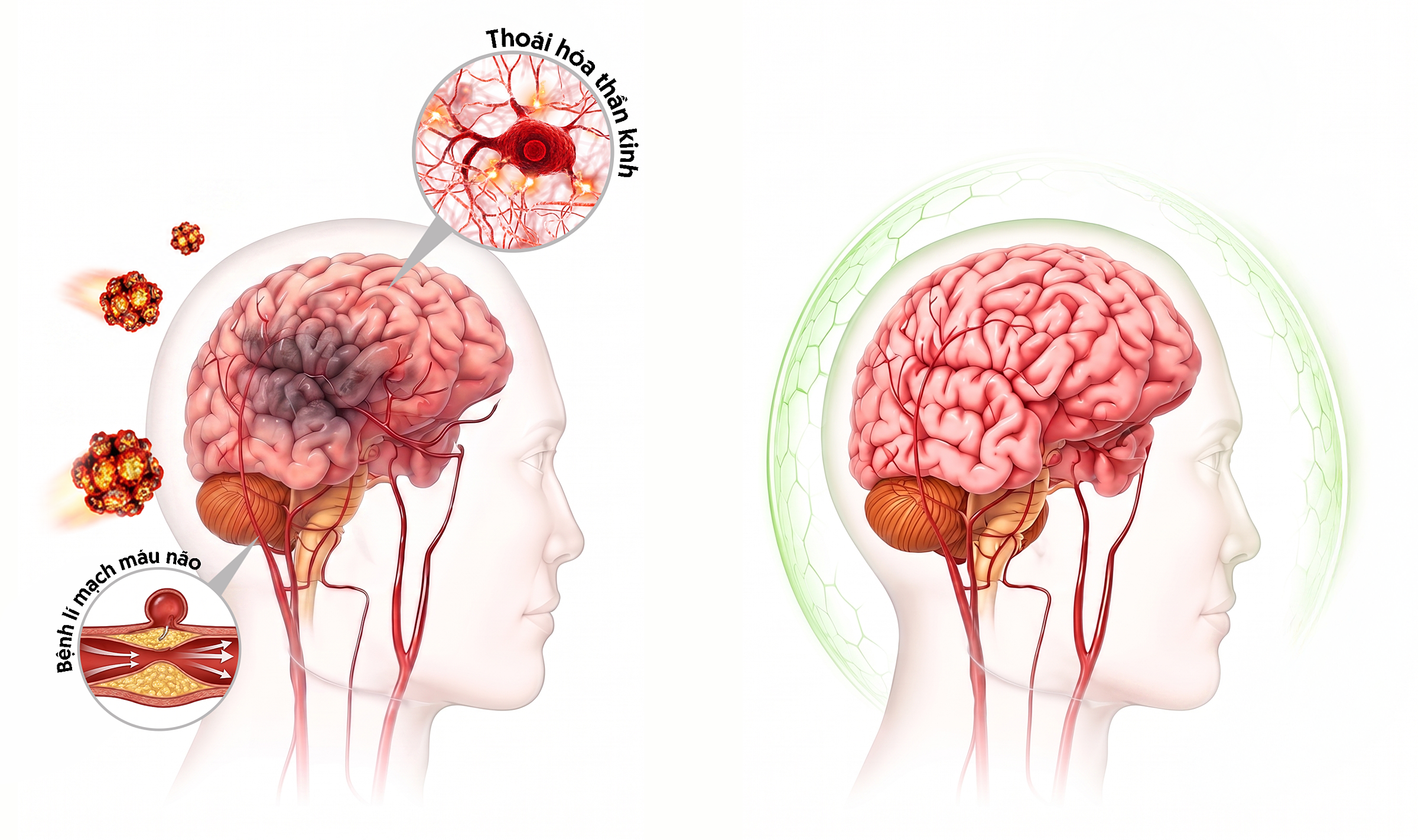 |
Brain damage from free radical attack (left) and healthy brain with sufficient nutrients (right). Photo: Eco Pharmaceutical
Exercising at least 150 minutes each week not only boosts physical health but also increases oxygen supply to the brain, stimulates the production of neurotrophic factors, and mitigates the effects of stress. Individuals experiencing symptoms of sleep disorders should consult a neurologist for diagnosis and appropriate support to detect any abnormalities early.
Thai Thanh