Alzheimer's disease is a progressive neurodegenerative condition and the most common cause of dementia in older adults. It typically appears after the age of 65, with the risk increasing with age. Doctor Nguyen Thi Phuong Thao, a specialist in Neurology and Stroke at Tam Anh General Hospital Hanoi, highlights several early signs of the disease.
Frequently forgetting new information: The brain's inability to register and retain new information causes patients to repeatedly ask questions, forget recent conversations, or events. Patients often rely on notes or family members to remember tasks.
Difficulty with familiar tasks: Patients struggle with tasks like cooking, managing finances, taking medication, or performing activities they once mastered. This is due to brain damage that impairs the ability to retain new short-term memories. Some individuals may even forget the sequence of steps for a routine activity.
Trouble finding words or following conversations: Patients often forget the names of objects, struggle to express thoughts, lose their train of thought, or cannot keep up with discussions. They may also repeat the same story multiple times.
Disorientation regarding time and place: Forgetting dates, not knowing one's current location, or getting lost in familiar places are also signs of Alzheimer's disease. The condition damages and destroys nerve cells and connections within the cerebral cortex.
Personality changes: Patients may become apathetic, anxious, suspicious, easily agitated, or make decisions inconsistent with their previous character.
Difficulty with spatial awareness and visual perception: Some individuals experience trouble estimating distances, orienting themselves in space, or recognizing object locations. This can impact their ability to walk, drive, and perform daily activities.
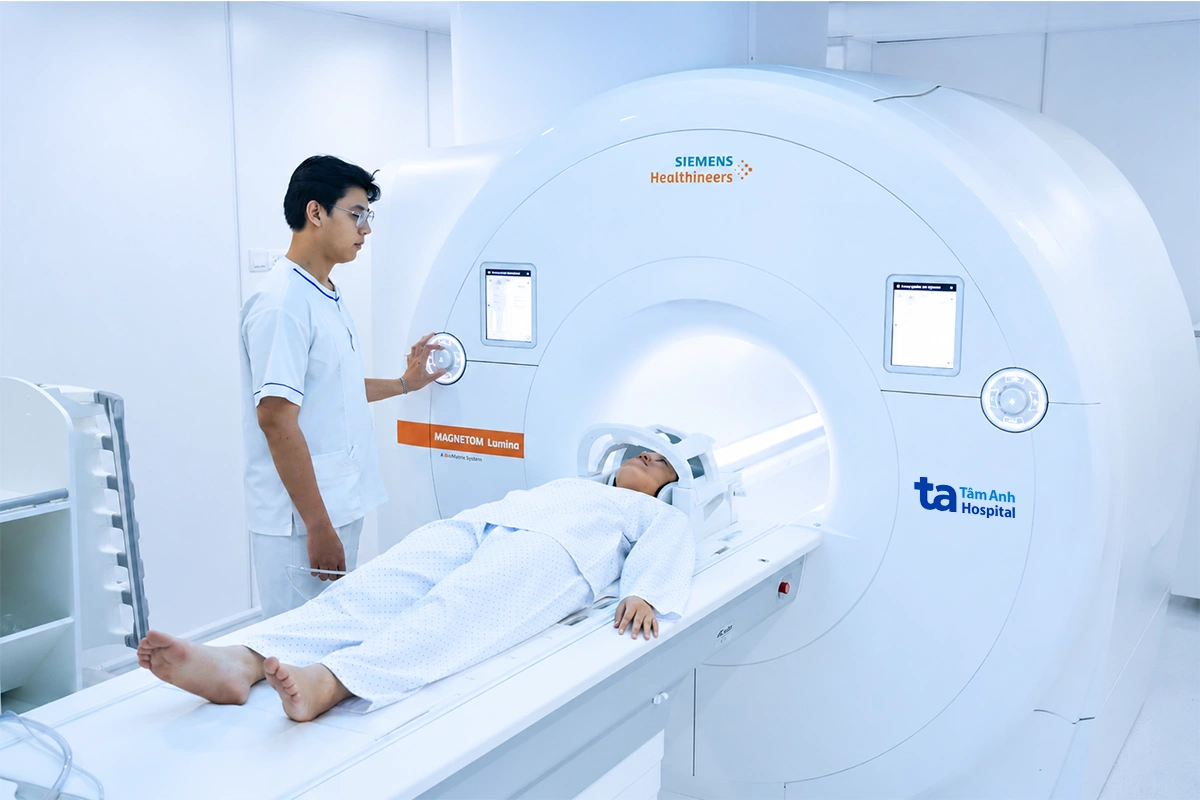 |
A doctor performs a brain magnetic resonance imaging scan for an Alzheimer's patient. Illustration: Tam Anh General Hospital Hanoi |
Doctor Phuong Thao further explains that with Alzheimer's disease, memory loss tends to be repetitive and progressive, differing from typical age-related forgetfulness. Beyond Alzheimer's, cognitive decline can also stem from other causes, including depression, sleep disorders, medication side effects, or other neurological conditions.
If family members notice clearer signs of memory decline, such as frequently repeating questions, struggling with familiar tasks, or unusual behavioral changes, the patient should seek medical evaluation. Diagnosing Alzheimer's disease involves more than just symptoms; doctors will gather a medical history, consult with family members, and assess the patient's cognitive function and ability to perform daily activities to determine the extent of impairment.
Patients may require a brain magnetic resonance imaging (MRI) or computed tomography (CT) scan to evaluate structural brain damage, assess brain atrophy, and rule out other causes of cognitive decline.
In cases requiring a definitive Alzheimer's diagnosis, doctors may utilize amyloid and tau biomarkers in cerebrospinal fluid, perform a brain PET/CT scan, or conduct blood biomarker tests. However, doctors emphasize that these tests should only be performed when clinically indicated, and patients should not self-test or self-diagnose based on results.
Alongside medication, patients should maintain physical activity, engage in intellectual and social activities, control blood pressure, blood sugar, and blood lipids, and ensure adequate sleep and a healthy diet. Timely diagnosis and treatment provide patients with better opportunities for intervention, risk factor management, care planning, and greater autonomy in decisions regarding their health and life.
Hieu Nguyen
| Readers can submit questions about neurological diseases here for doctors to answer. |