Doctor Nguyen Anh Dung, Head of the Department of Thoracic and Vascular Surgery at the Center for Thoracic and Vascular Surgery, Tam Anh General Hospital, Ho Chi Minh City, reported that the patient had a 13 mm thyroid nodule located within the left thyroid lobe. It had not yet spread externally, and ultrasound results indicated TIRADS 5, signifying a high risk of malignancy. This type of case is suitable for endoscopic surgery, which helps minimize surgical scarring, reduces pain, lowers the risk of complications, and allows for faster recovery.
Endoscopic thyroid surgery is not as common as endoscopic procedures for the abdominal or thoracic cavities, or some other specialties. This is because the abdominal and thoracic regions naturally provide ample space for instrument manipulation. In contrast, for endoscopic thyroid surgery, doctors must create a working space either through an axillary approach or a transoral vestibular approach. This presents the greatest challenge for endoscopic surgeries of the thyroid and head and neck regions, but it offers significant aesthetic benefits for the patient.
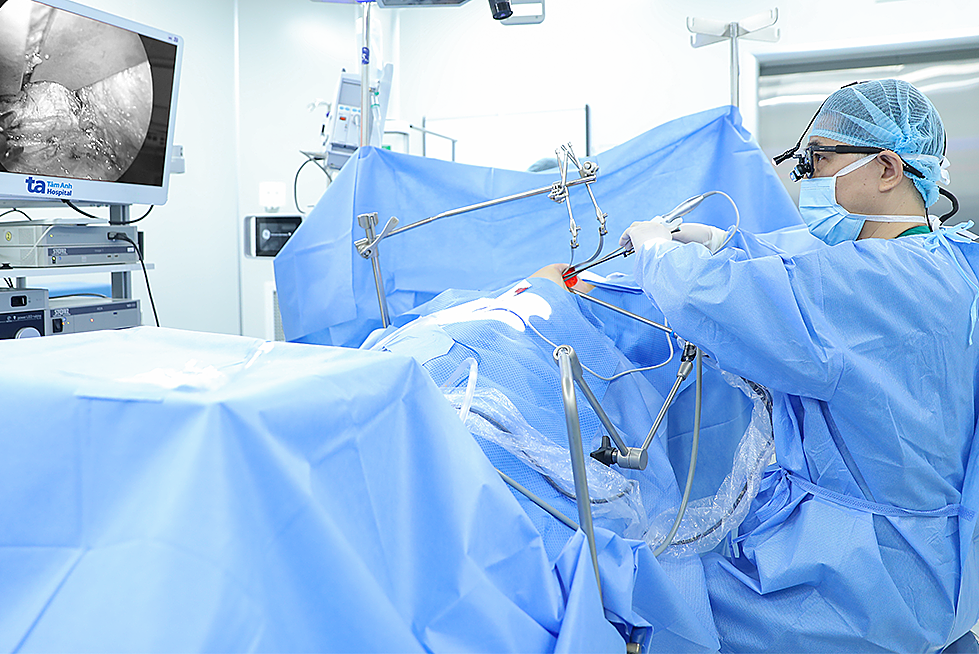 |
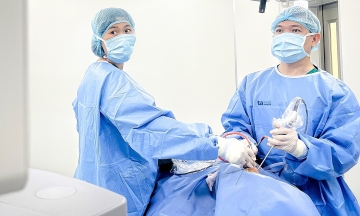
Doctor Dung removing a thyroid nodule from a patient using minimally invasive endoscopic surgery. Photo: Tam Anh General Hospital |
The surgical team made a 5 cm incision in Ms. Mai's left armpit region, dissecting to create a subcutaneous tunnel, anterior to the pectoralis fascia, extending to the front of the neck to access the left thyroid lobe.
With the aid of a chest and neck skin lifting device and a high-magnification camera, the doctors carefully controlled the thyroid's vascular system, minimizing the risk of bleeding. The risk of damage to the recurrent laryngeal nerve was also greatly reduced. This approach helps patients avoid complications such as voice loss or hoarseness after surgery. The entire left thyroid lobe was meticulously dissected by the doctors in less than 1 hour, preserving blood vessels and surrounding organs.
Post-surgery, Ms. Mai was alert and able to eat, drink, and speak normally the next day. The incision was strategically placed along the natural fold of the armpit, ensuring a favorable cosmetic outcome.
Pathology results confirmed papillary thyroid cancer that had not invaded the capsule and had not metastasized. The patient received follow-up examinations and regular monitoring advice from endocrinology and oncology specialists.
Doctor Dung advises patients to get adequate rest, maintain a balanced diet, avoid alcohol, tobacco, and strenuous activities for 4-6 weeks after endoscopic thyroid surgery. Patients should engage in light exercise as instructed by their doctor and seek immediate medical attention if they notice any unusual signs, such as pain, swelling at the incision site, hoarseness, or difficulty swallowing.
Thu Ha
* Patient's name has been changed
| Readers can submit questions about cancer here for doctors to answer |