Doctor Tran Thi Tra Phuong, from the Nutrition Department at Tam Anh General Hospital Hanoi, states that many people have a habit of watching videos, reading news, or replying to messages while eating. This habit does not directly cause stomach ulcers, but it can affect digestion and increase the risk of gastroesophageal reflux.
The stomach is an organ closely influenced by the nervous system. From the moment one sees, smells, and tastes food, the brain triggers the secretion of saliva, gastric juices, and digestive enzymes to prepare for digestion. This mechanism is known as the "cephalic phase of digestion", which supports smooth and efficient digestive activity.
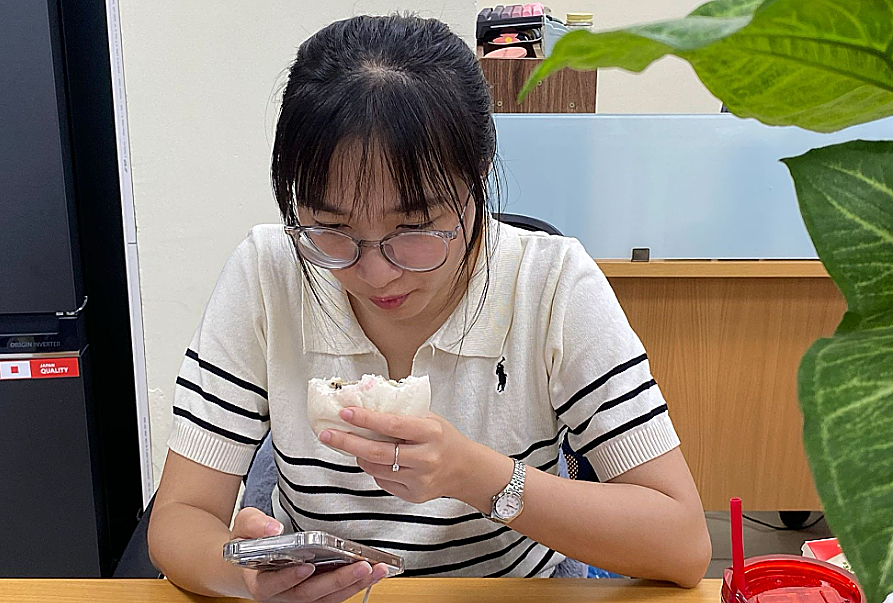 |
The habit of eating while scrolling on a phone leads to less chewing and faster swallowing, indirectly causing bloating and indigestion. *Illustrative photo: Thanh Ba*.
However, when focused on a phone screen, the brain constantly processes images, sounds, and emotional information. This distracted eating can reduce the ability to recognize satiety, making it difficult to control eating speed and the amount of food consumed. This causes the stomach to over-stretch, increasing abdominal pressure and creating conditions for acid to reflux into the esophagus.
According to Doctor Phuong, people tend to chew less and swallow faster when eating while watching their phone. Food that is not thoroughly chewed forces the stomach to contract more to process it, easily causing bloating and indigestion.
Viewing stressful or emotionally stimulating content while eating promotes the body to increase the secretion of cortisol hormone. The sympathetic nervous system becomes more active, while the parasympathetic nervous system, which supports digestion, reduces its activity. This can lead to stomach motility disorders and abdominal pain.
Doctor Phuong encourages everyone to focus on meals to savor the flavors and adjust chewing speed, which helps the digestive system function more effectively while also limiting overeating. It is advisable to place phones away from the dining table and dedicate about 15-20 minutes solely to eating, perhaps interacting with others at the table. Thorough chewing, slow eating, and focusing on meals not only improve digestion but also support weight management and reduce the risk of gastroesophageal reflux.