Farsightedness is a refractive error where images focus behind the retina instead of directly on it. Individuals with farsightedness often struggle with near vision, requiring significant accommodation when reading, writing, or performing tasks that demand close-range focus. This condition can cause eye strain, headaches, and reduced concentration.
Doctor Hoang Quyet Tien, from the Medical Information Center at Tam Anh General Hospital, Ho Chi Minh City, stated that farsightedness can occur at any age, but its prevalence and manifestations vary across different age groups.
Children and teenagers (0-17 years)
Farsightedness is common in young children, particularly during their early years. Some infants are born with mild physiological farsightedness, and the degree of farsightedness often decreases as their eyes fully develop.
Young children's eyes possess excellent accommodative ability, allowing them to see clearly for extended periods despite having farsightedness. Detecting farsightedness in young children is often challenging because they may not be aware of their eye condition or cooperate well during vision tests. Consequently, farsightedness can be overlooked, leading to delayed detection and correction, potentially resulting in amblyopia (lazy eye), strabismus (crossed eyes), binocular vision dysfunction, or reduced visual acuity. Children often exhibit signs such as squinting while reading, rapid eye fatigue, headaches, or decreased academic performance.
Among teenagers aged 10-17, farsightedness is less common but can still occur due to genetic factors or structural eye abnormalities, such as a short eyeball axis or a flatter-than-normal cornea.
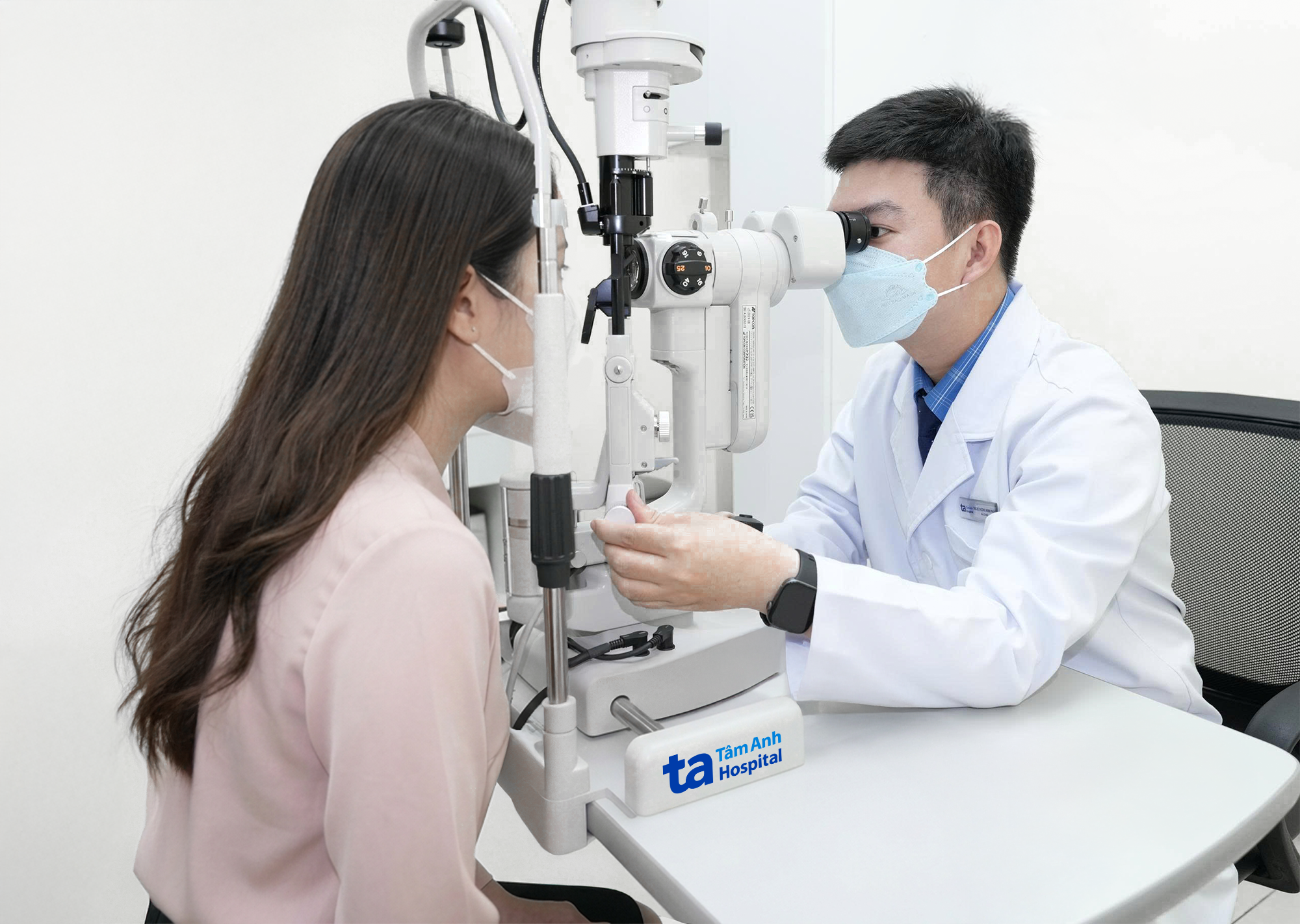 |
A doctor at Tam Anh General Hospital is checking a woman's vision. Photo: Hospital provided. |
Adults (18-40 years)
Farsightedness can still appear at this age, but its incidence is lower than in children and it is harder to recognize. Due to good accommodative ability, the eyes can maintain clear images. Many individuals with mild congenital farsightedness often only discover it when symptoms like eye strain, headaches, and blurred vision become noticeable after prolonged exposure to electronic devices, reading, or similar activities.
After age 40
Farsightedness typically becomes more pronounced after age 40 as the eye's accommodative ability declines due to the aging process. Patients may experience poor near vision and rapid eye fatigue but can still see distant objects relatively clearly. For individuals who already had farsightedness, symptoms often appear earlier and impact daily life and work more significantly.
Doctor Tien recommends that infants have their first eye examination before one year of age, ideally between 6-12 months. Children aged 3-5 should have regular check-ups once a year. Adults should have eye exams at least once every two years, and after 65 years of age, annual examinations are advised.
To protect eye health, everyone should allow their eyes adequate rest when using electronic devices, get sufficient sleep, and consume plenty of green vegetables and fresh fruits. Individuals over 12 years of age can supplement with broccophane essence from natural broccoli to support eye protection and limit the progression of farsightedness.
Dinh Dieu
| Readers can submit questions about ophthalmic conditions here for a doctor's response. |