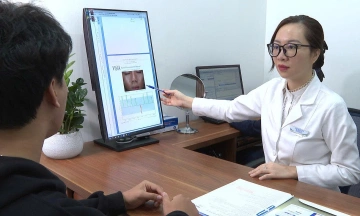
Transcranial magnetic stimulation is a non-invasive technique that uses magnetic pulses to target specific brain regions.
Doctor Tran Le Thanh Tam, head of the Neurology department at Tam Anh District 7 General Clinic, stated that the timing of repetitive transcranial magnetic stimulation (rTMS) after a stroke varies for each individual. Neurologists typically assess the extent of brain damage, the degree of functional impairment, and each patient's rehabilitation goals. Not all post-stroke patients follow the same protocol or intervention schedule.
Repetitive transcranial magnetic stimulation (rTMS) is most effective when initiated about one week after a stroke. The method can still provide benefits during the first three to six months, a period when the brain retains significant capacity for reorganization and recovery, according to doctor Tam.
For post-stroke patients, rTMS treatment is primarily combined with physical therapy and active rehabilitation to leverage the brain's responsiveness and promote motor recovery.
Each treatment session can last approximately two to three hours, including the transcranial magnetic stimulation and rehabilitation time. During the first month, patients typically receive treatment for two consecutive weeks, followed by a break of about two weeks. In the subsequent month, doctors evaluate the patient's response to determine whether to continue with a new course of treatment.
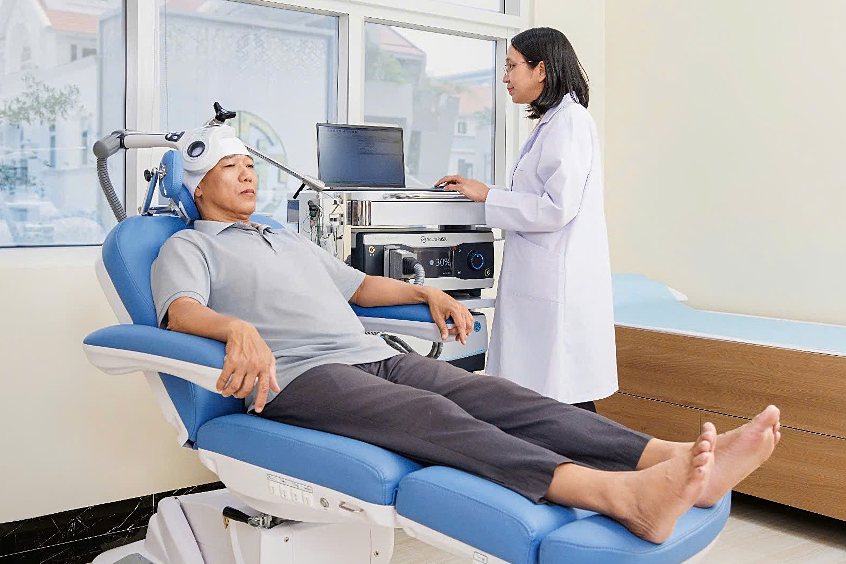 |
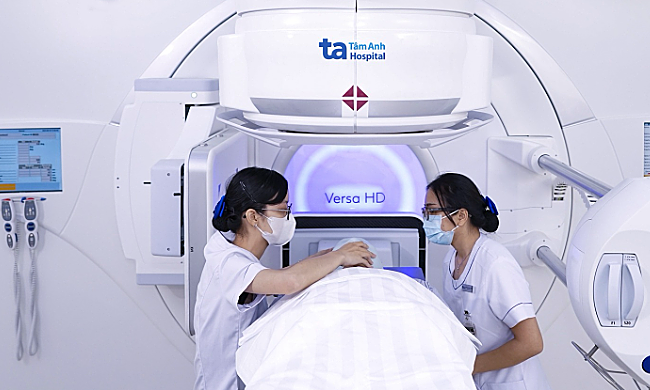
A doctor performs transcranial magnetic stimulation on a patient. *Photo: Tam Anh District 7 General Clinic* |
After a stroke, the activity between the two brain hemispheres can become imbalanced: the healthy hemisphere may become overactive while the injured brain region weakens. Depending on the individual case, doctors can adjust the stimulation to either reduce overactivity in the healthy hemisphere or increase activity in the brain region associated with the function needing recovery.
When combined with physical therapy, speech therapy, and other suitable rehabilitation methods, transcranial magnetic stimulation helps patients improve motor skills, walking, balance, language, and some cognitive functions after a stroke.
During treatment, patients sit or lie comfortably while a magnetic coil is placed on their head to deliver magnetic pulses to the target brain area. This method requires no surgery or insertion of instruments into the body, and patients can resume normal activities after the session. Some cases may experience mild headaches or scalp discomfort, which are usually temporary.
Doctor Tam advises post-stroke individuals to consult a neurologist to assess the extent of their injury and recovery potential, which helps in selecting the appropriate treatment method and increasing the chances of a good recovery.
Trong Nghia
| Readers can ask questions about neurological diseases here for doctors to answer. |