Radiation therapy, commonly known for using high-energy beams directed from outside the body to destroy tumors and cancer cells (external beam radiation therapy), actually encompasses various methods, including brachytherapy and systemic radiation therapy.
Dr. CKI Nguyen Huy Loc, from the Department of Radiation Therapy at the Oncology Center, Tam Anh General Hospital Ho Chi Minh City, states that specific guidance on patient contact with others will be provided based on the radiation therapy method used.
For brachytherapy, a radioactive source is placed within or adjacent to the tumor. This source may remain in place for a few minutes, hours, or many days.
In cases of temporary brachytherapy, patients are typically not radioactive once the source is removed from the body. Consequently, they can interact with others after treatment concludes. However, during the treatment itself, patients need to stay in a private room and limit contact with other individuals.
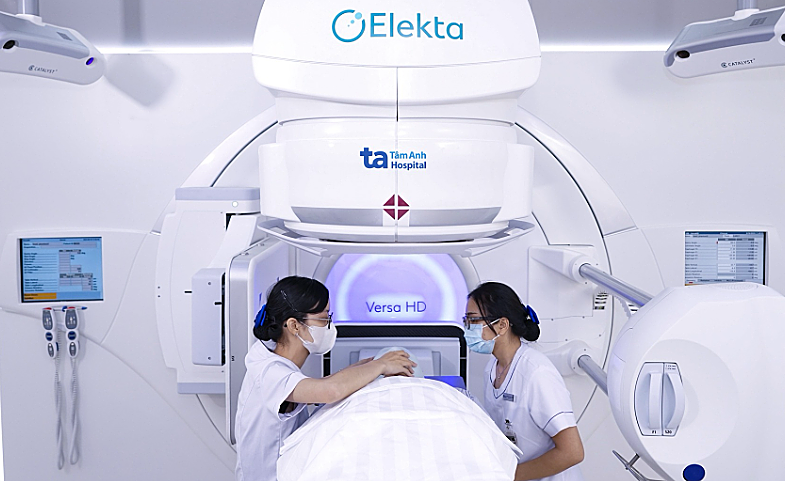 |
A new generation accelerator radiation therapy system enhances effectiveness and minimizes side effects for patients. Photo: Tam Anh General Hospital. |
With systemic radiation therapy, where radioactive medication is administered intravenously or orally (such as radioactive iodine), the body retains radioactivity for several days. Patients should isolate during the period they are taking medication, staying in a private room and limiting contact with those around them. After one to two weeks, once the radioactivity has been eliminated from the body, patients can return to their normal activities.
External beam radiation therapy uses high-energy radiation beams directed from outside the body to destroy abnormal cells. Patients undergoing this type of radiation therapy can maintain their normal daily routines, including eating, working, and studying, without concern for affecting those around them.
According to Dr. Loc, patients should strictly adhere to the instructions provided by their doctors and technicians throughout the radiation therapy process. This adherence helps avoid unnecessary anxiety and ensures safety for both the patients and their loved ones. During and after treatment, patients should consume adequate nutrients and drink sufficient water to support their body's ability to cope and recover.
By Khai Minh
| Readers can send questions about cancer here for doctors to answer. |