Amidst the global trend of population aging, "healthy aging"—extending healthy life expectancy—has become a central focus. Japan currently leads the world in this regard, with an average healthy life expectancy of 73 to 74 years.
According to family physician Chen Xinmei (Taiwan, China), alongside lifestyle habits, natto (fermented soybeans) in traditional Japanese cuisine is a key contributor to maintaining bone and cardiovascular health.
Doctor Chen Xinmei explains that while most people know calcium supplementation is fundamental for strong bones, simply consuming calcium is not enough. The activity of vitamin K2 is also crucial. If calcium is compared to building materials, then vitamin K2 acts as the "coordinator" responsible for directing them. Vitamin K2 has two core tasks:
Directs calcium into bones: Precisely guides absorbed calcium to be stored in bones, thereby strengthening bone density.
Prevents calcium in blood vessels: Stops calcium from depositing on arterial walls, preventing hardening and reducing the burden on blood vessels.
In nutritional science, vitamin K is primarily divided into two types: K1 and K2. Their roles and absorption efficiency in the human body differ significantly:
Vitamin K1: Found in dark green vegetables, its main function is to support blood clotting.
Vitamin K2 (short-chain MK-4): Found in egg yolks, chicken, etc., has a short half-life, making it difficult to accumulate stably in the blood.
Vitamin K2 (long-chain MK-7): Found in fermented foods, has an extended half-life of about 68 hours (nearly three days). Thanks to its prolonged functional duration, this form is highly effective in enhancing calcium utilization.
Doctor Chen Xinmei presented a comparison table of K2 content in common foods (per 100 g). The MK-7 content in natto tops the list compared to all other foods:
Natto: MK-7 approximately 900-1000 micrograms
Cheese: Approximately 280-510 micrograms (mostly MK-8, MK-9 forms)
Egg yolk: Approximately 31 micrograms (short-chain MK-4 form)
Chicken thigh meat: Approximately 20-58 micrograms (short-chain MK-4 form)
German sauerkraut: Total amount approximately 5 micrograms (MK-7 accounts for only about 0,2 micrograms)
Therefore, the doctor points out that, based on the daily recommended intake of 90 to 180 micrograms of MK-7, individuals can easily meet this standard by consuming about half a pack (20 g) of natto daily.
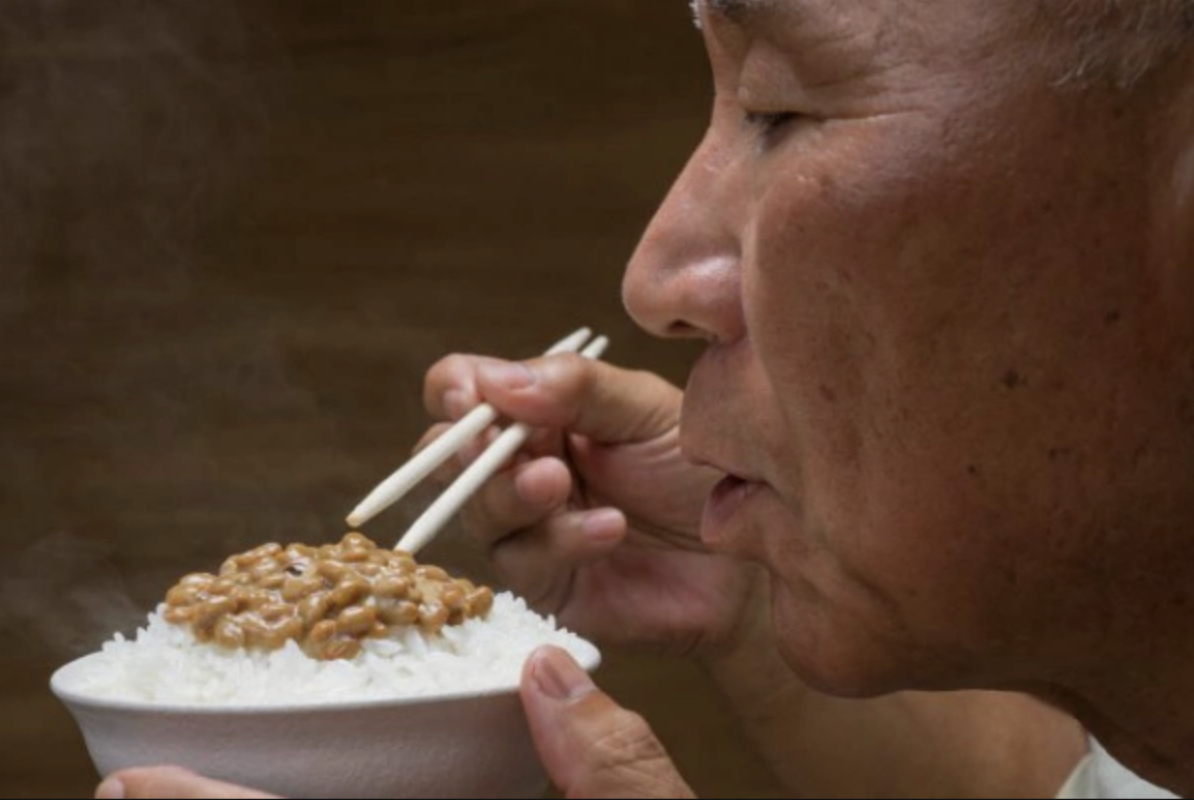 |
Japanese people often eat natto with breakfast. Photo: Haccola |
With age, modern individuals often face a dual risk: bone loss and declining cardiovascular function. Doctor Chen Xinmei emphasizes that through daily diet, appropriate supplementation of fermented foods rich in long-chain MK-7 can establish a more effective calcium absorption and distribution mechanism. This achieves dual health benefits: "calcium in bones, arteries free of calcification," making it an essential daily choice for building a healthy body.
However, the doctor also notes that because vitamin K itself promotes blood clotting, patients using anticoagulant medication who wish to supplement high doses of vitamin K2 or significantly increase their natto intake must first consult their treating physician or pharmacist for assessment and advice to ensure medication safety.
By My Y (According to SETN)