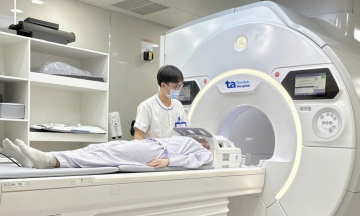
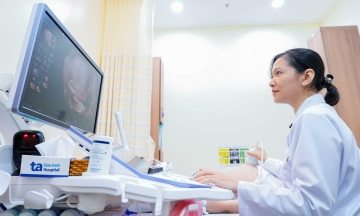
Mr. Le, 62, presented with no unusual symptoms like coughing, chest pain, or shortness of breath, and was a non-smoker. A low-dose lung CT scan at Tam Anh General Hospital, Ho Chi Minh City, identified a 2 cm lung tumor in the lower left lung lobe, in the S9 segment, with smooth borders and a 5-15% risk of malignancy.
Dr. Nguyen Anh Dung, Head of Thoracic - Vascular Surgery at the Thoracic - Vascular Surgery Center, explained that for small lung tumors with malignancy risk, such as Mr. Le's, needle biopsies often fail to yield precise or sufficient samples to confirm the lesion's nature. Consequently, patients require thoracic surgery for complete tumor removal and an immediate intraoperative biopsy.
If the tumor proves benign, the patient avoids further treatment, ensuring maximum lung tissue preservation and preventing respiratory function decline that would result from removing an entire lung lobe. For malignant tumors, doctors formulate an early-stage treatment plan.
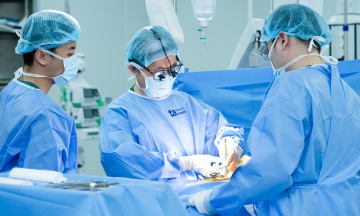
Given Mr. Le's history of type 2 diabetes and hypertension, endoscopic surgery was chosen to minimize blood loss, pain, and surgical site infection risks, ensuring maximum safety. This approach enables the surgical team to remove the entire tumor for an immediate frozen section biopsy during the same operation, facilitating a precise diagnosis.
Immediate histological analysis confirmed a benign inflammatory lesion, leading the surgical team to halt the procedure. No further lung tissue removal was necessary, preserving the patient's respiratory function.
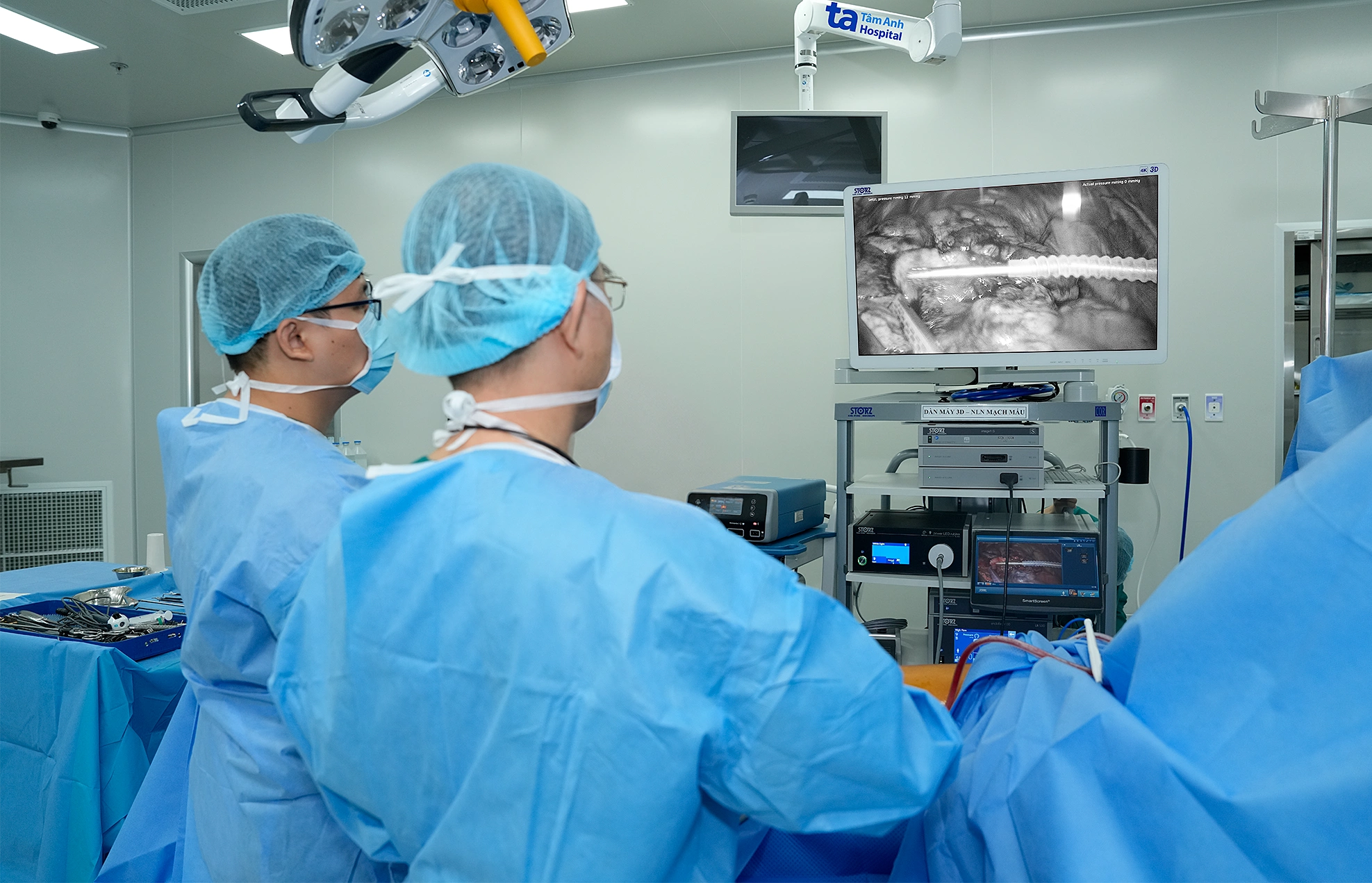 |
Dr. Dung (right) performs endoscopic lung tumor surgery for a patient. *Photo: Tam Anh General Hospital* |
Thanks to minimal invasiveness and blood loss, Mr. Le could sit up and walk gently one day after surgery. He was discharged on day 4, shortening his hospital stay by 3-4 times compared to traditional open surgery, which typically requires 10-14 days.
Dr. Dung noted that early-stage lung tumors often present with few symptoms or are easily mistaken for common respiratory illnesses. This can lead to patient complacency and missed opportunities for optimal treatment. He recommends that everyone undergo a health check-up at least once a year. High-risk individuals, including those over 50, current or former smokers, those working in toxic environments, or with a family history of lung disease, should seek medical advice for screening. Early detection facilitates less invasive, effective, and safe treatment, preserving respiratory function.
Bao Anh
*Patient's name has been changed
| Readers can submit questions about cancer here for doctors to answer. |