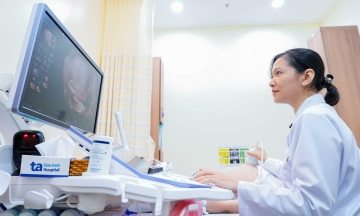
During an examination at Tam Anh General Hospital, TP HCM, Nick's left arm blood pressure was 90/60 mmHg, while his right arm was 120/80 mmHg. A vascular CT scan revealed the patient had over 80% severe narrowing in both internal carotid arteries, the main blood vessels supplying the brain. Concurrently, the left subclavian artery—a major vessel from the heart that runs under the collarbone to supply blood to the entire arm—was also severely narrowed. This reduced blood flow to the left arm, causing the uneven blood pressure readings between his two arms.
Doctor Nguyen Anh Dung, Head of Thoracic and Vascular Surgery at the Thoracic and Vascular Surgery Center, stated that Nick had severe narrowing of both carotid arteries and the left subclavian artery simultaneously. Without immediate intervention, the patient faced a risk of cerebral infarction and stroke at any moment. The patient's advanced age, along with a long history of diabetes and hypertension, were factors accelerating atherosclerosis, which obstructs blood flow to the brain and limbs.
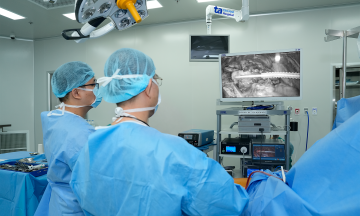
To ensure patient safety, doctors consulted and agreed on a two-stage treatment plan. In the first stage, the surgical team performed a right carotid endarterectomy on the more severely narrowed artery, removing atherosclerotic plaques from the vessel wall to clear the blood pathway to the brain and prevent stroke.
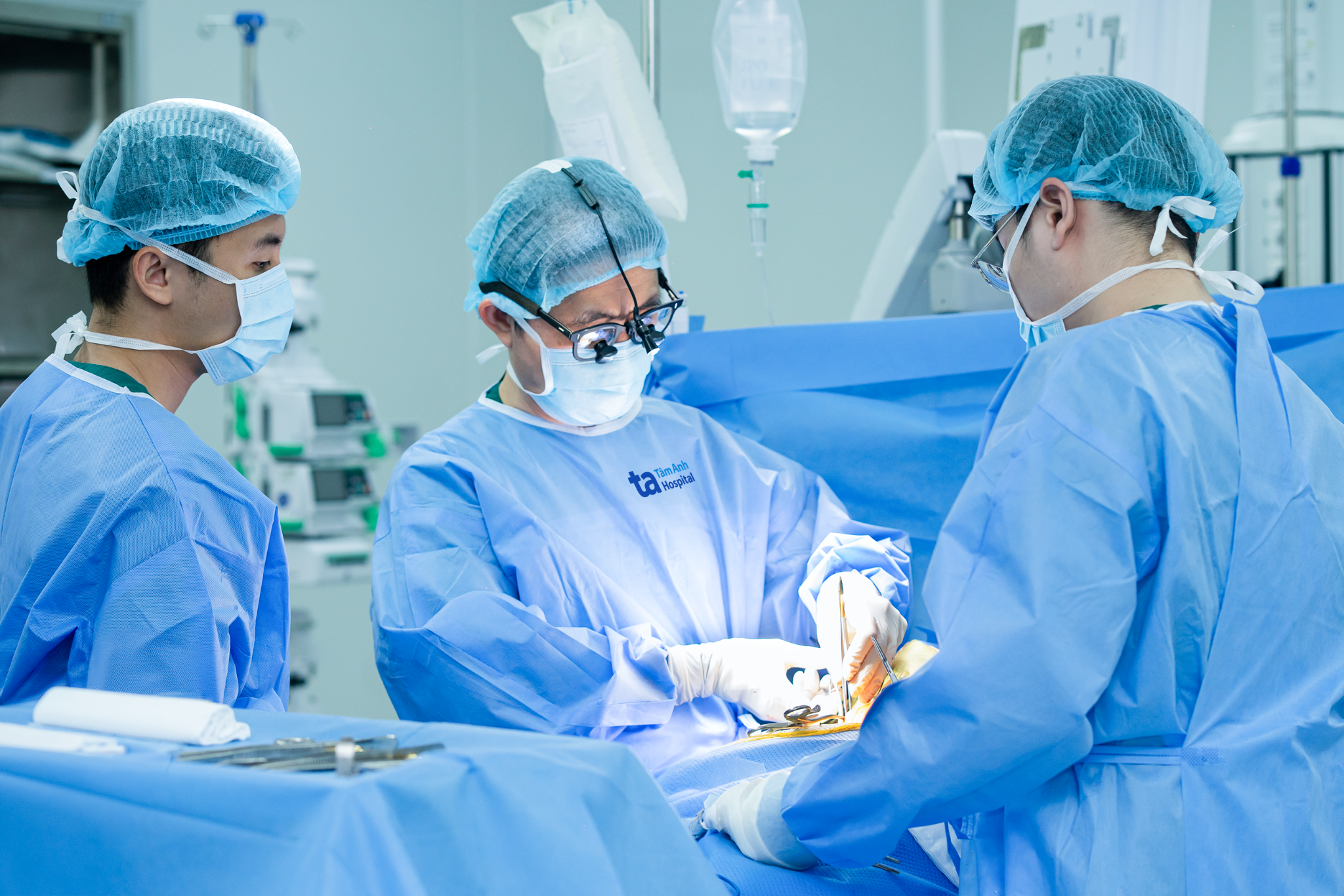 |
Doctor Dung (center) and the Thoracic and Vascular Surgery team performed a carotid endarterectomy on the patient. *Photo: Tam Anh General Hospital*
After surgery, Nick's dizziness improved, and he continued to manage his blood pressure and blood sugar, combined with antiplatelet medication to reduce the risk of blood clot formation and re-narrowing of the vessels.
Eleven months later, once the patient's health stabilized, the team proceeded with surgery to remove plaque from the left carotid artery. The severe narrowing of the subclavian artery was addressed using a minimally invasive vascular bypass technique. Instead of opening the chest, doctors made an incision of approximately 5 cm in the neck region, grafting an artificial vessel segment to create a bypass around the narrowed section, directing blood directly to the left subclavian artery to supply the arm.
Post-surgery, the patient's hand felt warmer, grip strength improved, and the sensation of weakness and fatigue during movement decreased. Blood pressure in both arms returned to normal levels. Nick recovered well and was discharged from the hospital.
Doctor Dung noted that atherosclerosis and carotid artery narrowing often progress silently. Most patients only discover the condition when they experience a transient ischemic attack or a stroke. Symptoms such as dizziness, limb weakness, loss of balance, or blurred vision can be mistaken for vestibular disorders, age-related issues, or other medical conditions.
"A significant difference in blood pressure readings between the two arms is an important sign not to be overlooked, especially when accompanied by pain, fatigue, or weakness in one arm, as this could signal subclavian artery narrowing or blockage," Doctor Dung stated.
Doctors recommend that older adults, particularly those with hypertension, diabetes, dyslipidemia, a history of smoking, or cardiovascular disease, undergo regular vascular disease screenings every 6 to 12 months. Should sudden symptoms like: headache, dizziness, facial drooping, limb weakness or paralysis, difficulty speaking, blurred vision, or loss of balance appear, patients should seek prompt treatment at a hospital with a vascular specialty.
Bao Anh
* Patient's name has been changed
| Readers can submit questions about cardiovascular disease here for doctors to answer |