The worker was crushed by a large rock in the buttock area, suffering severe soft tissue damage and complete loss of movement in the injured leg. After initial treatment at a local hospital, he was transferred to Viet Duc Friendship Hospital. Doctors determined that the patient faced a permanent loss of lower limb function if nerve reconstruction was not performed promptly.
The surgical team debrided the damaged tissue and discovered that the patient's sciatic nerve was completely severed. The two ends of the nerve had retracted, creating a gap of nearly 4 cm, making direct suturing impossible.
"This was the most challenging point of the surgery; if the surgeon had only treated the wound and closed it, the patient would have had almost no chance of good functional recovery. Moreover, taking an autologous nerve for grafting would create a new injury," said Master of Science, Doctor Tran Ngoc Van, a member of the surgical team.
After consultation, the doctors decided to use a preserved nerve segment from the hospital's Tissue Bank for the patient. Under a microscope, the surgeon grafted the nerve segment into the nearly 4 cm gap, creating a bridge for the patient's nerve fibers to regenerate over time.
The team noted that using preserved nerve tissue spared the patient from additional injury that would result from harvesting a healthy nerve from another site. It also provides an additional treatment option for complex peripheral nerve injuries in other patients.
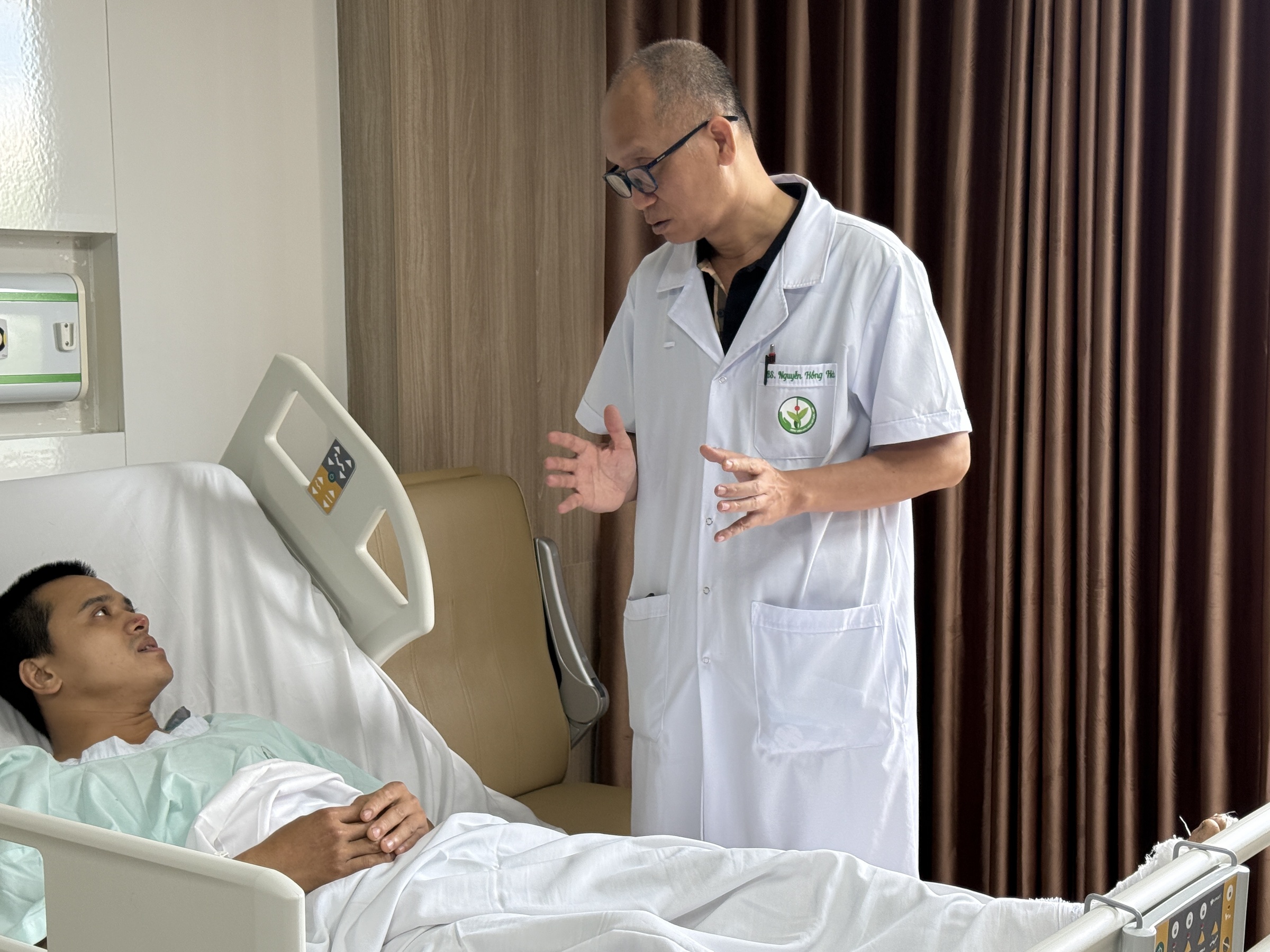 |
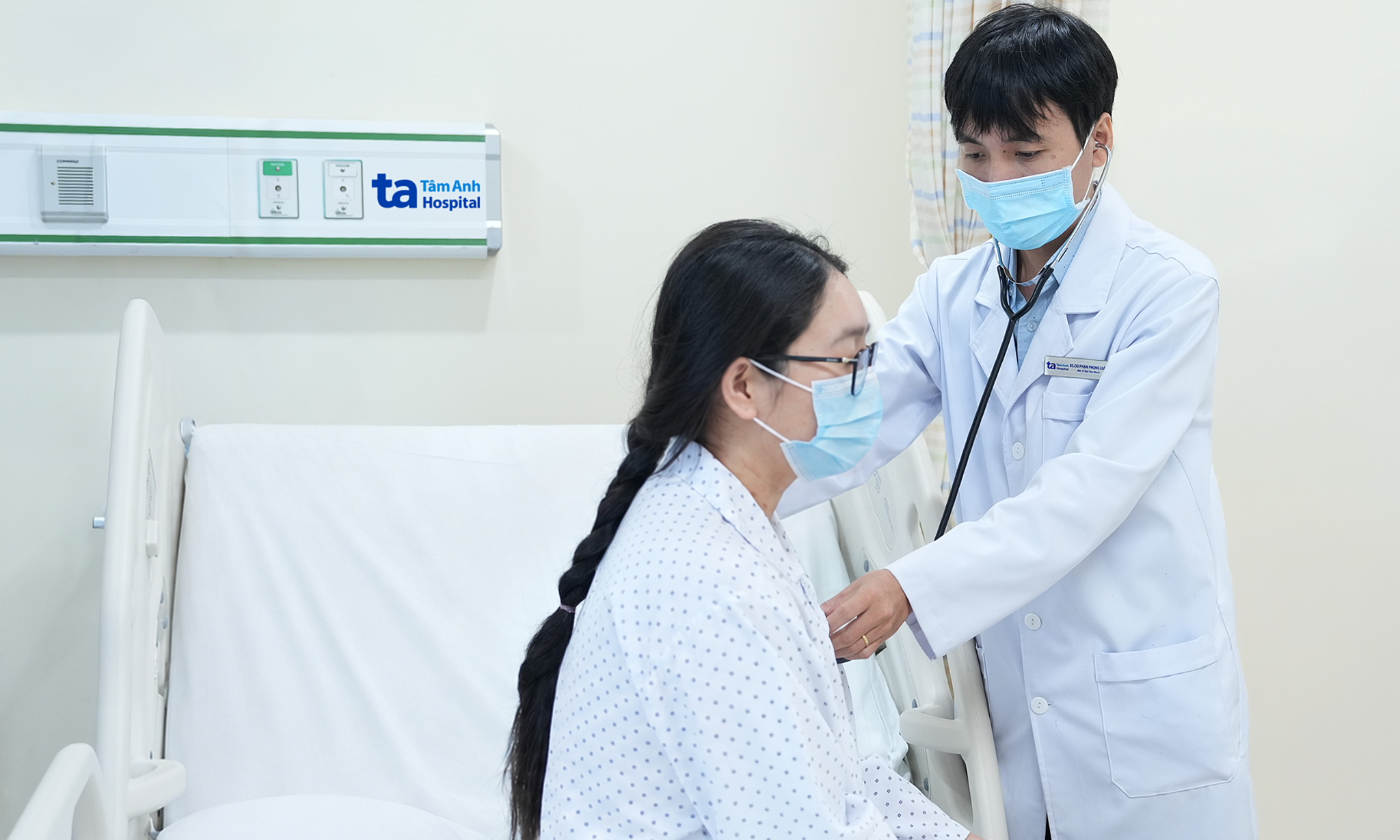
Doctor Ha examines the patient after surgery. Photo: Nhat Duc
According to Associate Professor, Doctor Nguyen Hong Ha, Head of the Department of Maxillofacial Surgery and Aesthetic Plastic Surgery, a high sciatic nerve severance is a particularly complex injury in nerve microsurgery. Unlike blood vessels, which can immediately resume flow after anastomosis, nerves require many months, even years, to regenerate. Nerve fibers typically grow about 1 mm per day, while the distance from the buttock to the foot is very long.
"The patient's nerve was reconstructed immediately during emergency care, not with the promise of complete recovery, but to preserve the greatest possible chance of functional recovery," Associate Professor Ha explained.
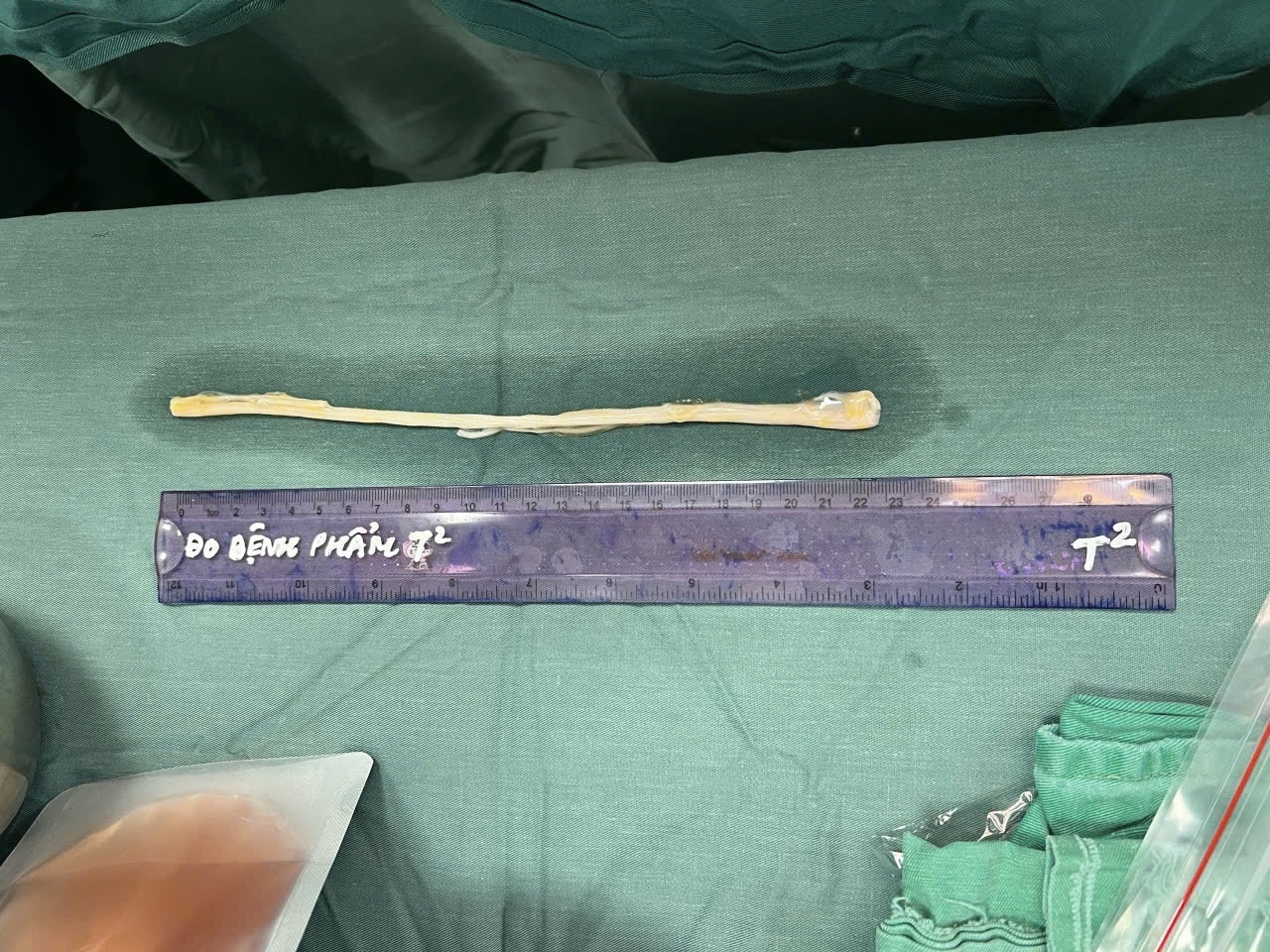 |
The preserved nerve segment grafted for the patient. Photo: Hospital provided
After 10 days of treatment, the patient's condition was stable, with no signs of infection. He will undergo physical therapy and be monitored for two years at one, three, 6, 12, 18, and 24-month intervals to assess nerve regeneration and the recovery of both motor and sensory functions.
Associate Professor Ha noted that for large nerve injuries, every millimeter of nerve regeneration brings hope. Even if the patient only recovers partial motor or sensory function, it can significantly improve their quality of life and ability to return to work.
This marks the first time Viet Duc Friendship Hospital has performed a preserved nerve grafting technique. According to Associate Professor Ha, the Tissue Bank enables medical teams to implement many modern reconstructive techniques, providing biological materials for cases of tissue, tendon, bone, cartilage, or nerve loss after severe trauma.
Le Nga