Vision problems largely stem from three refractive errors: myopia, hyperopia, and astigmatism. Myopia provides clear near vision but blurs distant objects, while hyperopia typically hinders near sight. Astigmatism, conversely, distorts or blurs images at various distances.
Myopia: a common cause
If reading books, using a phone, or viewing nearby objects is clear, but distant signs, blackboard text, or other faraway items appear difficult, myopia is often the cause.
Healthline states that myopia, a refractive error, allows the eye to see nearby objects clearly while blurring distant images. This condition arises when light entering the eye fails to focus precisely on the retina, often due to an irregularly shaped cornea or an elongated eyeball.
Individuals with myopia often squint to clarify distant objects, experiencing eye strain, headaches, or discomfort from prolonged focusing. Myopia's severity ranges from mild to severe, impacting distant vision differently for each person.
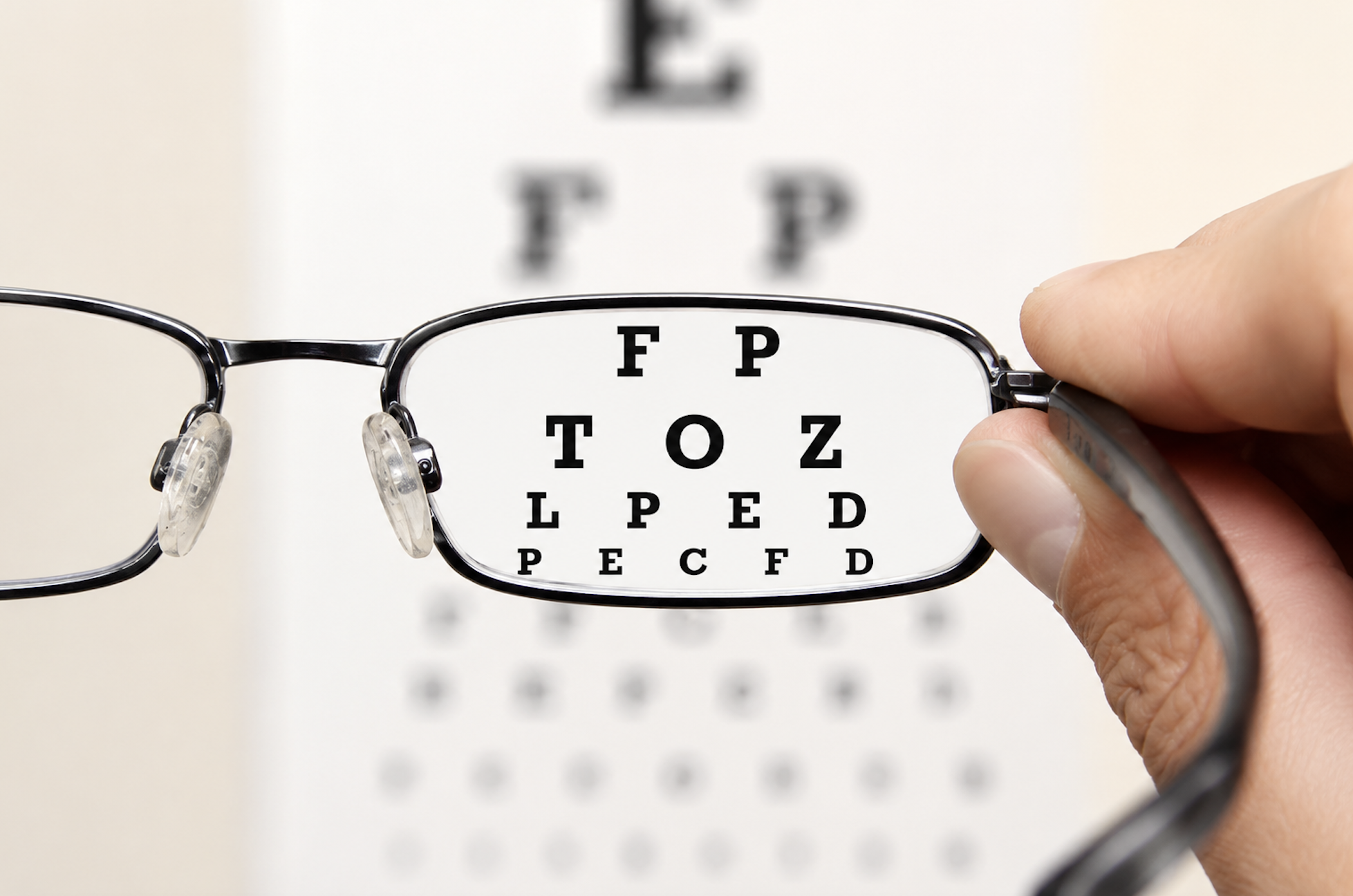 |
Myopia causes the eyes to see nearby objects relatively clearly, but distant images appear blurry. Image created by AI |
Not all blurry distant vision is myopia
Astigmatism, too, can blur or distort images. Health explains this condition occurs when an irregularly curved cornea or lens refracts light incorrectly, leading to unclear retinal images. Astigmatism may appear alongside myopia or hyperopia.
Unlike myopia or hyperopia, astigmatism doesn't solely blur vision at one distance. Patients might experience blurriness both near and far, often accompanied by squinting, eye strain, or headaches, particularly during prolonged focus.
Beyond refractive errors, blurry vision links to various issues: dry eyes, cataracts, glaucoma, diabetic retinopathy, or macular degeneration. Thus, avoid self-diagnosing the cause based only on distant or near vision.
When to seek eye examination
If blurry distant vision becomes frequent or worsens, seek an eye exam to determine its cause. A doctor measures vision, refraction, and conducts a general check-up to detect refractive errors or eye diseases.
Sudden blurry vision, especially with severe eye pain, headaches, floaters, light flashes, vision loss, facial drooping, or speech difficulty, demands emergency care. These symptoms may signal retinal detachment, stroke, or other serious conditions.
For myopia, hyperopia, or astigmatism, eyeglasses or contact lenses improve vision. In some cases, a doctor may advise refractive surgery.
Bao Bao (Compiled)
| Readers can send questions about ophthalmic diseases here for doctors to answer. |