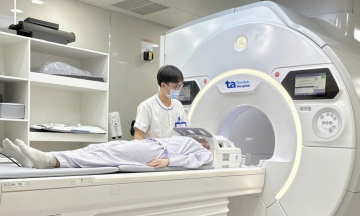
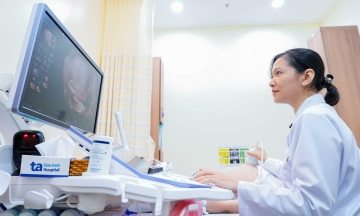
Mr. Sy arrived at Tam Anh General Clinic, District 7, suffering from multi-organ failure, anemia, generalized edema, and pleural and pericardial effusion. Ultrasound results showed poor renal corticomedullary differentiation and a glomerular filtration rate (eGFR) of 8,8 mL/min/1,73m², significantly below the normal 90 mL/min/1,73m², indicating end-stage renal failure. He required emergency dialysis to control fluid overload and sustain his life.
Specialist Doctor Level I Do Thi Hang, Head of the Nephrology and Dialysis Unit, stated that Mr. Sy had chronic kidney disease. A recent bout of dengue fever caused severe acute kidney injury, leading to a sudden decline in kidney function. The medical team developed a treatment protocol to manage fluid overload and electrolyte imbalances while aiming to preserve his remaining kidney function.
However, after several dialysis sessions, his kidney function showed no clear signs of recovery. Doctors decided to perform an arteriovenous fistula (AVF) surgery on his arm, establishing stable vascular access in case lifelong dialysis became necessary.
Mr. Sy began dialysis three sessions per week, comprising two sessions of conventional hemodialysis (HD) and two sessions of online hemodiafiltration (HDF Online). This method effectively removes medium-sized toxins and inflammatory mediators, which contribute to kidney damage during acute episodes.
During his hospital stay, Mr. Sy began writing a diary, documenting each session with the dialysis machine and his family's emotions upon learning he might need lifelong dialysis.
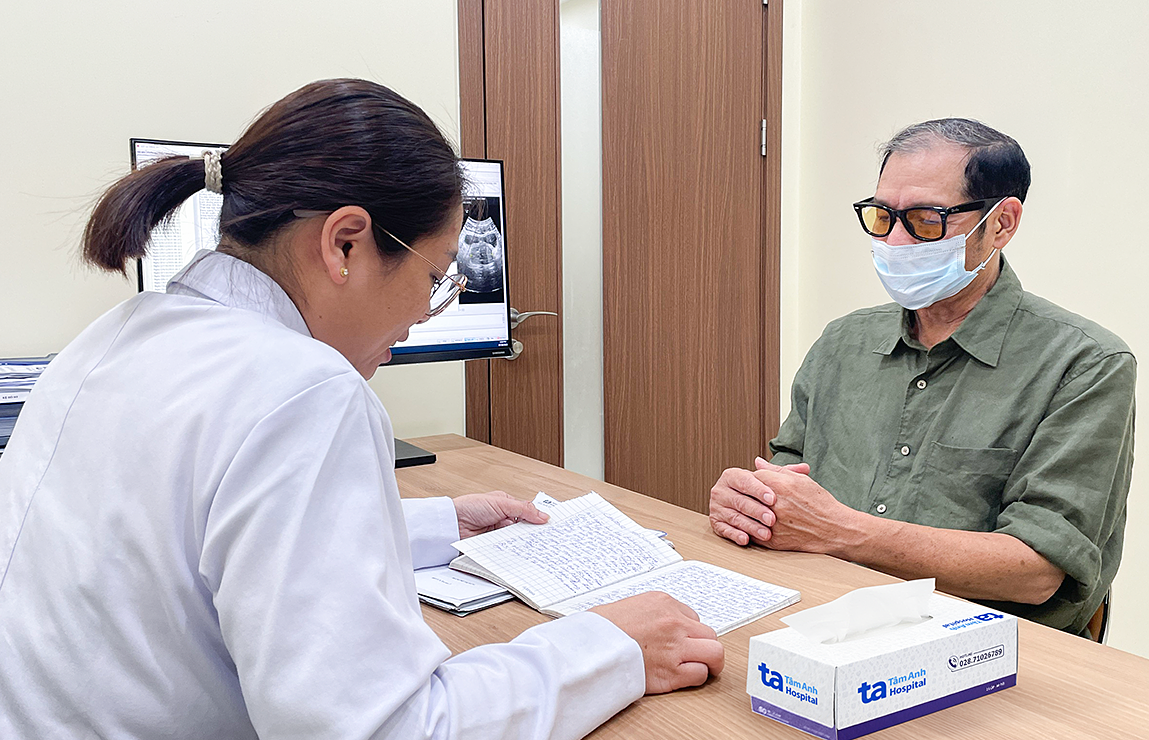 |
Doctor Hang reads pages from Mr. Sy's diary written during his dialysis days. Photo: Tam Anh General Clinic, District 7 |
Meanwhile, doctors diligently monitored the kidney's natural recovery potential. A positive sign emerged when a pre-HDF Online dialysis test showed Mr. Sy's glomerular filtration rate (eGFR) had increased to 22 mL/min/1,73m², indicating kidney function was beginning to improve. Doctors decided to temporarily suspend dialysis, continue internal medicine treatment, and closely monitor his kidney's recovery. However, they remained prepared to resume dialysis if his kidney function declined.
Mr. Sy's kidney function indicators were closely tracked, alongside managing underlying conditions, nutrition, fluids, and electrolytes. After nearly seven weeks of treatment, his eGFR continued to rise and stabilized at 35-39 mL/min/1,73m², corresponding to chronic kidney disease stage 3b. His anemia, glomerular damage, and overall physical condition also showed marked improvement.
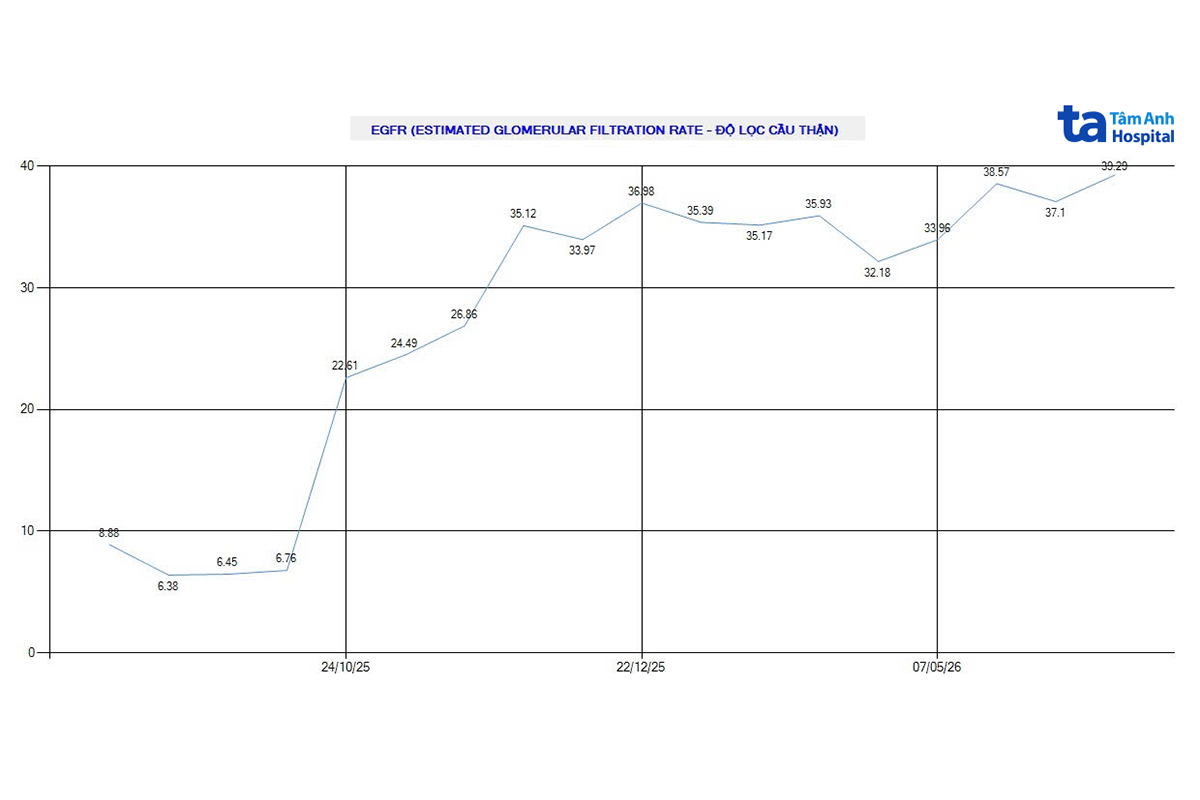 |
Mr. Sy's glomerular filtration rate (eGFR) improved significantly after seven weeks of treatment. Photo: Tam Anh General Clinic, District 7 |
When doctors delivered the good news that Mr. Sy no longer needed to depend on a dialysis machine and would transition to internal medicine treatment, he was both surprised and emotional. Currently, he only needs monthly follow-up appointments and ongoing internal medicine. His diary, chronicling his dialysis journey, concluded earlier than expected, but he carefully keeps it and brings it to every follow-up appointment.
According to Doctor Hang, not all dialysis patients require lifelong treatment. The key is accurate diagnosis of the cause, assessment of recovery potential, and timely intervention. However, the chance of recovery heavily relies on early detection and control of the disease.
The Ministry of Health estimates that over 10 million Vietnamese adults suffer from chronic kidney disease. Approximately 46,000 patients require dialysis, but the entire healthcare system only has about 7,000 dialysis machines. The five-year mortality rate for dialysis patients is as high as 50%.
Chronic kidney disease often progresses silently, with many individuals only discovering it when kidney function has significantly deteriorated. Doctor Hang advises patients with chronic kidney disease to attend regular follow-ups, adhere to treatment, and effectively manage underlying conditions such as hypertension and diabetes. Patients should avoid self-medicating with painkillers, traditional herbal medicine, or unverified products, as these can further damage the kidneys.
Patients experiencing symptoms such as edema, decreased urination, prolonged fatigue, shortness of breath, or rapid weight gain due to fluid retention should seek medical attention for kidney function assessment and timely treatment.
Dinh Lam