Nam, 20, developed pharyngitis, an inflammation of the lymphoid tissue in the nasopharynx, at age 7. His condition frequently recurred, and he managed symptoms with medication. Currently, Nam experiences tinnitus and hearing impairment. An ear endoscopy at Tam Anh General Hospital, TP HCM, revealed retracted eardrums, fluid accumulation in the middle ear, and retracted malleus handles in both ears. Audiometry and tympanometry confirmed grade one mixed hearing loss, indicating damage to both the middle and inner ear. A CT scan further showed mild erosion of the incus body and stapes on both sides.
Professor, Doctor Tran Phan Chung Thuy, Director of the Ear, Nose, and Throat Center, diagnosed Nam with bilateral attic retraction, bilateral serous otitis media, and suspected mastoiditis with cholesteatoma. This is a complication of uncontrolled adenoid hypertrophy.
Adenoids are lymphoid tissue located in the nasopharynx, near the opening of the Eustachian tube. When adenoids are hypertrophic or chronically inflamed, they can block the Eustachian tube, leading to Eustachian tube dysfunction. Dysfunction of the Eustachian tube impairs middle ear ventilation, causing the eardrum to be drawn inward, retract, and gradually collapse, losing its normal vibratory capacity. According to Professor Chung Thuy, this process often develops silently over many years, progressing to mastoiditis and significant hearing loss in adulthood.
Professor Chung Thuy recommended surgery to improve hearing and prevent permanent deafness. However, the patient's hearing cannot fully recover. While surgery helps the eardrum and ossicular chain vibrate better, thereby improving conductive hearing in the middle ear, prolonged inflammation causes irreversible damage to the auditory nerve cells.
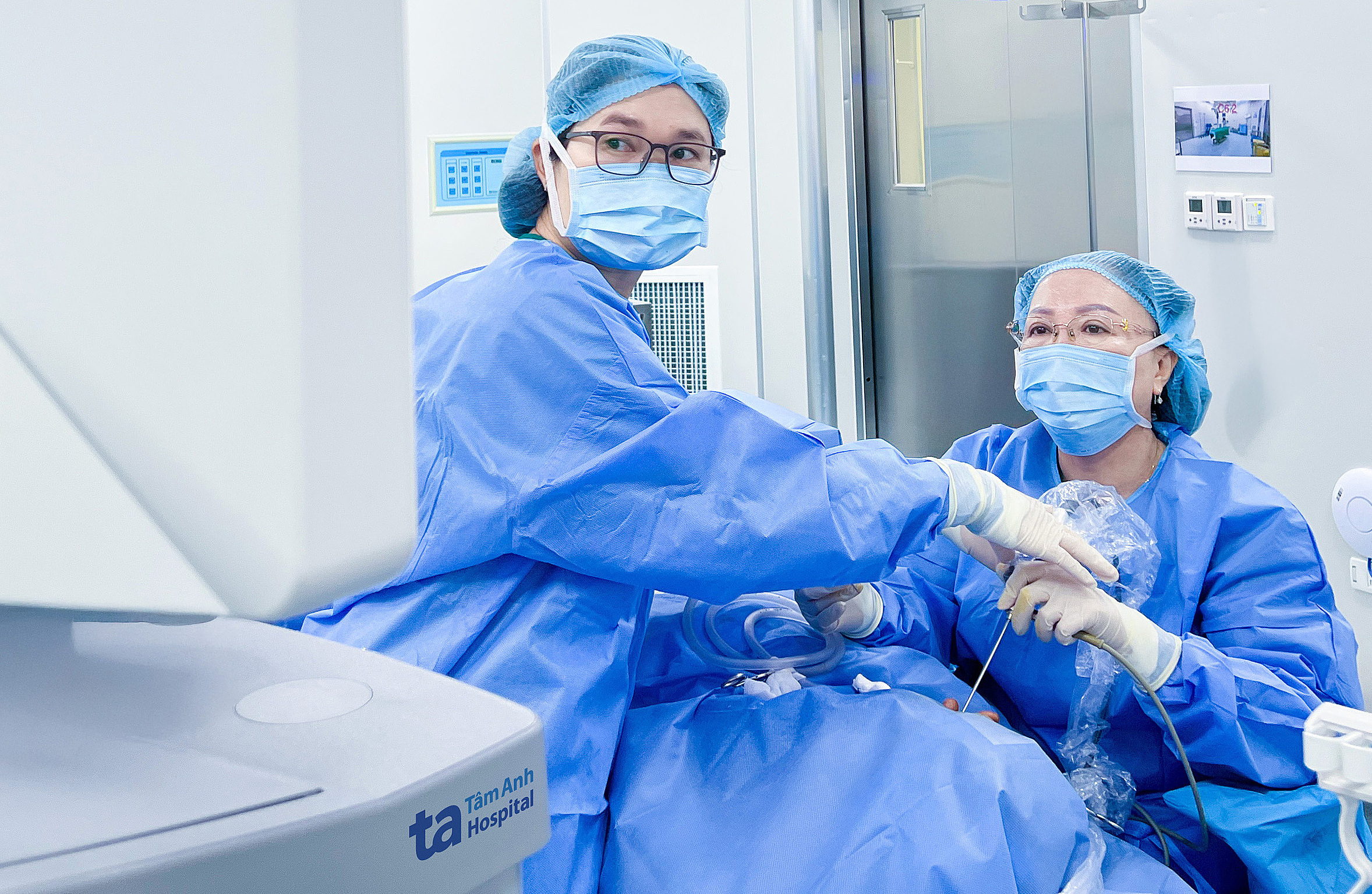 |
Professor Chung Thuy (right) performing surgery on Nam. *Photo: Tam Anh General Hospital*. |
The surgical team made an incision in the anterior-inferior quadrant of the eardrum to release negative pressure and drain middle ear fluid. Subsequently, a ventilation tube (diabolo) was inserted to maintain middle ear ventilation, balance pressure, and limit recurrent eardrum collapse.
Two weeks after the procedure, the incision healed, and the ventilation tube was correctly positioned. One month post-surgery, Nam's eardrum adapted to the tube, and his hearing improved.
Professor Chung Thuy stated that many parents worry about adenoidectomy or tonsillectomy impairing a child's immunity, but this belief is incorrect. Adenoids are only a small part of the upper respiratory tract. In addition to adenoids, a child's body is protected by many other immune structures, such as palatine tonsils, lingual tonsils, and the lymph network beneath the nasopharyngeal mucosa. When adenoids are removed, these structures continue to identify and combat pathogens, helping maintain a stable immune barrier. Delaying treatment for adenoiditis and tonsillitis can lead to complications, affecting hearing later in life.
Uyen Trinh
| Readers can submit questions about ear, nose, and throat conditions here for doctors to answer. |