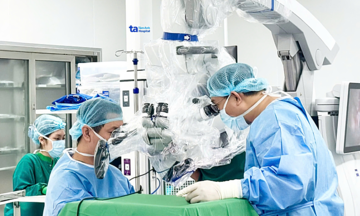
Dr. Duong Quang Huy, head of the Andrology Unit at the Center for Reproductive Assistance, Tam Anh General Hospital - District 8, reported that Minh's testicular volume was only about one ml, significantly lower than the normal range of 12-25 ml. Semen analysis revealed azoospermia, and genetic tests confirmed a diagnosis of Klinefelter syndrome.
Dr. Huy explained that individuals with Klinefelter syndrome often exhibit a tall stature, long limbs, atrophied testes, and impaired sperm production. Minh was advised to undergo early intervention to maximize the chance of sperm retrieval before complete loss of spermatogenic function. The primary objective was to collect as much sperm as possible for future assisted reproductive procedures.
Doctors opted for the micro-TESE microsurgical procedure to directly extract sperm from the testes. During the initial surgery, sperm was retrieved from both of Minh's testes. The quantity collected was sufficient to fertilize approximately 10 oocytes, which were then cryopreserved.
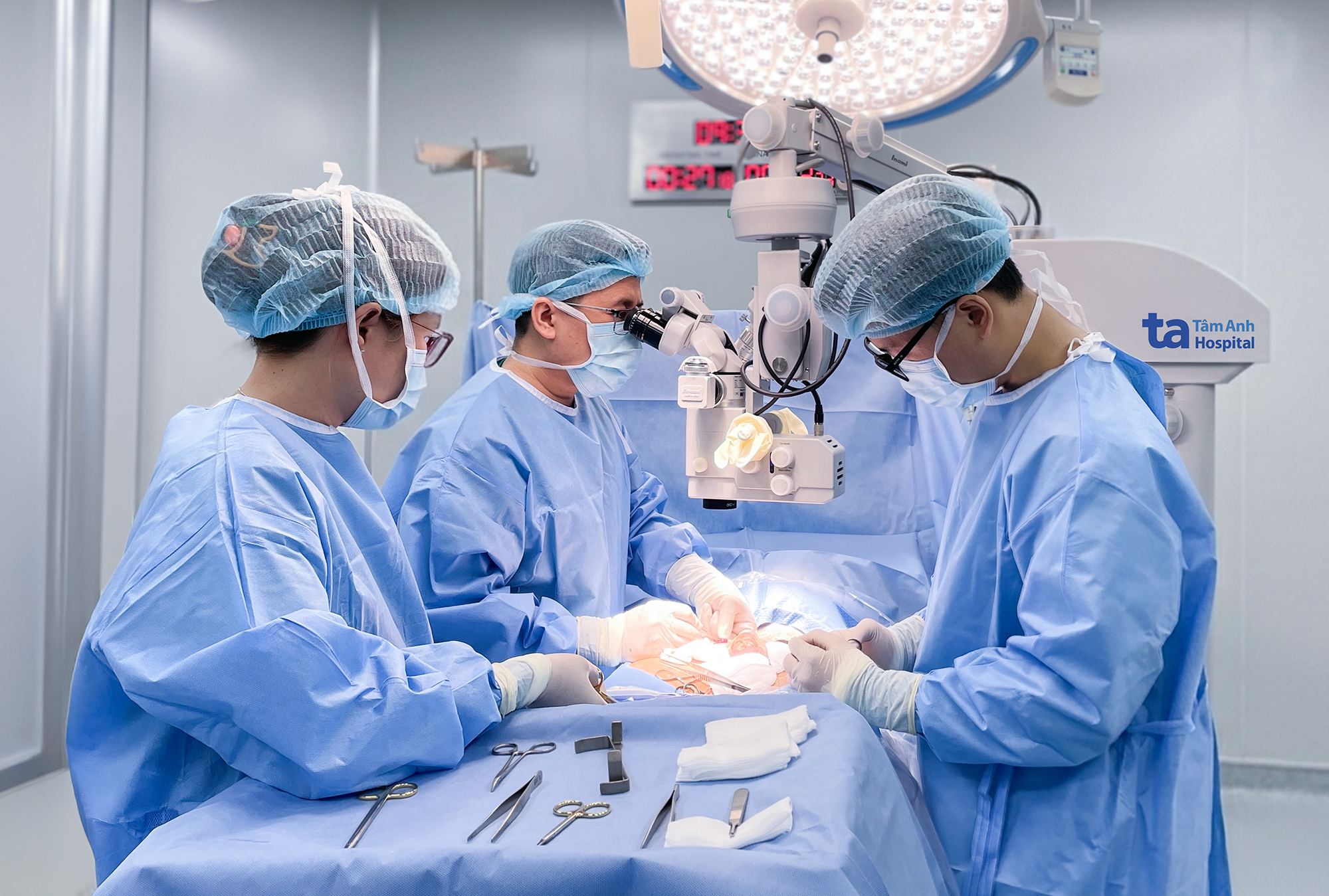 |
Dr. Huy (center) performs micro-TESE surgery to retrieve sperm. *Photo: Tam Anh General Hospital - District 8*
However, individuals with Klinefelter syndrome face a higher risk of producing embryos with genetic abnormalities compared to the general population. Minh's testes showed scattered areas of immature sperm cells, suggesting ongoing spermatogenesis. Consequently, doctors recommended additional hormone therapy and a second surgery to enhance his sperm reserve and maximize the chances of successful future conception.
Minh underwent a period of observation and support for immature sperm development within his testes for at least 6-12 months, allowing testicular tissue to recover before the second micro-TESE procedure. During this interval, Dr. Huy prescribed hormone-regulating medication to stimulate sperm production. Minh also received guidance on lifestyle modifications, including adequate sleep, stress reduction, maintaining a healthy weight, moderating alcohol and tobacco use, and avoiding prolonged scrotal exposure to high temperatures from sources like excessively hot baths or frequent saunas.
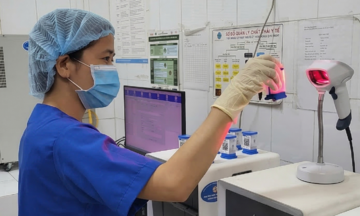
In early March, Minh underwent his second surgery. Utilizing a microsurgical microscope with 30x magnification, Dr. Huy meticulously located potential seminiferous tubules. These were then transferred to an adjacent laboratory, where embryologists carefully dissected the tissue under a microscope to identify sperm. After 90 minutes, a sufficient quantity of sperm was retrieved to fertilize 5-8 oocytes, which were subsequently cryopreserved. This reserve is expected to provide Minh with enough sperm for in vitro fertilization (IVF) when he marries in the future.
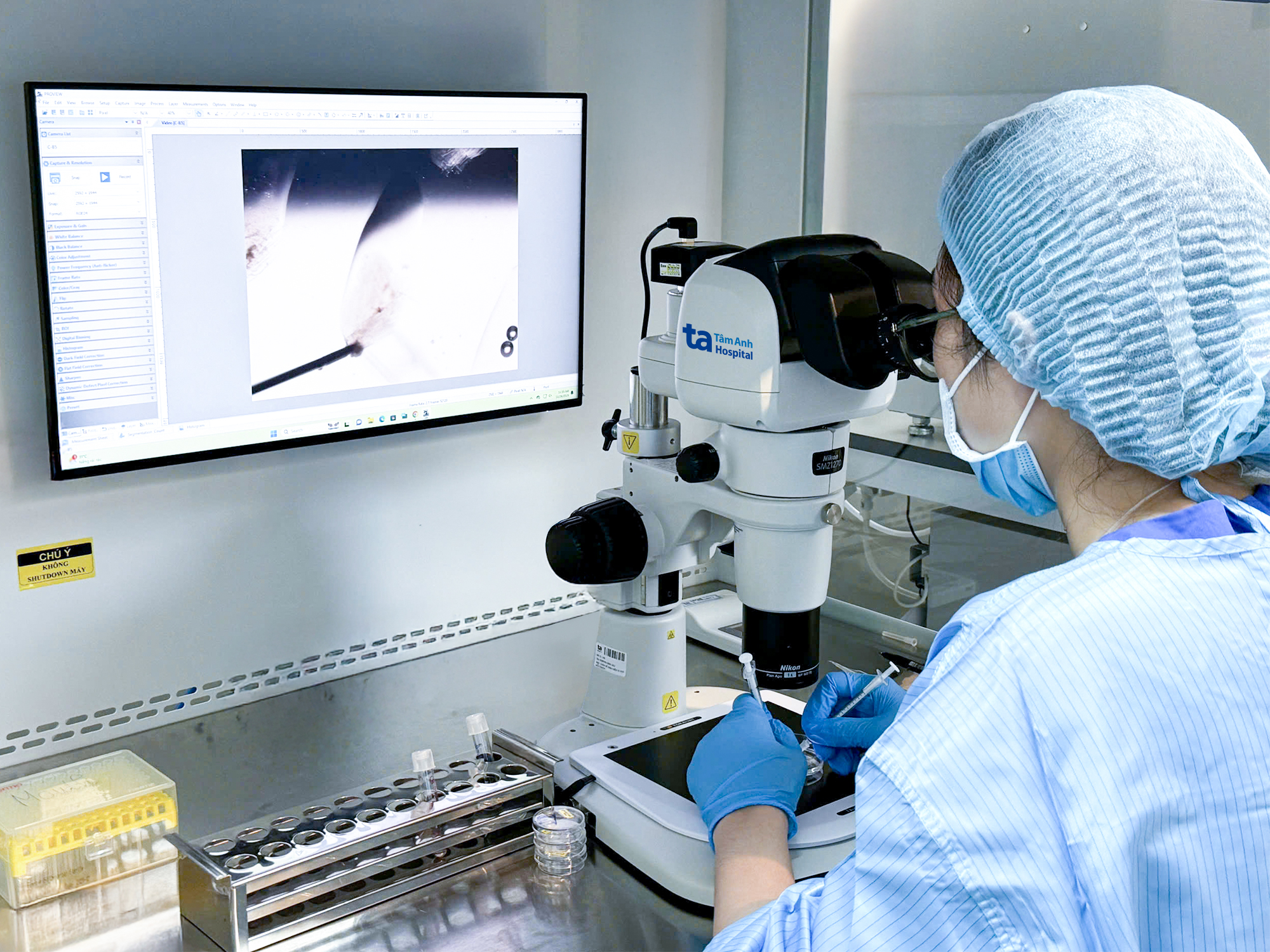 |
An embryologist dissects tissue samples to locate sperm for Minh. *Photo: Tam Anh General Hospital - District 8*
Dr. Huy stated that Klinefelter syndrome is a genetic cause of male infertility, impacting approximately one in 500 to 1,000 men. The condition arises from the presence of an extra X chromosome, most frequently presenting as a 47 XXY karyotype. Most cases remain undiagnosed until adulthood, when men seek medical attention for infertility.
Doctors advise men with abnormally small testes, delayed puberty, or reproductive concerns to seek early medical evaluation. Advances in modern microsurgical and assisted reproductive techniques now offer many patients the opportunity to father their own biological children.
Dinh Lam
*Character's name in the article has been changed.*