Answer:
Uterine polyps are common gynecological lesions affecting women of reproductive age. These benign growths of the uterine lining typically appear in the uterine cavity or cervix. Most polyps are small and asymptomatic, often detected incidentally during ultrasound or hysteroscopy. However, some can cause abnormal uterine bleeding or affect fertility, making their management crucial for in-vitro fertilization (IVF) success.
Optimizing uterine lining conditions is essential for successful IVF embryo transfer. If the uterus contains very small polyps (under 5 mm) that do not distort the uterine cavity or cause symptoms, doctors may consider monitoring instead of immediate intervention, particularly for older patients or those requiring early embryo transfer. However, this decision needs to be individualized, based on a patient's history of IVF failures, embryo quality, uterine lining characteristics, and other associated factors.
Doctors typically recommend removing polyps before embryo transfer when they are 1 cm or larger, numerous, located at the uterine fundus, near the fallopian tube openings, or if the patient has a history of unexplained failed embryo transfers.
 |
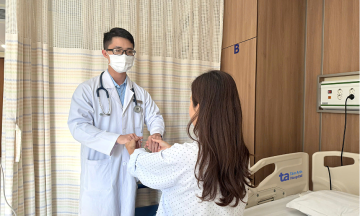
An IVF doctor at Tam Anh is consulting with a couple. *Illustrative photo: Tam Anh General Hospital*
Polyp removal is typically performed using minimally invasive hysteroscopy, a short procedure lasting approximately 15-30 minutes, allowing for same-day discharge. Hysteroscopy not only removes polyps but also enables doctors to comprehensively assess the uterine cavity, detecting and promptly addressing other abnormalities such as uterine adhesions or chronic endometritis. Following surgery, embryo transfer can proceed after one to two menstrual cycles, once the uterine lining has recovered stably.
It is important to note that not all polyp-like lesions are entirely benign. A small percentage of polyps can be associated with endometrial hyperplasia or precancerous lesions, particularly in older women or those with risk factors. Therefore, polyp removal and subsequent histopathological examination not only enhance pregnancy chances but also aid in diagnosing and screening for potential underlying conditions.
You should consult directly with your treating doctor for a specific assessment. Based on the polyp's size, location, your treatment history, and your IVF plan, the doctor will advise whether to remove the polyps first or proceed directly with embryo transfer to ensure both effectiveness and safety.
Doctor, Level I Specialist Phan Ngoc Quy
Reproductive Support Unit
Tam Anh Cau Giay General Clinic