Hung, who frequently suffered from neck, shoulder, and back pain due to prolonged sitting at work, visited a massage facility in Ho Chi Minh City for a spinal adjustment to alleviate pain and improve posture. Following the session, he suddenly experienced occipital headaches, dizziness, and temporary blurred vision. When his symptoms worsened, leading to a loss of balance while walking, he sought examination at Tam Anh General Hospital Ho Chi Minh City.
Dr. Nguyen Thi Minh Duc, Head of the Neurology Department at the Neuroscience Center, reported that Hung was conscious but showed signs of balance disorder. A 3 Tesla brain MRI, combined with a survey of the cerebral and cervical vascular systems, revealed a right vertebral artery dissection. This had formed a thrombus, causing a mild brainstem infarction.
According to Dr. Minh Duc, the vertebral artery is a critical blood vessel supplying the brain. These arteries run along both sides of the cervical spine, merging to form the basilar artery, which provides blood to the brainstem, cerebellum, and posterior brain regions. These areas control essential life functions such as movement, balance, respiration, swallowing, and consciousness.
"When the neck is forcefully twisted or rotated, the artery's inner lining can tear, allowing blood to enter the arterial wall and cause dissection", Dr. Duc explained. She added that this injury narrows the vessel lumen, obstructing blood flow to the brain or forming a blood clot. These clots can travel with the bloodstream, blocking cerebral arteries and leading to acute ischemic stroke.
Thanks to timely detection, Hung responded well to medical treatment with antithrombotic medication and close monitoring. Following treatment, his symptoms significantly improved, and he made a good recovery, avoiding severe neurological complications.
 |
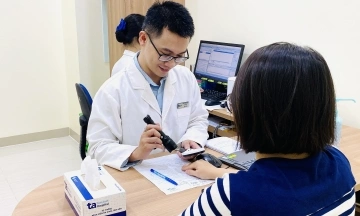
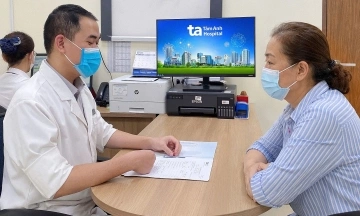
Dr. Minh Duc checks Hung's muscle strength and assesses his recovery potential. *Photo: Tam Anh General Hospital* |
According to the American Stroke Association (ASA), arterial dissection accounts for approximately 2% of all stroke cases. Initial symptoms of vertebral artery dissection are often easily overlooked. Patients may experience one-sided neck pain, occipital headaches, dizziness, blurred vision, tinnitus, or loss of balance for several hours to several days before the onset of a stroke.
Spinal adjustments may be appropriate in specific cases, provided they are indicated and performed by qualified professionals. Before any intervention, patients require a thorough assessment of their medical history, risk factors, and vascular condition.
Dr. Minh Duc advises against self-manipulation of the neck or performing neck twisting and rotating techniques at massage or spa facilities without medical expertise. If individuals experience unusual neck pain, persistent headaches, dizziness, loss of balance, or blurred vision, they should visit a hospital for timely diagnosis and treatment to avoid the risk of stroke and long-term complications.
Trong Nghia
*Patient's name has been changed
| Readers can submit questions about neurological conditions here for doctors to answer. |