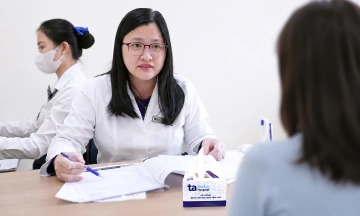
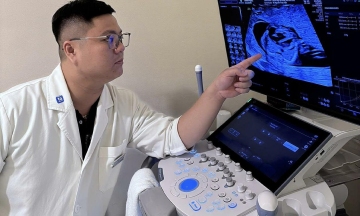
Ms. Diem's examination at Tam Anh General Hospital, TP HCM, revealed chronic thromboembolic pulmonary hypertension (CTEPH). This condition occurs when blood clots in the pulmonary arteries do not fully dissolve, eventually turning into fibrous tissue. These fibrotic lesions form bands, webs, or narrowed segments within the vessels, creating significant resistance to blood flow from the right side of the heart to the lungs. This resistance increases pulmonary artery pressure and places a heavy burden on the right ventricle.
CT angiography scans identified extensive lesions throughout both of the patient's lungs, affecting both large arterial branches and distant small ones. Associate Professor, Doctor Pham Nguyen Vinh, Director of the Cardiovascular Center at Tam Anh General Hospital, TP HCM, noted that the widespread nature of these lesions complicated the treatment strategy.
Currently, three primary methods exist for treating CTEPH: pulmonary endarterectomy (PEA), balloon pulmonary angioplasty (BPA), and medical therapy. Many cases necessitate a combination of these therapies rather than relying on a single approach.
Pulmonary endarterectomy is typically the primary choice if the lesions are surgically accessible. However, for Ms. Diem, numerous narrow and obstructed segments were located in the distal pulmonary artery branches, which the medical team determined were unsuitable for surgery. She was prescribed anticoagulants to prevent new blood clots and medication to manage pulmonary hypertension. Despite this, medication does not directly remove the fibrotic lesions that cause narrowing or obstruction within the pulmonary arteries. "If blood flow through the obstructed pulmonary artery branches is not improved soon, the heart will enlarge and weaken," Associate Professor Vinh stated.
The team opted for balloon pulmonary angioplasty (BPA). Instead of open surgery, doctors guide wires and specialized balloons through blood vessels to the narrowed pulmonary artery branches. Doctor Vu Nang Phuc, from the Cardiovascular Center at Tam Anh General Hospital, TP HCM, explained that this is a specialized interventional technique, optimal for patients whose lesions are unsuitable for surgery. This technique is currently implemented in only a few cardiovascular centers in Vietnam.
The patient's pulmonary vascular resistance measured 5,5 WU, a significantly elevated level that forced the right side of her heart to work under immense pressure to pump blood through the lungs. Given the widespread distribution of lesions in both lungs, the team devised an intervention plan comprising three stages, sequentially addressing groups of pulmonary artery branches based on their anatomical location. According to Doctor Phuc, dividing the intervention into stages enhances the safety of the procedure, allowing the team to manage complications effectively if they arise.
During the first session, doctors prioritized ballooning to dilate some branches in the lower lobe of the right lung. "I feel much easier to breathe," Ms. Diem said while still on the operating table. She received local anesthesia, remained conscious during the procedure, and was discharged after 48 hours.
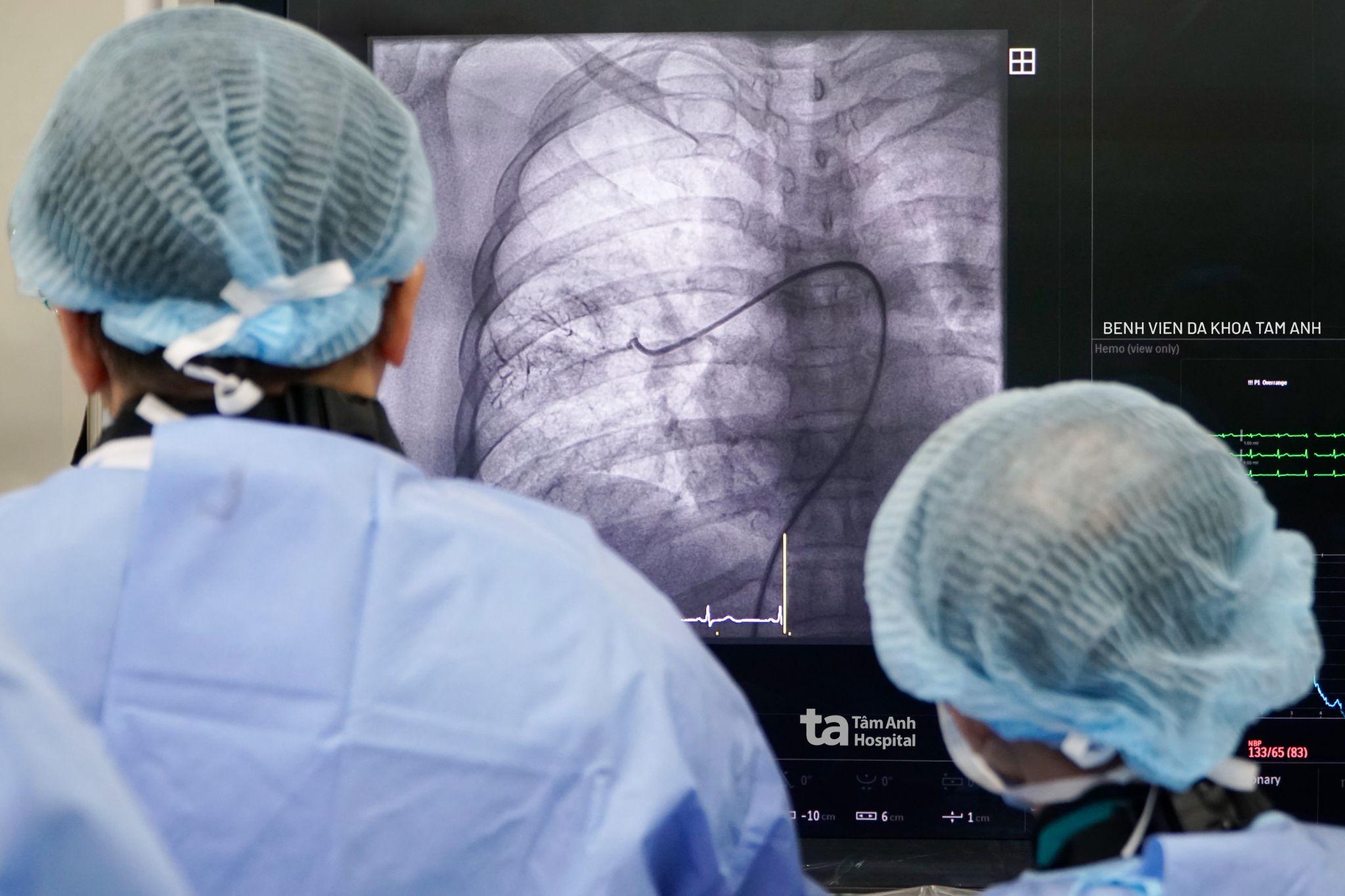 |
Dr. Phuc (left) and his team intervene to clear obstructed pulmonary artery branches with the support of a digital subtraction angiography (DSA) system. *Photo: Tam Anh General Hospital* |
After one month, the team proceeded with the second session, targeting the pulmonary artery branches in the left lung. Subsequently, the patient underwent the third session, focusing on the remaining narrowed and obstructed branches in the right lung. Following the three interventions, Ms. Diem's pulmonary vascular resistance decreased to approximately 2 WU, demonstrating significant improvement in pulmonary hemodynamics. Many previously narrowed or obstructed pulmonary artery branches were widened, and blood flow through the lungs improved significantly. She continues to take prescribed medication and has regular follow-up appointments to assess her symptoms, right heart function, and pulmonary hemodynamics.
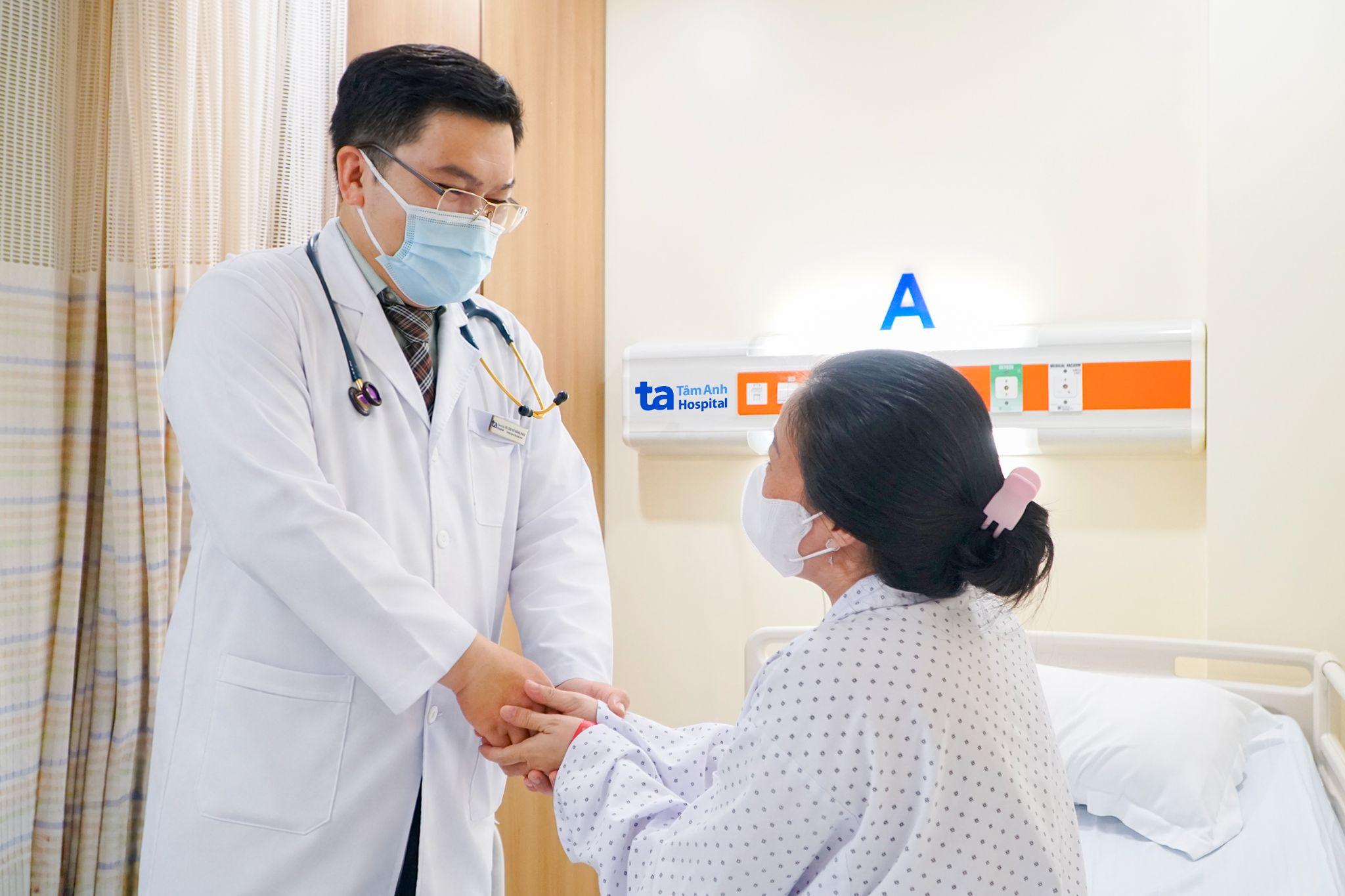 |
Ms. Diem thanks Dr. Phuc after the successful third intervention. *Photo: Tam Anh General Hospital* |
Chronic thromboembolic pulmonary hypertension (CTEPH) can occur after an acute pulmonary embolism, but not all patients have a clear history of it.
Doctor Phuc stated that CTEPH is a rare disease that can be overlooked due to non-specific symptoms. Patients experiencing persistent or worsening shortness of breath, rapid fatigue, and reduced exercise capacity should seek medical attention to determine the cause. Individuals who have been treated for pulmonary embolism but still experience shortness of breath or have not fully recovered their physical activity after several months should undergo re-examination to evaluate and rule out CTEPH.
Ngoc Chau
| Readers can submit questions about cardiovascular diseases here for doctors to answer |