Medical professionals recently issued a significant warning about the strong link between unhealthy sleep habits and cancer risk. Doctor Yu Ya-lan, Deputy Head of the Sleep Disorder Department at Xi'an Traditional Chinese Medicine Hospital (China), stated that sleeping less than 6 hours each night, staying up late without napping, and having irregular routines reduce melatonin levels in the body, potentially increasing cancer risk by up to 82%.
Doctor Yu Ya-lan further explained that prolonged sleep and activity rhythm disturbances not only cause fatigue but also directly push health towards cancer. Clinical studies show that within two years prior to a cancer diagnosis, most patients experienced a long period of severe sleep disorders. This highlights a very close relationship between sleep habits and the development of cancer cells.
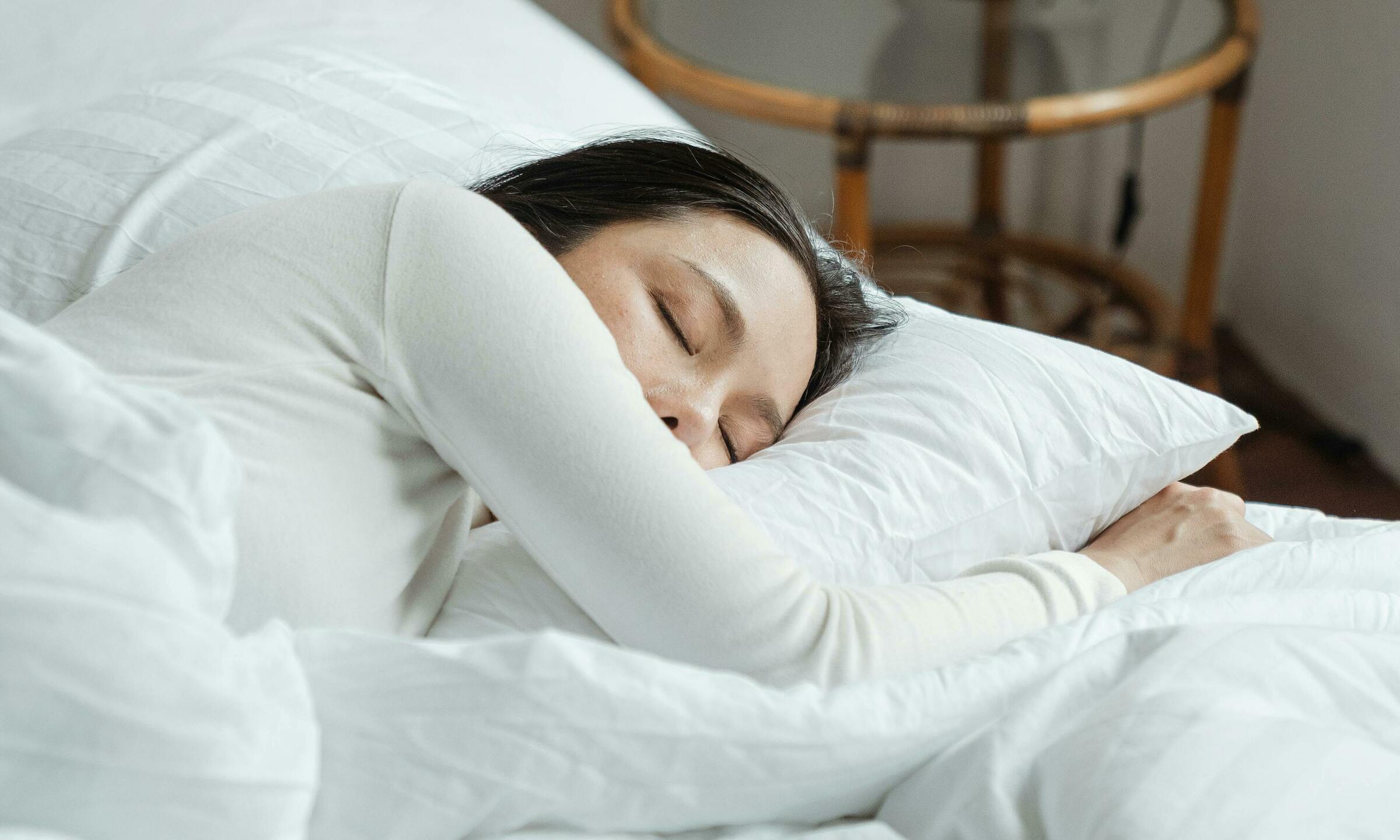 |
Individuals sleeping less than 6 hours each night have a 41% higher cancer risk than those with normal sleep. Photo: Pexels |
Among the habits requiring immediate adjustment, severe sleep deprivation is paramount. Research data indicates that people who sleep less than 6 hours each night have a 41% higher cancer risk compared to normal individuals, with this figure rising to 53% in women. The core reason lies in the reduction of melatonin, the body's natural antioxidant, leading to increased inflammation levels.
The second dangerous habit is staying up late with no midday nap. For those experiencing nighttime sleep deprivation, a midday nap acts as a small-scale repair process for the immune system. If a person frequently stays up late and does not compensate with a midday nap, their cancer risk can surge to 82%.
Finally, irregular routines and a disrupted circadian rhythm pose a risk. The International Agency for Research on Cancer (IARC) has classified night shift work, which involves "day-night reversal," as a Group 2A carcinogen. A broken circadian rhythm damages the function of tumor suppressor genes, accelerating the spread of cancer cells.
This view is echoed by many specialists. Doctor Huang Xuan cited studies indicating that a prolonged irregular lifestyle leads the body into a state of chronic inflammation. Doctors from Taipei Medical University Hospital also warned that sleeping less than 6 hours daily increases cancer risk by 41%. Meanwhile, Doctor Qian Zheng-hong emphasized that a disturbed circadian rhythm hinders melatonin metabolism, increasing the risk of liver cancer.
To mitigate declining health, a study published in the scientific journal Nature Communications recommends the optimal bedtime for preventing cardiovascular disease and promoting melatonin secretion is between 22:00 and 23:00. Individuals can start by going to bed 15 to 30 minutes earlier every 2 to 5 days to gradually achieve this goal.
Additionally, within 90 minutes before sleep, it is advisable to put away mobile phones and use blackout curtains or eye masks to prevent blue light from disrupting melatonin secretion. During the day, it is recommended to get about 30 minutes of sun exposure at two times: before 10:00 and after 16:00. This should be combined with moderate exercise to strengthen the circadian rhythm, but high-intensity training should be avoided within 2 to 3 hours before bedtime.
My Y (According to Yahoo TW)