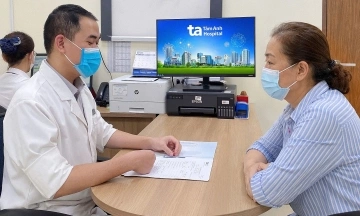
Yen's condition was diagnosed at Tam Anh General Hospital, TP HCM. Ultrasound results revealed a thyroid tumor on his left side, extending to the central part of the thyroid, causing a noticeable protrusion in his neck. The tumor measured 2x3,2x4 cm, with a volume of nearly 12 ml, about the size of a lemon. This significant growth led to symptoms like difficulty swallowing and neck deformity.
Dr. Nguyen Dang An, from the Center for Diagnostic Imaging and Interventional Radiology, highlighted the challenges of traditional treatment. He explained that open surgery might require removing part or all of the thyroid, leading to significant pain, longer recovery, and increased risks of bleeding and infection.
To address these concerns, doctors conducted a consultation and recommended radiofrequency ablation (RFA) treatment for Yen. This minimally invasive method precisely destroys the tumor while preserving maximum healthy thyroid tissue, thereby reducing the risk of hypothyroidism and hypoparathyroidism. RFA is particularly suitable for patients with contraindications to surgery or those who prefer a non-surgical option.
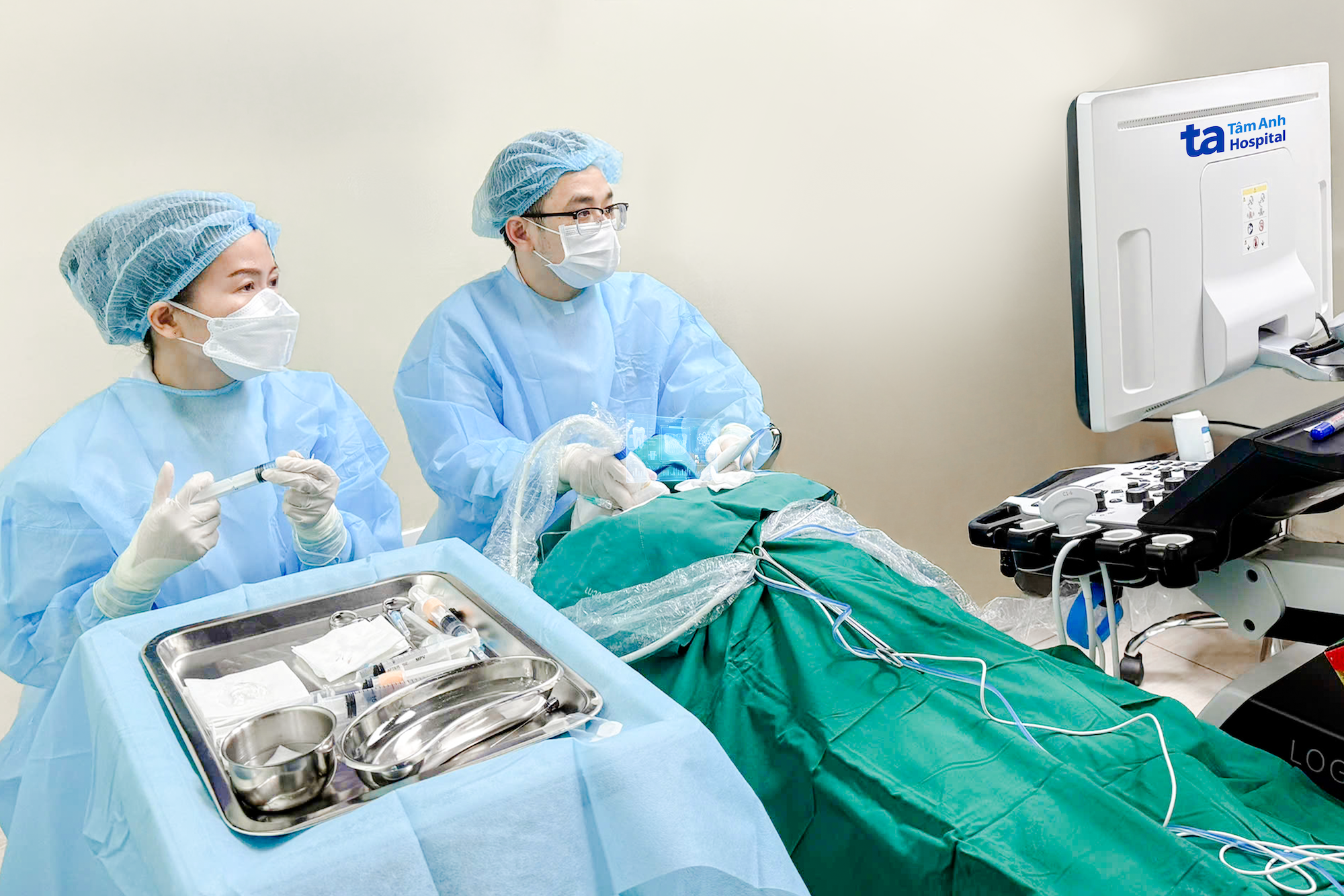 |
Dr. An (in blue, right) and his team perform radiofrequency ablation to destroy Yen's tumor. Photo: Tam Anh General Hospital |
The RFA procedure involved several key steps. After administering local anesthesia to Yen, the medical team used a hydrodissection technique to separate the tumor from surrounding vital structures. Next, a specialized needle was guided directly into the tumor under ultrasound, allowing the doctor to move and completely ablate the tumor.
Post-procedure ultrasound images confirmed that the tumor was completely treated, showing no remaining blood flow signals within it. During the procedure, Yen remained conscious and conversed with the doctor. He was discharged after one hour of monitoring.
Yen's recovery showed remarkable progress. After one month, the tumor had shrunk to approximately 4 ml. Six months later, it was only 0,35 ml, representing a reduction of over 97%. His neck appeared nearly normal, and he no longer experienced the sensation of obstruction or neck protrusion.
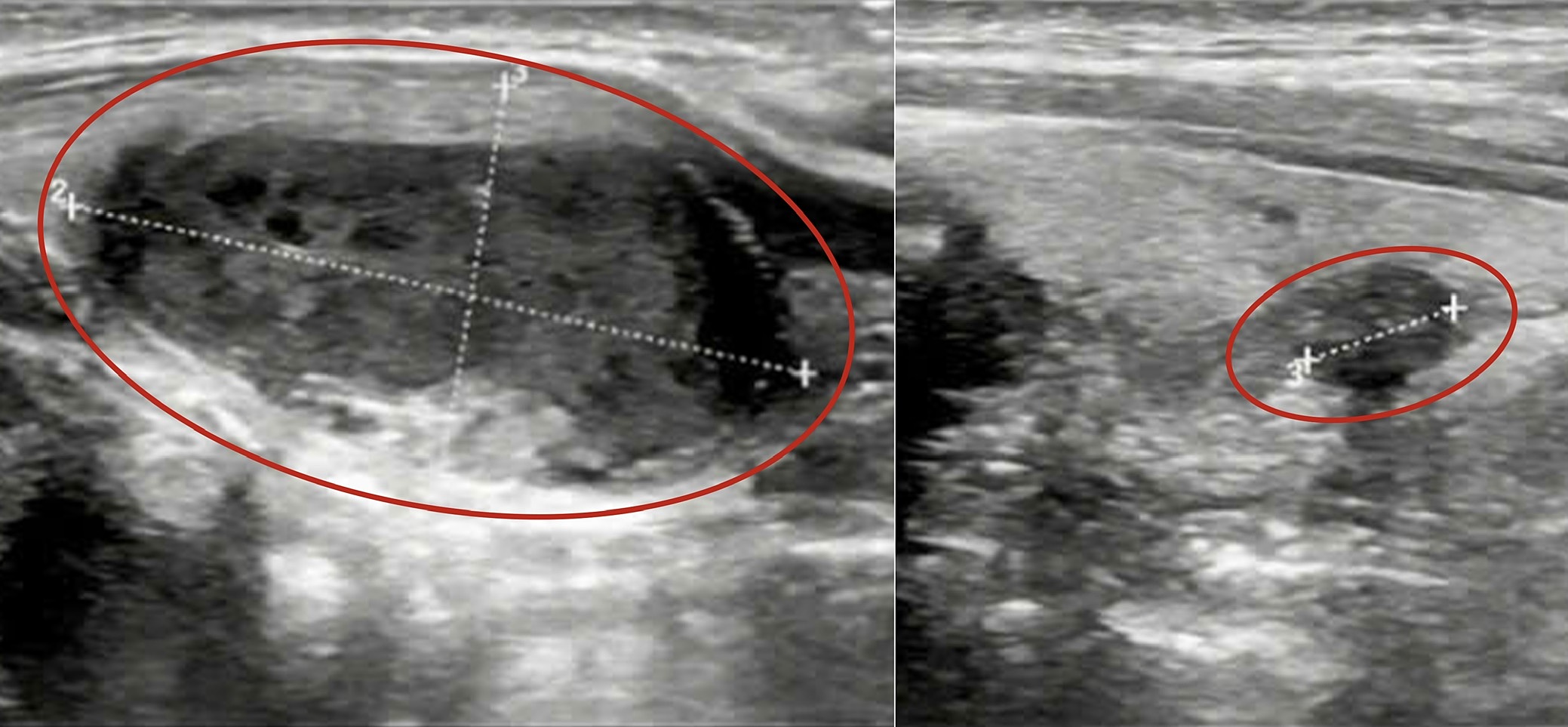 |
Yen's thyroid tumor before (left) and six months after (right) RFA, showing a 97% reduction in size. Photo: Tam Anh General Hospital |
Dr. An emphasized the growing prevalence of thyroid tumors, often discovered during routine health check-ups. While most are benign, large tumors can cause cosmetic concerns, difficulty swallowing, or compression in the neck area. He pointed out that RFA offers significant advantages over open surgery, which often leaves scars and affects thyroid function. RFA involves only a very small needle puncture through the skin, is minimally invasive, offers quick recovery, limits complications, and ensures cosmetic outcomes.
Nhu Ngoc
*Patient's name has been changed
| Readers can submit questions about cancer here for doctors to answer |