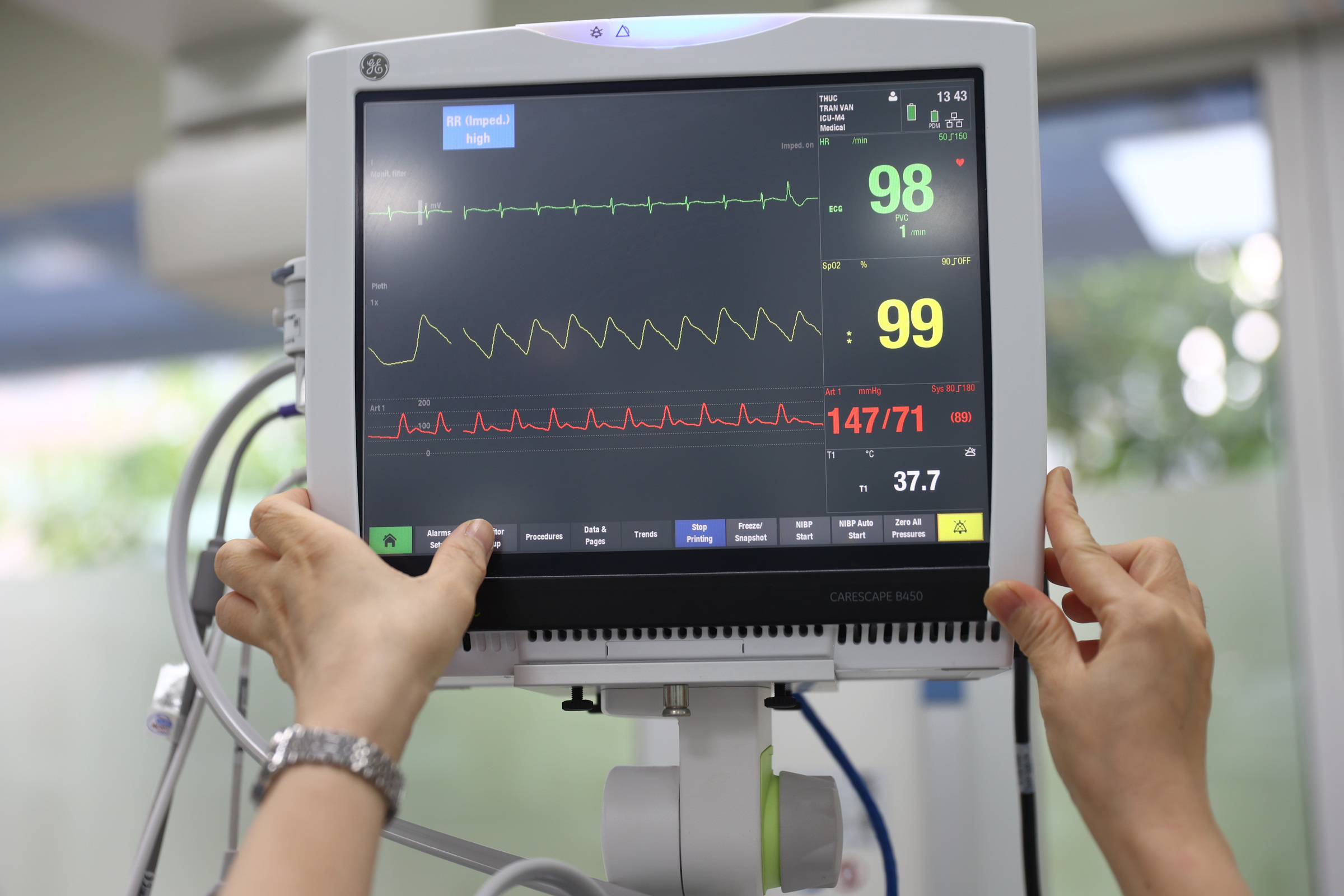
Doctor Tran Quan Nham, a cardiovascular internal medicine specialist from Taiwan, shared a case on a health program about a 39-year-old man. Despite his muscular physique and regular exercise, he suddenly collapsed and experienced out-of-hospital cardiac arrest (OHCA) while working out at his company gym.
After timely emergency treatment, test results revealed the patient suffered an acute myocardial infarction, with severe blockages in all three coronary arteries.
Doctor Nham stated that the traditional belief that only obese, sedentary individuals face "three highs" (high blood pressure, high blood sugar, and high blood lipids) is completely mistaken.
In the patient's case, his bad cholesterol (low-density lipoprotein or LDL) level reached 187 mg/dL, significantly exceeding the standard threshold of 130 mg/dL, while his good cholesterol (high-density lipoprotein or HDL) was only 37 mg/dL.
Another instance involved a woman in her 20s with a slender build whose LDL level also reached 220 mg/dL, necessitating medication to prevent early-onset heart disease.
According to Doctor Tran Quan Nham, about 70-80% of the body's cholesterol is produced by the liver and is closely linked to genetic factors; only about 20-30% comes from daily diet.
LDL (bad cholesterol): If excessive, it accumulates in blood vessel walls. Over time, these plaques narrow and block blood vessels, leading to stroke or myocardial infarction.
HDL (good cholesterol): It acts as a "scavenger vehicle", collecting excess cholesterol from peripheral blood vessels and transporting it back to the liver for processing.
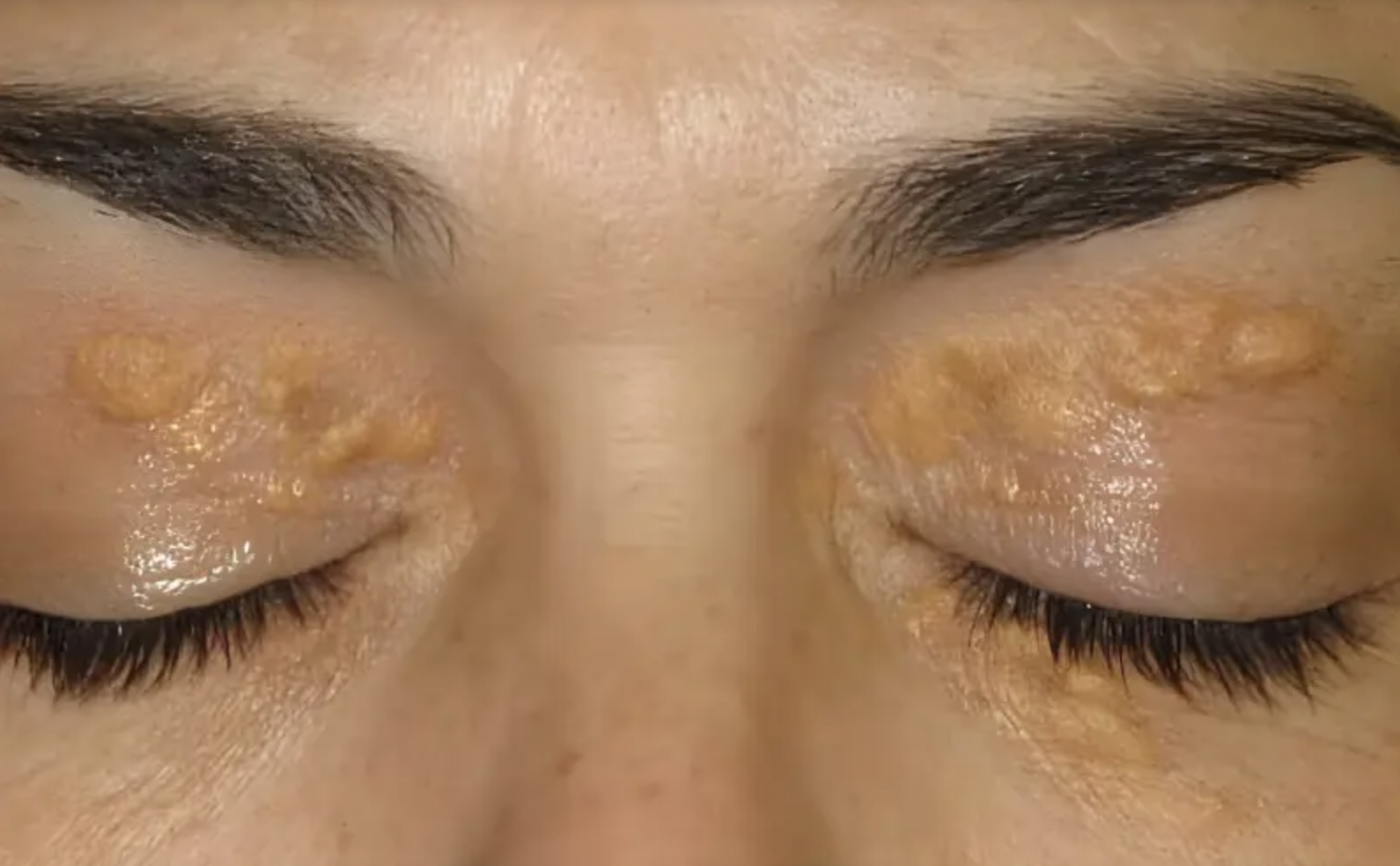 |
yellow plaques around the eyes are a manifestation of cholesterol deposits under the eyelid skin and can signal dyslipidemia and potential cardiovascular risk. Photo: Thien Thanh Eye Hospital |
Experts warn that when LDL levels become too high, the body emits visible signals, particularly on the face:
Earlobe creases
This sign indicates a gradual reduction in the body's elastic fibers, which is associated with arterial hardening.
Yellow plaques around the eyes (xanthelasma)
When cholesterol levels are so high that there is no longer room for accumulation, they deposit under the skin, forming yellow nodules or patches around the eyelids.
In more severe cases, patients may experience symptoms such as dizziness, heavy head sensation, and neck stiffness. Doctor Nham noted that even after cholesterol levels decrease with treatment, earlobe creases or yellow plaques around the eyes will not disappear on their own.
Therefore, if these signs are detected, individuals should promptly visit medical facilities for blood lipid checks to proactively prevent dangerous cardiovascular events.
My Y (According to SETN)