Eng English
China 中国人

Eng English
China 中国人
  • News
  • World
  • Business
  • Entertainment
  • Sports
  • Law
  • Education
  • Health
  • Lifestyle
  • Travel
  • Science
  • Digital
  • Automobiles
  • Trở lại Thể thao
  • Health
Saturday, 13/6/2026 | 11:01 GMT+7

When does a child with bronchiolitis need antibiotics?

My one-year-old has had bronchiolitis for over 10 days and is not recovering. Do I need to give my child antibiotics? (Mai Huong, Hanoi)

Bronchiolitis, an inflammation of the bronchioles—the smallest airways in the lungs—primarily affects children under two years old, especially those between two and six months of age. The main culprits are viruses such as respiratory syncytial virus (RSV), rhinovirus, and adenovirus. These viruses trigger inflammation, mucosal swelling, and excessive fluid production, narrowing the airways and leading to symptoms like wheezing, rapid breathing, and coughing.

The illness typically peaks between the third and fifth day. Most children show significant improvement within 7 to 14 days, though a cough can persist for two to four weeks in some cases. It is common for the illness to last longer than 10 days, as with your child, but this does not necessarily indicate a secondary bacterial infection. This extended duration can still be a normal progression of a viral illness.

Since antibiotics do not kill viruses, administering them for bronchiolitis will not help your child recover and may even cause harm. Doctors only consider antibiotics if there is clear evidence or strong suspicion of a co-existing bacterial infection, such as pneumonia or acute otitis media.

Signs that suggest a bacterial infection include a high fever of 39 degrees Celsius or higher, lasting for more than three days, or a fever that reappears after having subsided for several days. Other indicators are thick yellow or green phlegm, noticeable fatigue, significantly reduced feeding, and difficulty breathing. Severe bacterial infection symptoms may also be revealed through blood tests and X-ray imaging.

The primary treatment for bronchiolitis is supportive care, not antibacterial medication. Parents should use physiological saline solution nasal drops four to six times a day and gently suction their child's nose to keep the airways clear. Ensure the child drinks enough fluids or breastfeeds more frequently to thin mucus and prevent dehydration. Elevate the child's head during sleep to facilitate easier breathing. Administer paracetamol to reduce fever if it exceeds 38.5 degrees Celsius. Keep the room well-ventilated and moderately humid, while avoiding cigarette smoke and dry, cold air.

Parents should not independently administer cough suppressants, corticosteroids, or bronchodilator nebulizers without a doctor's prescription. These medications can cause adverse side effects or worsen the child's condition.
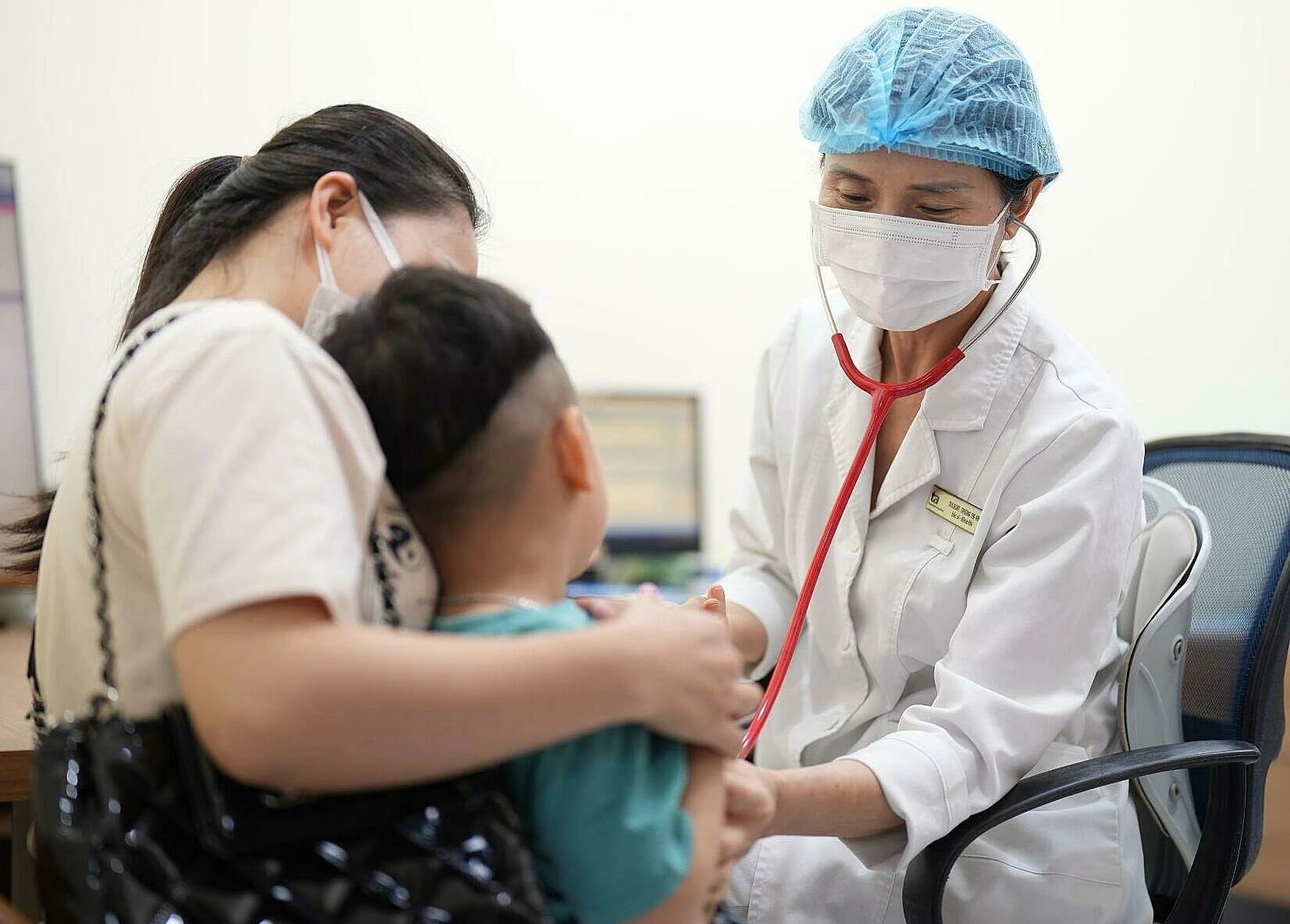
A doctor examines a child with a respiratory illness. Illustration: Tam Anh General Hospital

For a one-year-old with prolonged bronchiolitis, it is advisable to take your child to a medical facility for a lung examination. Do not delay seeking medical attention if your child exhibits signs of faster-than-normal breathing accompanied by chest retractions, nasal flaring, or refusing to feed. The most important actions are providing proper supportive care, closely monitoring for severe symptoms, and promptly seeking follow-up care or immediate medical consultation if any abnormalities arise to ensure a safe recovery.

Master, Doctor Nguyen Thi Huong

Department of Pediatrics

Tam Anh General Hospital Hanoi

Readers can submit questions about respiratory illnesses here for doctors to answer
By VnExpress: https://vnexpress.net/khi-nao-tre-bi-viem-tieu-phe-quan-can-dung-khang-sinh-5085267.html
Tags: respiratory infection childhood illness bronchiolitis

News in the same category

Foods to eat after 5 pm to help stabilize blood sugar

Foods to eat after 5 pm to help stabilize blood sugar

Low-starch vegetables, fiber-rich nuts, and fatty fish provide protein and healthy fats that can slow carbohydrate absorption.

Is urinary leakage in young women a sign of urinary tract disease?

Is urinary leakage in young women a sign of urinary tract disease?

I am 29 years old, have not given birth, and recently experience occasional urinary leakage when coughing forcefully or laughing loudly. Is this condition concerning, and is it a sign of urinary tract disease? (Minh Anh, Phu Tho)

Why is a full rabies vaccination regimen needed again?

Why is a full rabies vaccination regimen needed again?

Minh Dat from Gia Lai asks: "I completed my rabies vaccination after a dog bite 10 years ago. Now, after being bitten by a stray cat, I'm told I need a full five-dose vaccination regimen again. Why is this necessary?"

Doctor explains how to differentiate allergic rhinitis and sinusitis in summer

Doctor explains how to differentiate allergic rhinitis and sinusitis in summer

Prolonged hot weather interspersed with thunderstorms causes many to experience symptoms like sneezing, runny nose, and persistent nasal congestion, yet many mistakenly believe they have sinusitis and self-medicate, leading to complications.

Colitis and bloody stools: is it dangerous?

Colitis and bloody stools: is it dangerous?

I have colitis and recently experienced fresh blood in my stool. What causes this condition, and is it dangerous? (Chau, Dong Nai)

The dangers of overusing 'cooling drinks'

The dangers of overusing 'cooling drinks'

As temperatures rise, many are brewing herbal teas like gotu kola, black bean, or corn silk water daily, often replacing plain water entirely. However, health experts caution against this practice.

Signs of joint hypermobility

Signs of joint hypermobility

Joint hypermobility can cause pain, stiffness, reduced balance, and recurrent dislocations.

Long Chau reaches new milestone in pharmacy chain expansion

Long Chau reaches new milestone in pharmacy chain expansion

Long Chau has reached 2,678 pharmacies, helping to bridge the healthcare gap between urban and rural areas and improve access to medical products and services within communities.

Can low ovarian reserve be improved?

Can low ovarian reserve be improved?

My husband and I have been trying for a baby for three years, and my anti-Müllerian hormone (AMH) level is only 0.8 ng/mL. Can this be improved? (Mai, 35, Can Tho)

Hospitalized with acute pancreatitis after six days of fasting followed by binge eating

Hospitalized with acute pancreatitis after six days of fasting followed by binge eating

A young woman in China was urgently hospitalized with severe acute pancreatitis after adhering to a strict six-day fasting regimen followed by uncontrolled binge eating on her "cheat day".

Eng English
China 中国人
  • News
  • World
  • Business
  • Entertainment
  • Sports
  • Law
  • Education
  • Health
  • Lifestyle
  • Travel
  • Science
  • Digital
  • Automobiles
FPT Tower, 10 Pham Van Bach Street, Dich Vong Ward,
Cau Giay District, Hanoi, Vietnam
Email: contacts@vnportal.net
Tel: 028 7300 9999 - Ext 8556
Advertise with us: 090 293 9644
Register
© Copyright 2026 vnnow.net. All rights reserved.
Terms of use Privacy policy Cookies