 |
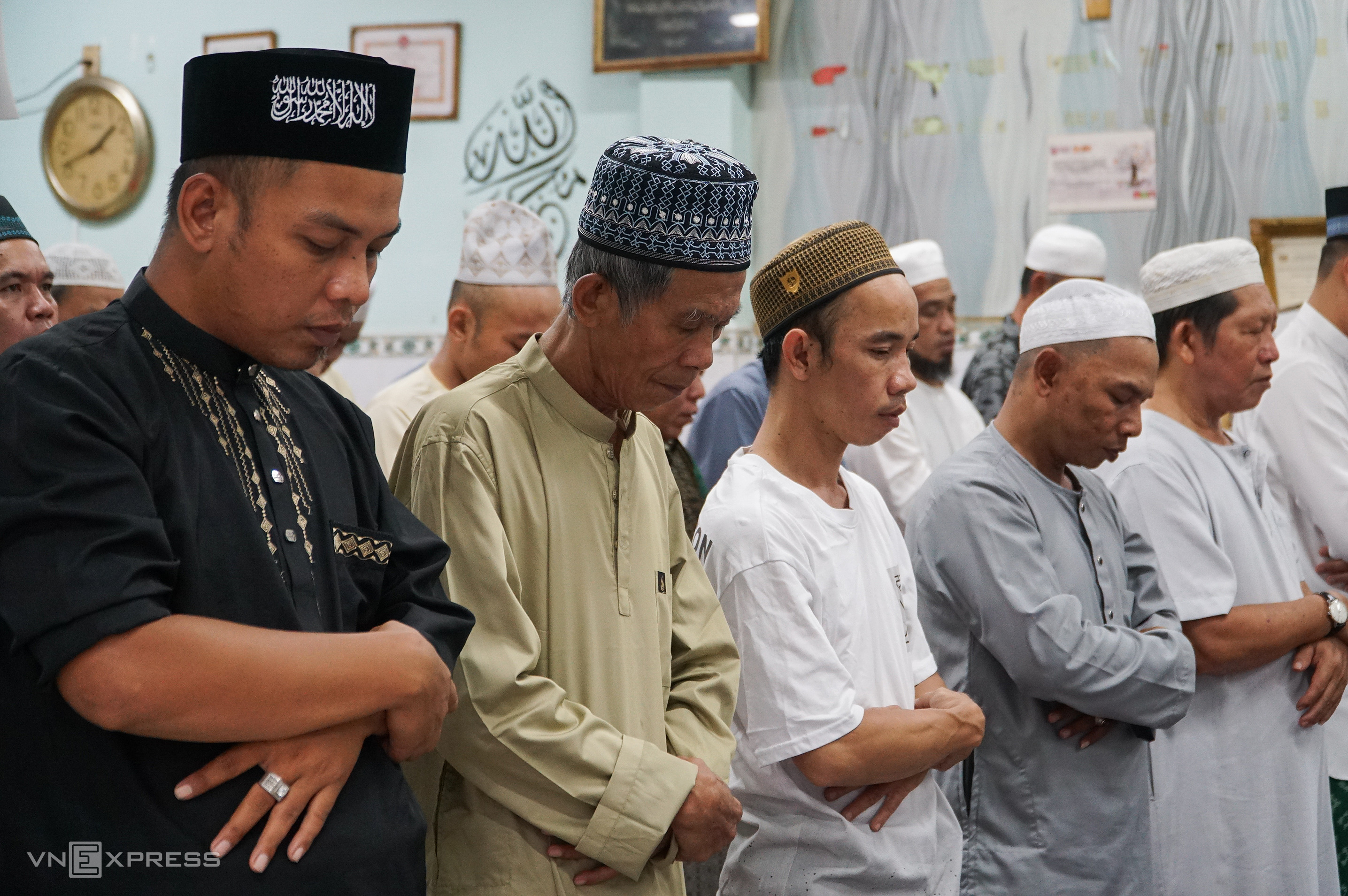
The ceremony lasted about one hour, attracting not only followers from the parish but also from many other areas. Due to the large crowd, the mosque utilized its upper floors and live-streamed the service so everyone could participate in the prayers. |
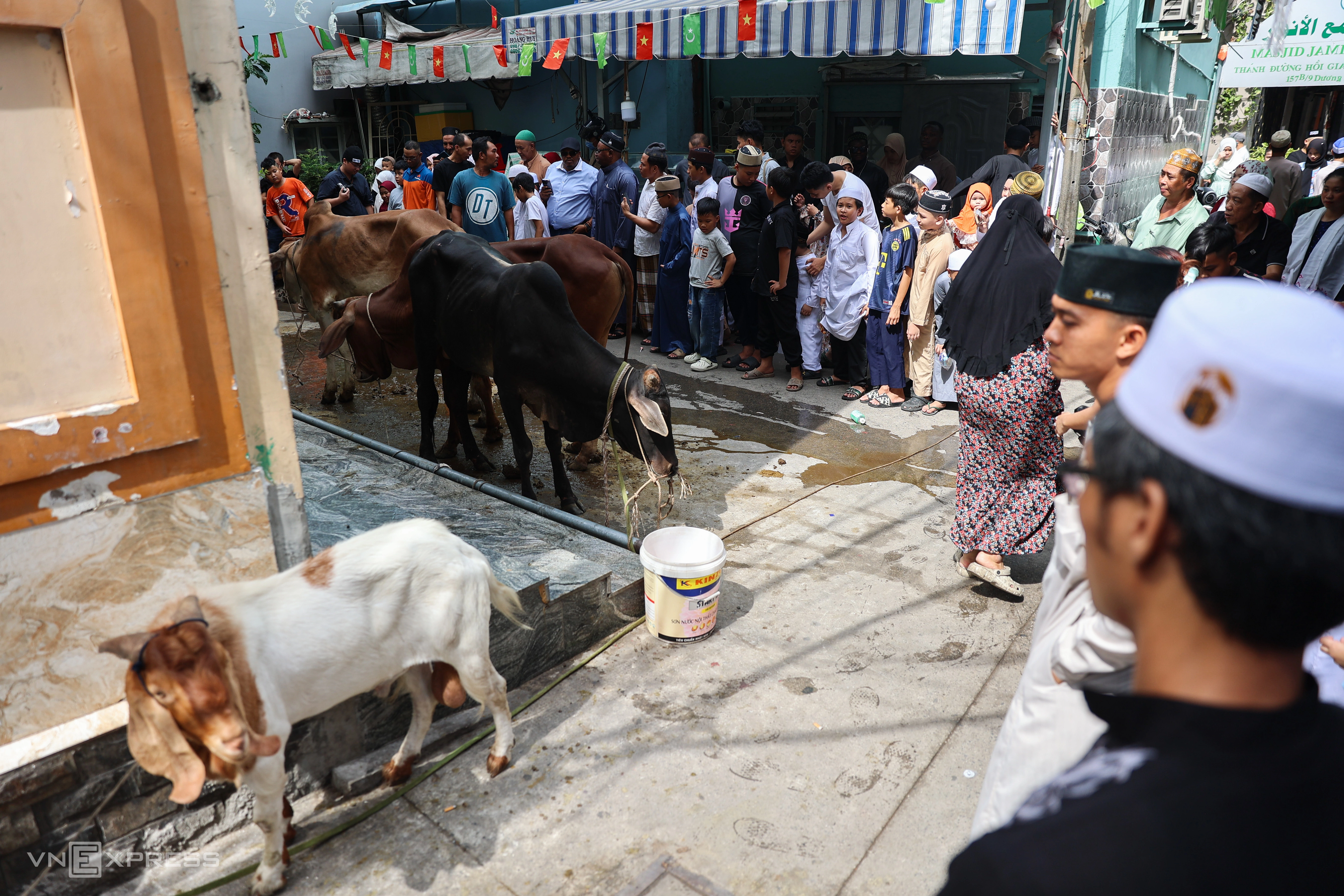
Hundreds of Cham people residing in alley 157 Duong Ba Trac began gathering on the street at 9 am to celebrate Raya Idil Adha. This alley is home to a community of 3,000 Muslims, making it the largest among Ho Chi Minh City's 16 parishes. Most residents in the area trace their origins to Chau Doc, An Giang, having migrated to Ho Chi Minh City in the 1960s.
Raya Idil Adha, also known as Eid al-Adha or the Feast of Sacrifice, is a major holiday considered the Lunar New Year for Muslims. It commemorates the devotion of Prophet Ibrahim (Abraham), who demonstrated his obedience to Allah and was blessed with divine grace and good fortune.
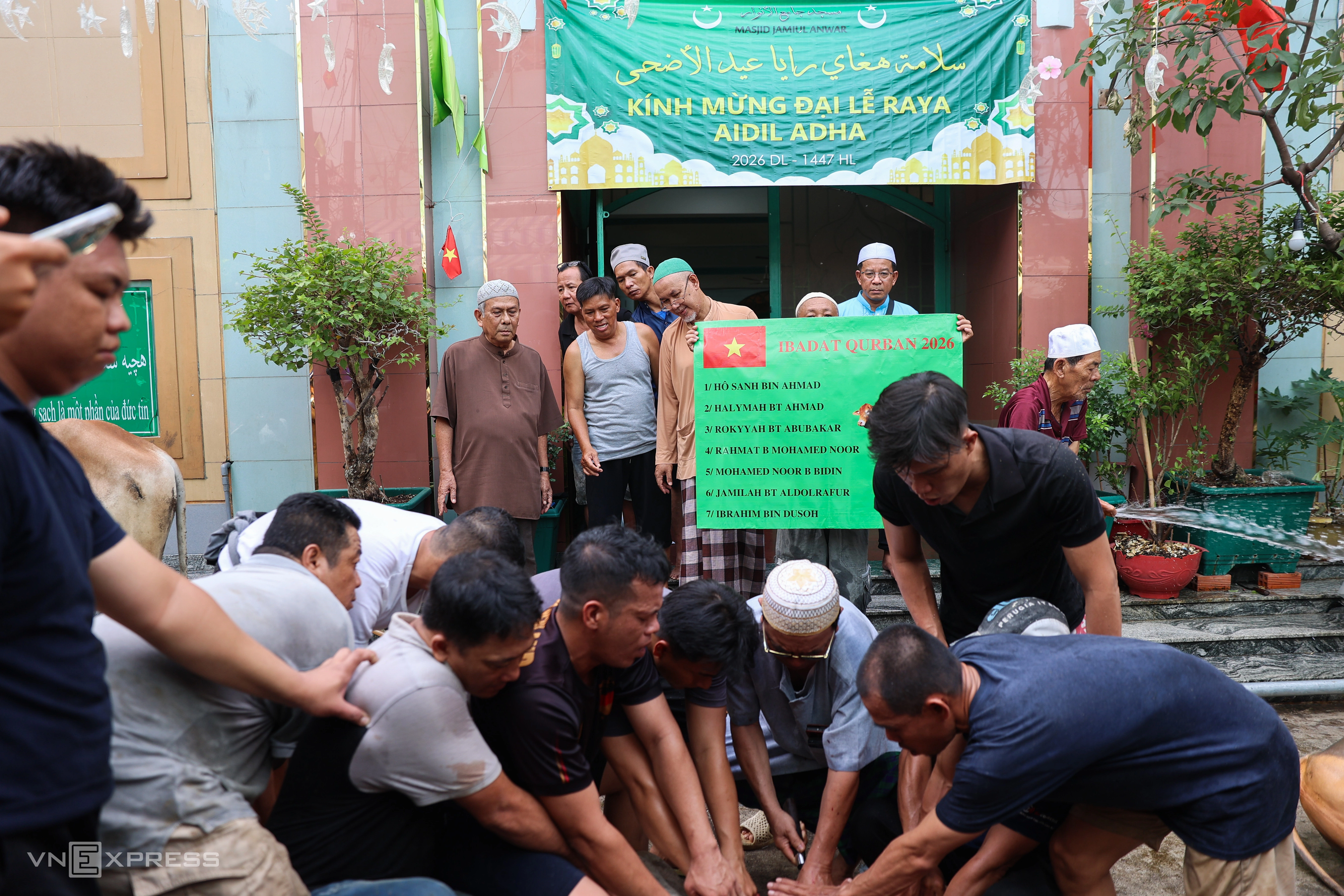
During Raya Idil Adha, the ritual sacrifice of cattle, cows, and sheep is performed to reenact Prophet Ibrahim's willingness to sacrifice his son at God's command. Haji Kim So, 75 years old, an elder and head of the Anwar parish management board, reported that this year, the community sacrificed 5 cows, 2 goats, and one sheep. These animals are thoroughly cleaned before the ritual. "The core meaning of the faith is obedience, absolute belief, and charity," the elder stated.
Around 9 am, following the ceremonies inside the mosque, the sacrifice ritual commenced with the slaughtering of the animals. During the rite, participants recite prayers for the animals. Additionally, community representatives hold a board to acknowledge those who donated animals for the sacrifice. The meat from the sheep, goats, and cows is then divided among households within the parish and distributed to disadvantaged individuals, embodying the spirit of charity, solidarity, and humanity central to Islam.
 |
Children often receive lucky money during Raya Idil Adha. While not a traditional Cham cultural practice, it has long been popularized through integration with other resident communities. |
Before the sacrifices, worshipers gathered for early morning prayers at the Jamiul Anwar Mosque. Only men are permitted to attend ceremonies inside the mosque, while women are only allowed during the month of Ramadan. These prayers are an essential part of the Raya Idil Adha celebration.
Following the ceremony, residents in the alley exchanged greetings and well wishes. Families gathered for reunions, visited relatives, and shared food with members of the community facing hardships.
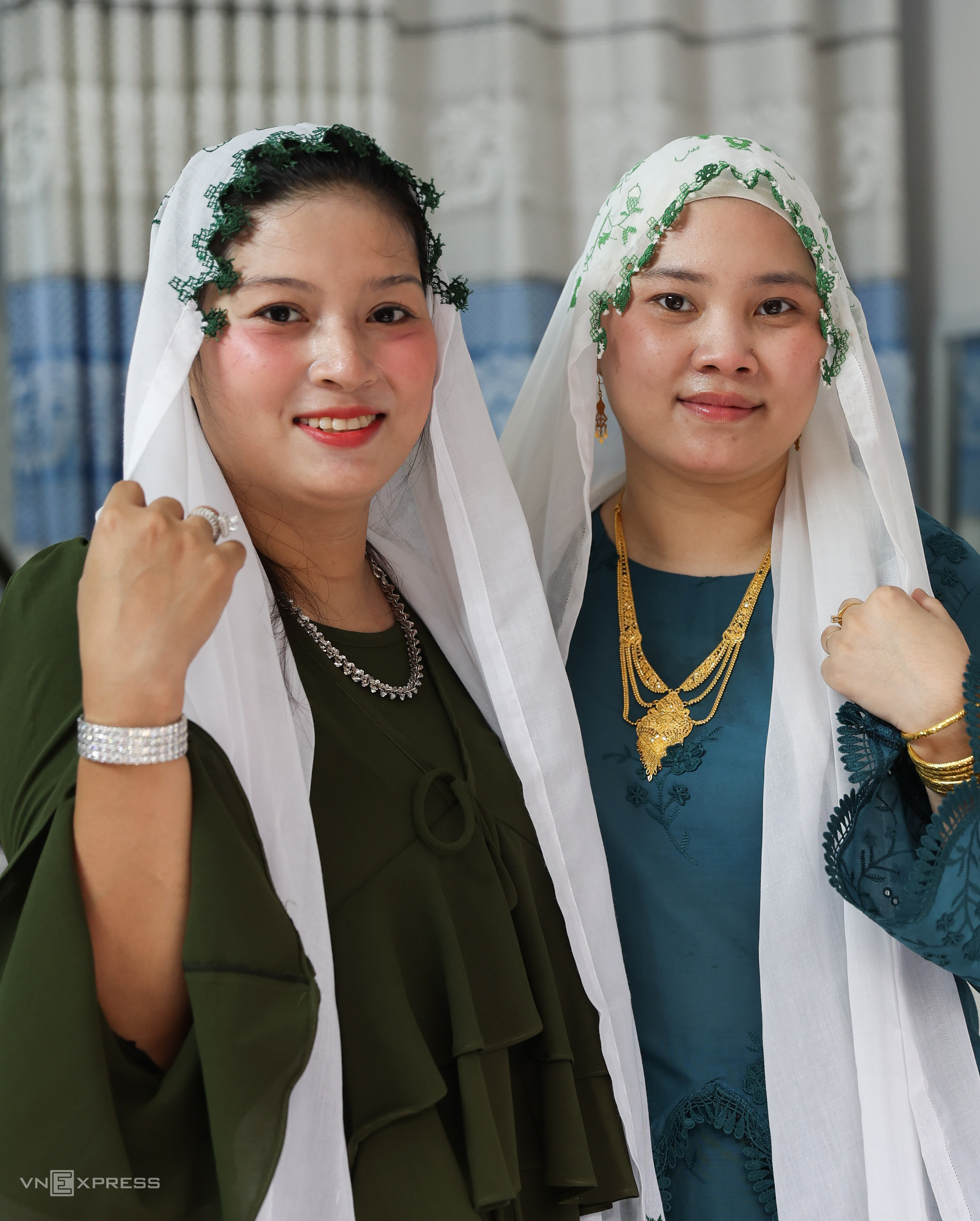
On this occasion, Muslims, especially women, don their newest and finest attire. They stroll through the streets, visit one another, and take commemorative photos. Azi, 14 years old, wearing a traditional Cham ao dai, immersed herself in the festive atmosphere of the alley. "For Muslims, this is the happiest day of the year," she remarked.
 |
Nur Ay Nii's family took a commemorative photo by the mosque. According to her, everyone, no matter how busy, makes an effort to reunite with family on this occasion.
 |
Nur Ha Lili's family (far left) took a photo with an "Eid Mubarak" sign, meaning "Happy Raya festival," displayed outside their home.
The Cham Muslim community in Ho Chi Minh City numbers approximately 10,000 people. Each area forms a village centered around a mosque (Masji Surau). At the city level, the Cham community has established a Muslim Community Representative Board, which is officially recognized by the authorities.
Quynh Tran