Unlike whole cuts, which are protected by an outer membrane, ground meat degrades faster. According to chef Vu Nhat Thong, founder of Eric Vu Cooking Class, tearing the meat into countless tiny fibers allows bacteria to penetrate and multiply deep inside, rather than just on the surface.
Processing tools like grinders, knives, and cutting boards also inadvertently introduce bacteria from the external environment into the center of the meat.
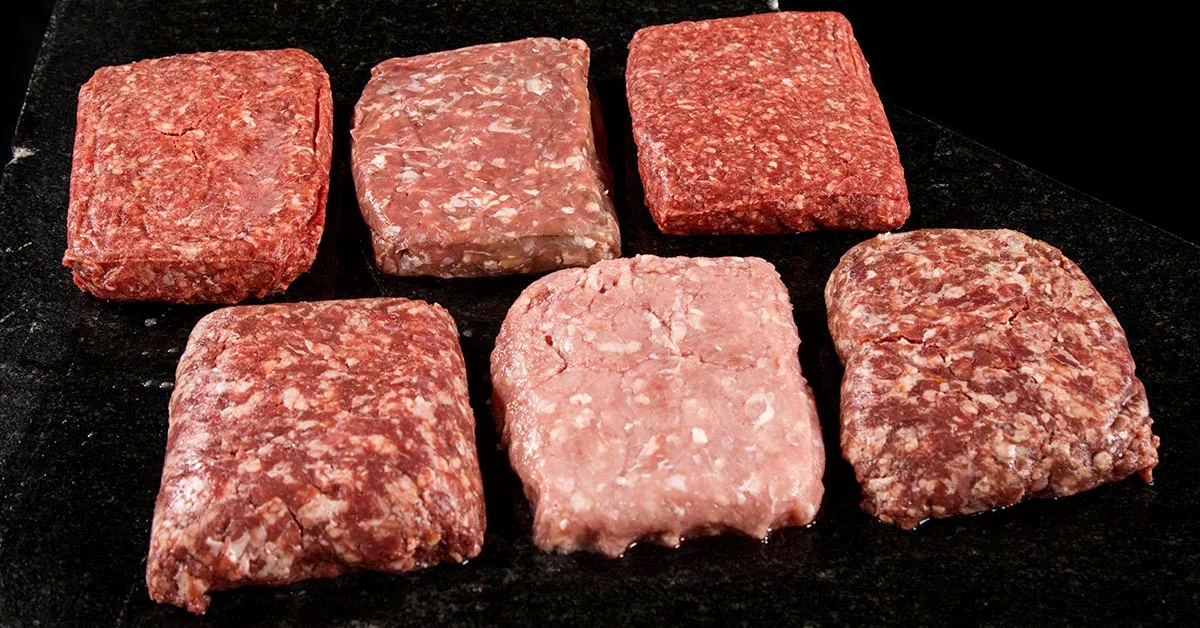 |
Portion ground meat into meal-sized amounts and flatten for storage. *Photo: Whiteoakpastures* |
Many mistakenly believe that storing meat in the refrigerator's fresh compartment is completely safe. In reality, a refrigerator is not a vacuum; it contains continuously circulating air with oxygen. For whole cuts, this oxygen only affects the outer surface. However, with ground meat, oxygen penetrates every gap between the meat fibers.
The presence of oxygen in the refrigerator leads to two consequences. First, it sustains and promotes the proliferation of aerobic bacteria. Second, oxygen directly causes fat oxidation, making the meat rancid and giving it an off-flavor. Simultaneously, this oxidation also transforms myoglobin, the pigment responsible for meat's fresh red color, into metmyoglobin, causing the meat to quickly turn grayish-brown and appear less fresh.
Due to its highly perishable nature, ground meat cannot be stored by simply tossing a large block into the freezer. To maintain a safe dormant state, preserve freshness, and shorten cooking time, chef Vu Nhat Thong suggests a four-step process:
Portioning
Determine the right amount of meat for one meal (around 150-200 grams) and divide it accordingly. This practice helps home cooks thaw only the necessary amount, preventing refreezing leftovers, which leads to nutrient loss and cross-contamination.
Flattening in a zip bag
Instead of rolling the meat into a ball, place it in a specialized zip bag and flatten it into a thin, flat sheet about 1-2 cm thick. This shape allows the meat to expose well to cold air, freeze quickly, and limit the formation of large ice crystals that can damage meat cells. Thin meat also thaws faster and can be stacked neatly to save freezer space.
Removing air
Residual air causes "freezer burn", making meat dry, tough, and prone to white spots. Users should zip the bag, leaving a small opening, then smooth it from the bottom up or submerge the body of the bag in a basin of water (without letting water enter the opening) so that water pressure pushes out all the air before sealing tightly.
Labeling
Use a permanent marker to clearly write the type of meat and freezing date on the bag. Labeling helps with quick identification and strict control over shelf life, preventing food from being stored for too long.
Bao Nhien