This year, People's Armed Forces Hero Ngo Thi Hue turns 87, while her partner, Tran Viet Tri, is nearly 90. Every day, she personally cooks and purees porridge, having it transported from her home on Tan Lap 2 Street, Hai Chau Ward, to Da Nang C Hospital, where he is undergoing treatment, because, as she says, "he only eats when I am there".
The couple's enduring bond was forged during the intense years of the Vietnam War. From 1959 to 1962, Ngo Thi Hue joined the intelligence unit of the Quang Da Security Department. To establish networks and complete liaison missions, transporting weapons into Da Nang city, she used various aliases such as Hiep, Hue, and adopted different guises. Sometimes she posed as a maid for Republic of Vietnam officers, other times as a merchant, a "cowgirl", or even disguised herself as a soldier's wife to evade the enemy's dense network of secret agents and checkpoints.
In 1962, after a guerrilla attack that killed 5 enemy soldiers on the spot, Hue was captured. The enemy declared their intention to "eradicate the communist source". She endured brutal torture, including having soapy lime water poured into her mouth, electrocution, a broken leg, and gunshot wounds to her knee and groin. They also used psychological torture, tying her hair to hang her up and beat her in an "airplane" style, submerging her face in lime water. On one occasion, they sent two drunken soldiers into her cell, intending to assault her. She screamed, and other female prisoners also shouted, "someone is molesting a child", which saved her.
Tri was also imprisoned at the time, performing odd jobs at Hoi An prison. Witnessing the petite female agent being dragged back to her cell, clothes torn and body covered in blood, yet refusing to utter a single word, he secretly admired her. Hue recalled his instructions to her cellmates: "Her body is torn from torture, but she won't confess, so try to keep her alive". Their connection grew through small acts of kindness; each time his family sent supplies from Da Nang to visit, Tri found ways to slip boxes of milk, vitamin B1, and B6 tablets through the cell door to Hue. Their relationship was initially built on the gratitude between comrades who shared the same ideals and faced common hardships.
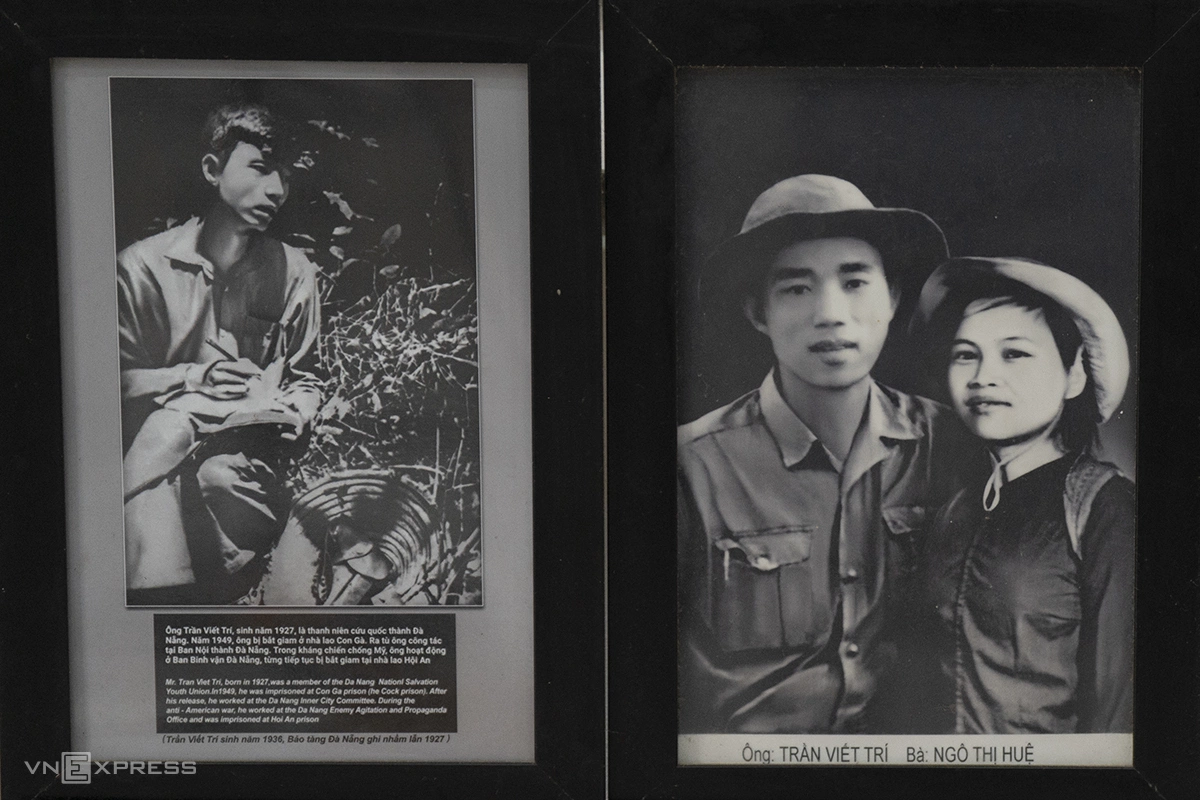 |
A portrait of the couple and archival photos from their resistance days are proudly displayed in the family living room. *Nguyen Dong* |
A special wedding officiated by the Minister of Public Security
After their release from prison, the two went their separate ways. Tri returned to work in the southern region and started a family in Tam Ky. In 1968, they coincidentally met again at Hospital E in the former Ha Tay province. At this time, Hue had a B52 bomb fragment lodged in her head, causing uncontrollable pain and leading her to destroy hospital property. When she regained consciousness after a sedative, Tri came to visit and recognized his former comrade from prison.
Tri was a single father at the time. His wife, also involved in the revolution, had died from a serious illness, leaving behind two young children. Seeing Hue's constant illness and knowing that the torture had taken away her ability to have children, Tri still proposed to her, seeking a legitimate way to care for her. Faced with his proposal, the intelligence agent who once feared no bullets was torn by internal conflict. The torture inflicted by the enemy on her abdomen and groin had robbed her of motherhood. She sadly refused. But then, a photo of two motherless children wearing straw hats, sent from the South to Tri, touched the depths of her heart. "I was moved by pity for the two children. I thought to myself, I don't have children now, and since he proposed, I could raise the two of them", she recounted, her eyes red.
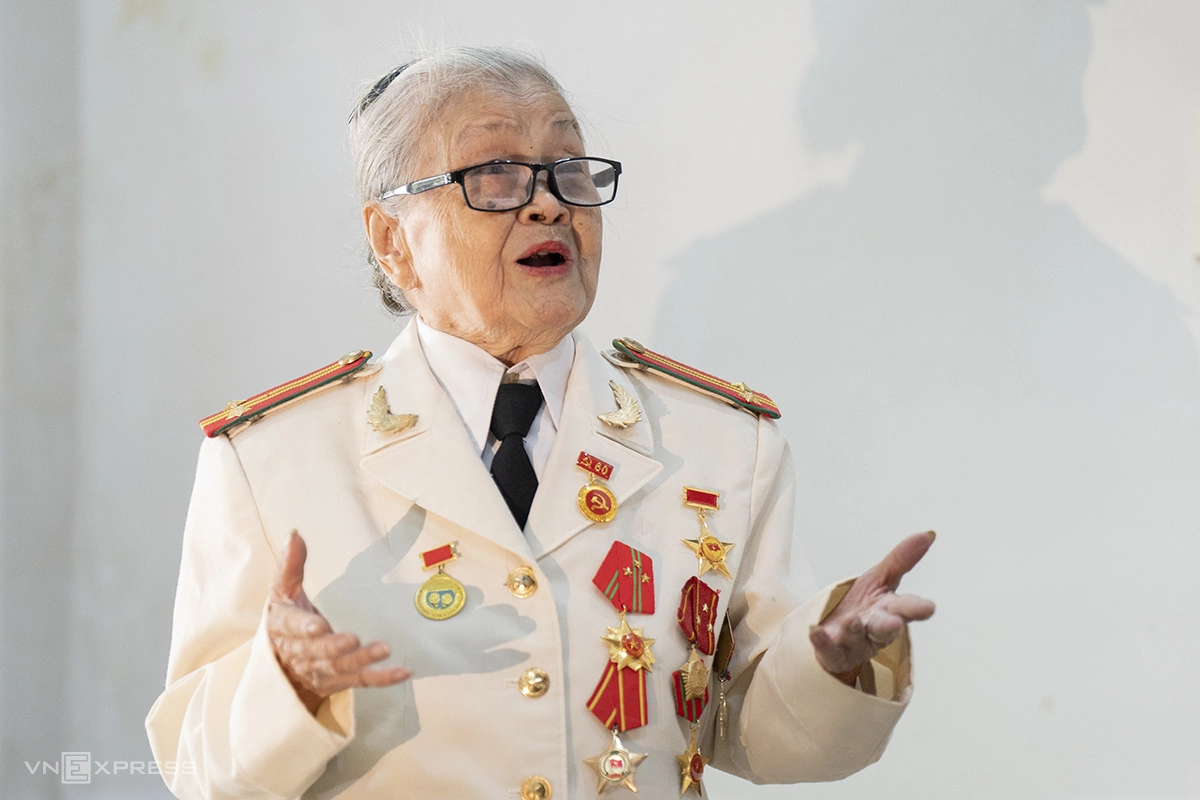 |
Ngo Thi Hue was awarded the title of People's Armed Forces Hero in 8/1985. *Nguyen Dong* |
Hue was adopted by Minister of Public Security Tran Quoc Hoan. However, regarding such an important matter in her life, she only dared to confide in the minister's wife. Hoan learned of the situation and, fearing that a tall, handsome man like Tri might only be with Hue out of loneliness, called him into his office for questioning: "What do you think, loving Hue? Can you guarantee you will care for her throughout her life?" Tri frankly explained: "Hue is constantly ill now, but I want to commit legitimately to caring for her". Tri's answer convinced his superior. Hue also felt Tri's sincerity and agreed for them to live together. Immediately after 30/4/1975, Minister Tran Quoc Hoan officiated their wedding, allowing Tri to confidently depart for work in the South.
Youth admires beauty, old age cherishes companionship in frailty
Keeping his promise from years ago, at 49, Tri decided to retire early to devote his full attention to caring for his wife, who bore many injuries. Hue often fainted and collapsed while working, requiring emergency care, all of which he handled himself. He fed her spoon by spoon, lovingly making up for her losses. Over half a century of living together, despite having no children of their own, relatives and neighbors have never heard them raise their voices. They address each other sweetly as 'anh - em' (older brother - younger sister), and any disagreements are merely debates while watching the news.
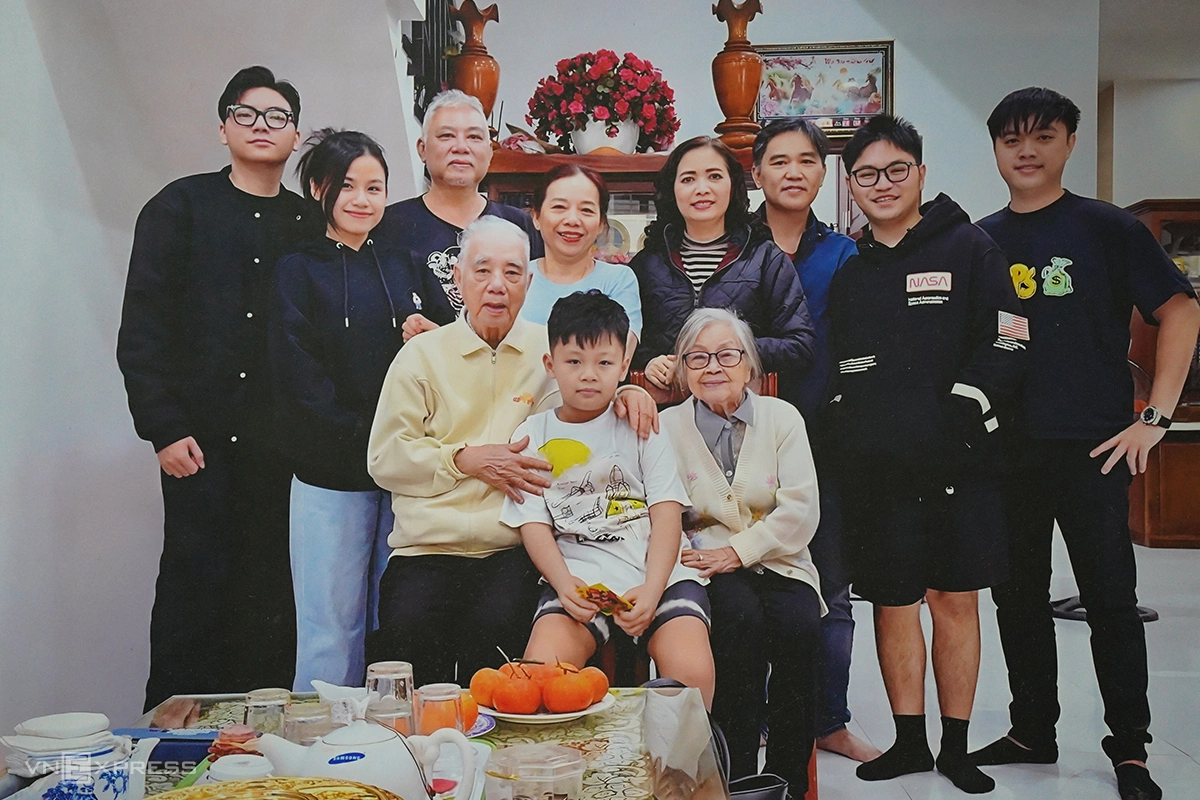 |
Hue, Tri, and the family of Tri's two children. *Family provided* |
In recent years, the lingering effects of Agent Orange have caused Tri to suffer a stroke and metastatic cancer, confining him to bed at Da Nang C Hospital. Hue, already small, has become even frailer, yet she remains a steadfast support for her husband. "Now I have to stay healthy to repay him for all the years he worried about me", she said. Every day, in their small home, with the help of Chi Tho, her niece-in-law, Hue personally purees food and cooks porridge. Regardless of the midday sun or evening, she asks relatives to drive her to the hospital to feed him. She says she is happy to have met a man who loves her. Watching him battle illness and old age, she tells him not to show his pain in front of her, so she has the courage to care for him, fulfilling their comradeship and marital love. Their love, which blossomed in prison, now resonates in her simple words: "Loyalty must be complete. Youth admires beauty, old age cherishes companionship in frailty."
Nguyen Dong