Keppel has enhanced water security in Can Tho City by donating two solar-powered saline water filtration systems. These systems, with an annual capacity of 4,3 million liters, were handed over to Khanh Hoa Ward and Lieu Tu Commune on 22/3, coinciding with World Water Day. Valued at approximately 1 billion dong, the new facilities are poised to benefit over 68.000 residents, especially during the dry season. The initiative is part of Keppel’s Living Well program, launched in 2022 to provide clean water in saltwater-affected areas. The system manufacturer will provide technical guidance, free maintenance, and filter replacements for the first two years after delivery.
Joseph Low, Head Representative of Keppel in Vietnam and President of Keppel Vietnam Properties, highlighted the urgency of the situation: "The Mekong Delta faces increasing pressure from climate change, especially saltwater intrusion and diminishing freshwater resources." He emphasized that the Living Well program focuses on practical solutions to improve community access to clean water. To date, the program has supplied clean water to approximately 157.000 residents across 11 communes in 7 provinces and cities within the Mekong Delta, through 11 water filtration systems with a total annual capacity of about 24 million liters, valued at approximately 5 billion dong.
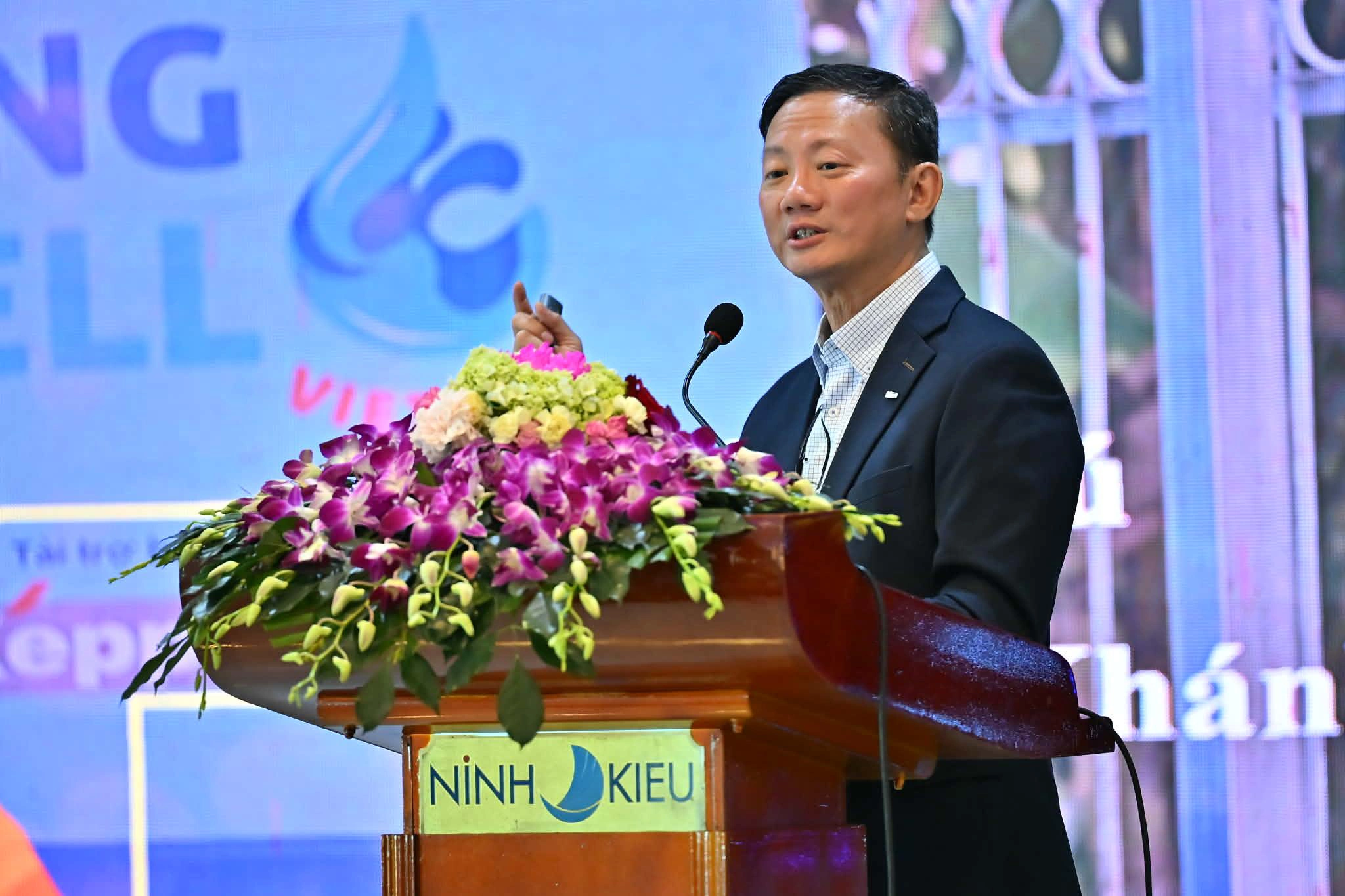 |
Joseph Low – Head Representative of Keppel in Vietnam and President of Keppel Vietnam Properties. *Photo: Keppel* |
In conjunction with the system handover, Keppel, in collaboration with Tien Phong Newspaper and the People's Committee of Can Tho City, organized a workshop titled "Water Security in the Mekong Delta Amid Climate Change." This event brought together representatives from the Ministry of Agriculture and Environment, local authorities from the Mekong Delta region, and various experts and organizations.
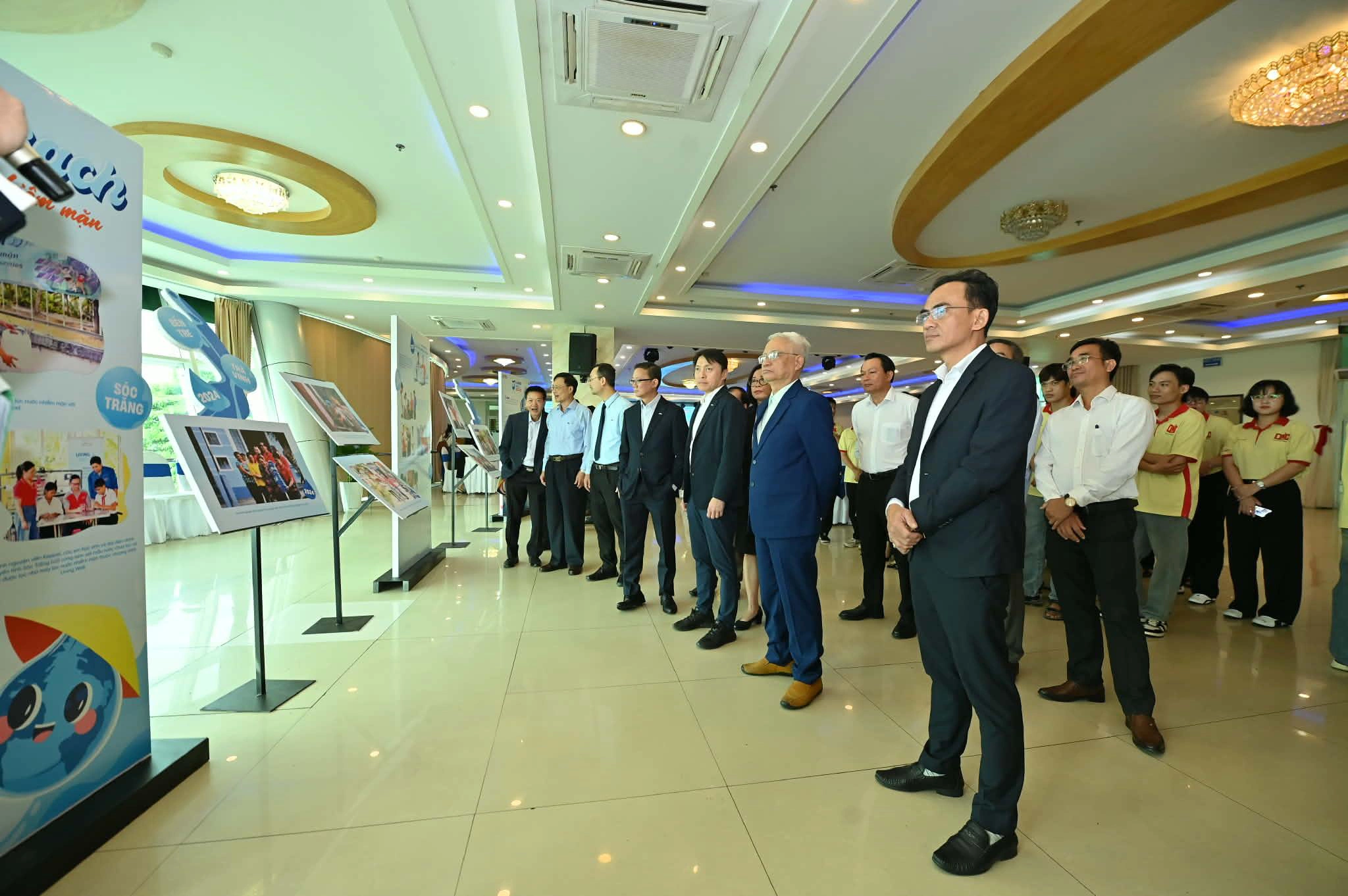 |
Guests visited the Living Well exhibition area, a program initiated by Keppel to provide clean water to saltwater-affected regions, at the workshop. *Photo: Keppel* |
Nguyen Hoang Anh, Deputy Director of the Can Tho Department of Agriculture and Environment, confirmed the growing severity of environmental challenges. He noted that drought, saltwater intrusion, and freshwater shortages during the dry season have become more frequent in recent years. Despite its extensive network of rivers and canals and relatively abundant water resources, Can Tho City, a regional hub, is significantly impacted by climate change. "These challenges directly affect the city's and the entire region's sustainable socio-economic development, necessitating efficient, economical, and sustainable management and use of water resources," said Hoang Anh.
Associate Professor Doctor Nguyen Phu Quynh, Deputy Director of the Southern Institute of Water Resources Science, observed that the region is facing significant external impacts. He suggested that the region's development needs to follow a path of controlled adaptation, proactively creating a suitable water regime based on the natural one. This approach aims to reduce risks and uncertainties in socio-economic activities. Quynh stressed that sustainable development demands the coordination of technological applications, multi-objective operations, and increased stakeholder participation.
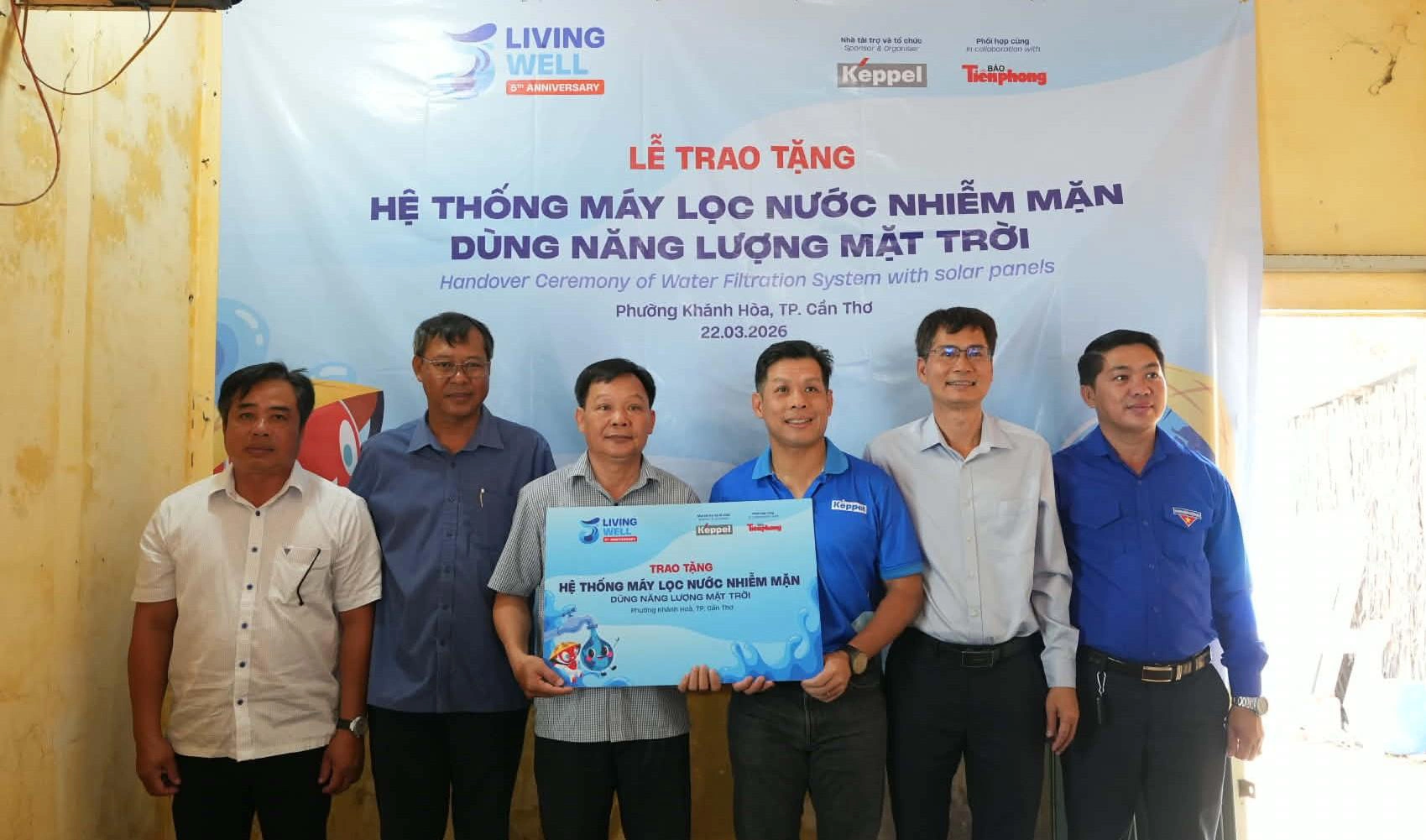 |
Keppel representatives handed over saline water filtration systems to wards and communes in Can Tho. *Photo: Keppel* |
Keppel has extensive experience in investing, developing, and operating water infrastructure projects, including desalination, water treatment, and reuse. In Singapore, the company participated in developing and operating the Keppel Marina East Desalination Plant, which can treat both seawater and freshwater, enhancing the nation's water self-sufficiency. Joseph Low reiterated the workshop's purpose: "Through this event, we aim to foster dialogue among policymakers, experts, and stakeholders to enhance water security and strengthen the region's resilience."
Can Tho City data for 2025 indicates that 82,66% of rural households receive clean water from various sources after mergers, with 11 units currently supplying clean water to rural areas. Looking ahead to 2030, Can Tho aims to increase the percentage of households using clean water to 85%. To achieve this target, the locality plans to promote social mobilization, engaging businesses and residents in investment, alongside leveraging the state budget.
Hoai Phuong