During a meeting with voters in Lao Cai on the morning of 30/9, Deputy Prime Minister Pham Thi Thanh Tra addressed numerous questions regarding salary and allowance policies for commune-level officials and civil servants, following the implementation of the two-tier local government model.
Voters urged the swift completion of salary and allowance policies that align with workload, job positions, levels of concurrent duties, and the specific characteristics of large mountainous areas.
The Deputy Prime Minister announced that after one year of implementing the two-tier local government, the Central Committee decided to increase allowances for commune-level officials and civil servants to 55%. This new rate will be effective from 1/7/2026, coinciding with the basic salary increase, and will remain in effect until salary reform is fully implemented.
The Government is currently finalizing a decree to implement this policy. According to Ms. Tra, the allowance increase stems from practical needs, as commune-level authorities directly undertake many tasks, resolve issues, and serve residents within the two-tier local government model.
"Increasing allowances is a specific policy designed to provide additional motivation and enhance accountability in public service within the new organizational model," the Deputy Prime Minister stated.
She emphasized that the new allowance increase is one component of a comprehensive policy package for officials and civil servants. The Government is developing a Project on salary and social insurance policy reform, expected to be presented to the Central Committee at the 5th Central Committee Conference, 14th tenure.
Specific allowance policies for teachers, medical staff, school support personnel, artists, police, and military personnel are also being implemented. Concurrently, the Ministry of Home Affairs is collaborating with the Vietnam Fatherland Front to amend regulations on the organization, operations, and management of associations, clarifying allowance levels for commune-level senior citizens' associations.
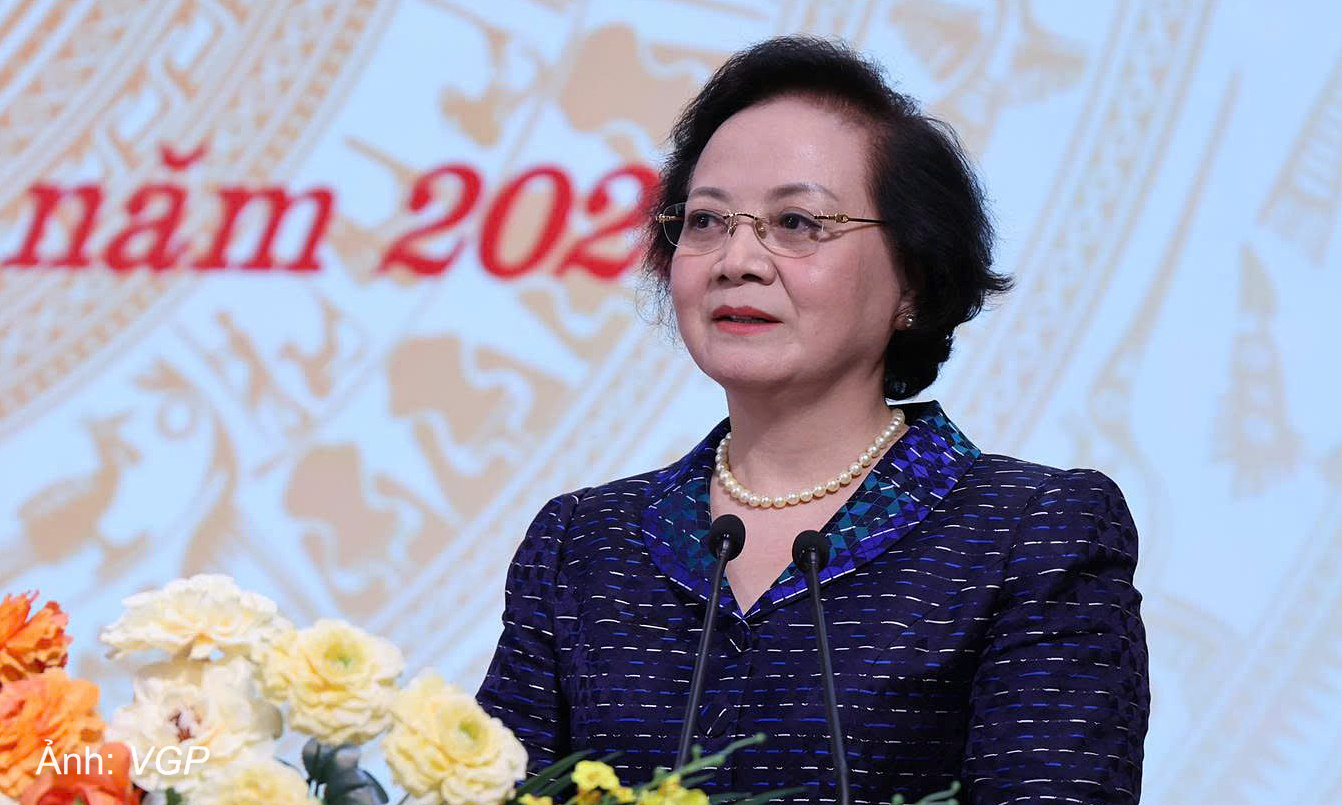 |
Deputy Prime Minister Pham Thi Thanh Tra meets with voters in Lao Cai on the morning of 30/9. *Photo: VGP* |
Resolution 27 of 2018 aimed to establish salary scales based on job positions, titles, and leadership roles, replacing the calculation method based on basic salary and coefficients. The initial roadmap was set for July 2021 but was postponed due to Covid-19 and various complexities. The National Assembly subsequently decided to implement comprehensive salary policy reform from July 2024; however, two crucial aspects – replacing the basic salary and coefficient system with new salary scales, and reorganizing allowance schemes – have not yet been deployed.
While policies are still being finalized, the basic salary was increased from 1,8 million to 2,34 million dong per month starting July 2024, and will further rise to 2,53 million dong from July 2026. With the current basic salary, civil servants earn approximately 3,4-25,3 million dong per month, and public employees earn about 3,8-20,2 million dong, excluding allowances.
Currently, commune-level officials and civil servants receive a public service allowance of 25%. In communes, wards, and special zones within Ha Noi and Ho Chi Minh City, the leadership position allowance coefficients are: chairman 0,7; vice chairman 0,6; head of department 0,35; and deputy head of department 0,2. In other localities, the corresponding rates are 0,6; 0,5; 0,25; and 0,15.
Vu Tuan