The Ministry of Justice is currently reviewing the draft revised Land Law before the Government submits it to the National Assembly for consideration and approval at its October session.
Compared to the draft from two months ago, the latest version includes more provisions on compensation, support, and resettlement, incorporating feedback from National Assembly delegates and various agencies. Notably, when organizing land expropriation, the implementing agency must investigate and determine the income derived from land use and assets attached to the land.
This assessment aims to quantify the income loss suffered by residents due to land expropriation, serving as a basis for creating suitable support plans to rebuild lives and restore livelihoods to their pre-expropriation state. Land owners whose land is expropriated must also be consulted, and their feedback incorporated, before compensation, support, and resettlement plans are approved.
The new draft also stipulates that resettlement areas must feature synchronous technical and social infrastructure, aligning with planning and the community's traditions, customs, and practices. Housing and residential land should be allocated in various types and sizes, corresponding to the compensation received and the resettled individuals' ability to pay.
Previously, the draft only required resettlement areas to have synchronous technical and social infrastructure and could serve one or more projects, without specifying diverse housing types or sizes.
Another new provision allows residents to resettle on the remaining portion of their land parcel. In cases where the state expropriates land for national defense, security, or socio-economic development for national or public benefit, residents who wish to can exchange their expropriated residential land for a portion of their original land parcel, as regulated by the Government. This mechanism aims to enable on-site resettlement, minimizing disruption to housing and livelihoods, and reducing the need for resettlement land elsewhere.
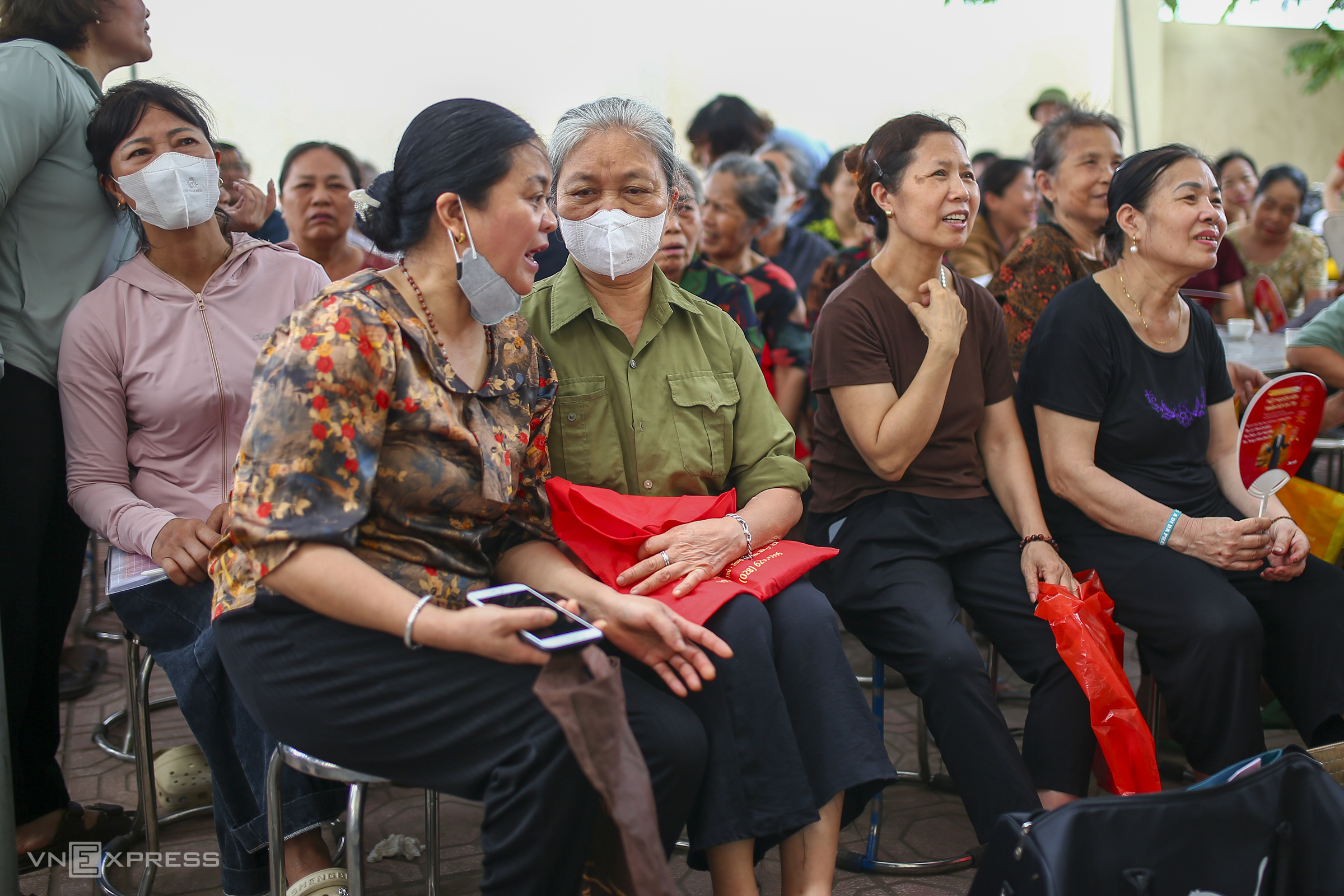 |
Residents of Tam Hung commune, Ha Noi city, await procedures to receive land compensation for a project. Photo: Pham Chieu |
The draft mandates that the state ensures funding for compensation, support, and resettlement. If a project developer voluntarily provides advance funds, this amount can be deducted from the land use fees or land rent payable for the project.
If a project is allocated land without charge, fully exempt from land use fees or rent, or if the financial obligation is less than the advanced amount, the difference can be further deducted from the investor's financial obligations in another project within the same provincial area. Any remaining amount after deductions will be accounted for as investment costs.
The draft also includes a mechanism to address cases of agricultural land expropriated under the 2003 Land Law where owners have not yet received residential or service land as per local policies.
According to the drafting agency, some localities previously had policies to allocate service land or residential land to those whose agricultural land was expropriated, aiming to support career transition and stabilize livelihoods. However, resolution in some areas has been prolonged due to lack of capital, cleared land funds, or policy changes.
The draft assigns provincial People's Councils the responsibility to regulate the resolution of these outstanding cases. The Government will specify the conditions, procedures, and implementation methods for certain specific mechanisms.
Son Ha