 |
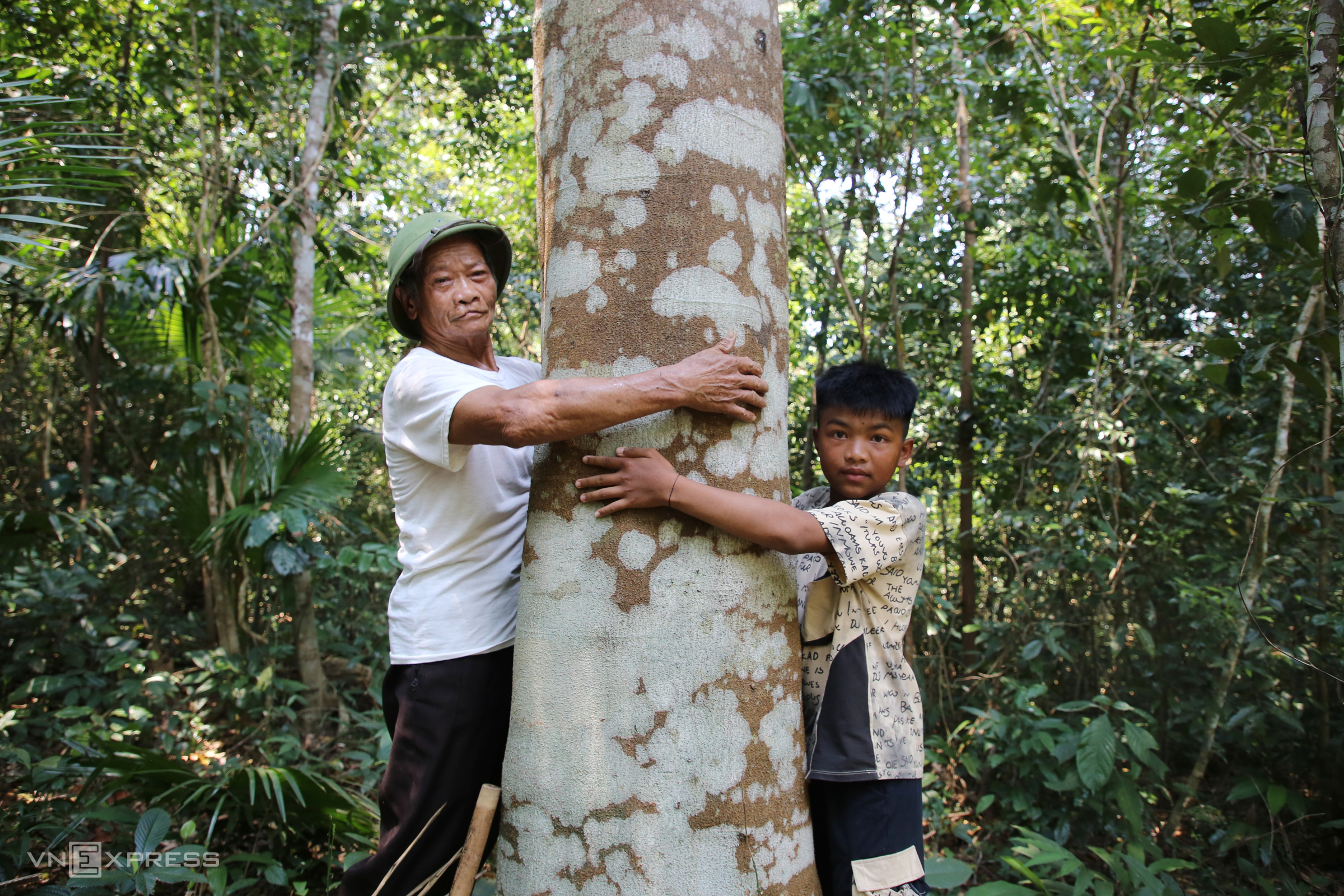
Truong Quoc Do, 75 years old, residing in Yen Tho village, Kim Phu commune (formerly part of Minh Hoa district), stands beside an ironwood tree so large it requires nearly two people to embrace.
In 1993, witnessing ironwood trees being felled, Mr. Do volunteered to protect 20 hectares of forest without compensation. While surrounding forests were cleared, his designated area has remained intact to this day. Daily, alongside his farm work, he dedicates time to inspect the ironwood forest. Given its extensive size, he divides his time, patrolling different sections each day.
Ironwood trees, scientifically known as Erythrophleum fordii, have a trunk diameter of nearly one meter and stand over 20 m tall with lush canopies. Annually, from February to April, the trees flower, and by late year, their ripe fruits release seeds that fall to the ground. The bark of ancient trees naturally peels off, allowing the trunk to expand in diameter as it grows. In Vietnam, green ironwood is classified among the four precious hardwoods: dinh, lim, sen, and tau.
 |
The path into the forest is often overgrown, so Mr. Do uses a machete to clear a trail during each patrol. "If I hadn't guarded them, these ironwood trees would have been cut down long ago. The forest would have become an acacia plantation," he stated. He added that seeing the lush green forest every day brings him joy, emphasizing that he preserves the ironwood forest not for commercial gain, but to leave it for future generations.
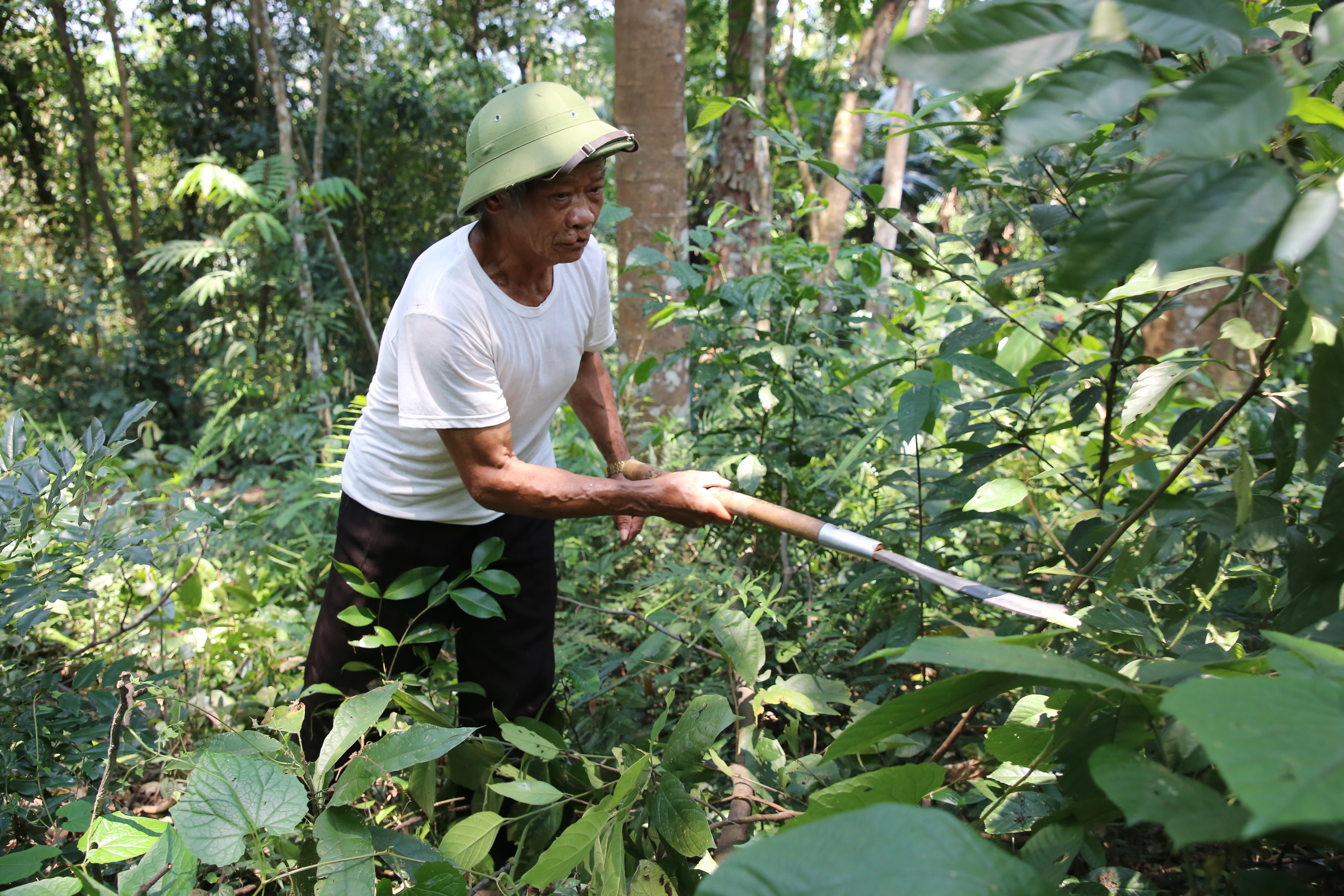 |
Mr. Do prunes individual bushes in the forest, allowing the ironwood trees to thrive. Over the past 30 years, regularly traversing the forest, he has memorized the location of each ironwood tree. "Many times, I caught locals cutting firewood; I reminded them not to cut living trees, but to gather dry wood if they needed fuel," he recounted.
The forest, rich in valuable timber, attracts illegal loggers. One afternoon in 2010, while resting, he heard the sound of a chainsaw. Rushing to investigate, he discovered a group preparing to fell an ironwood tree with a trunk diameter so wide it would take one person to embrace it. He lunged forward, hugging the tree to stop them, and the group threatened to beat him. Mr. Do then ran home to call his children and reported the incident to local authorities, who came to assist in driving the loggers away.
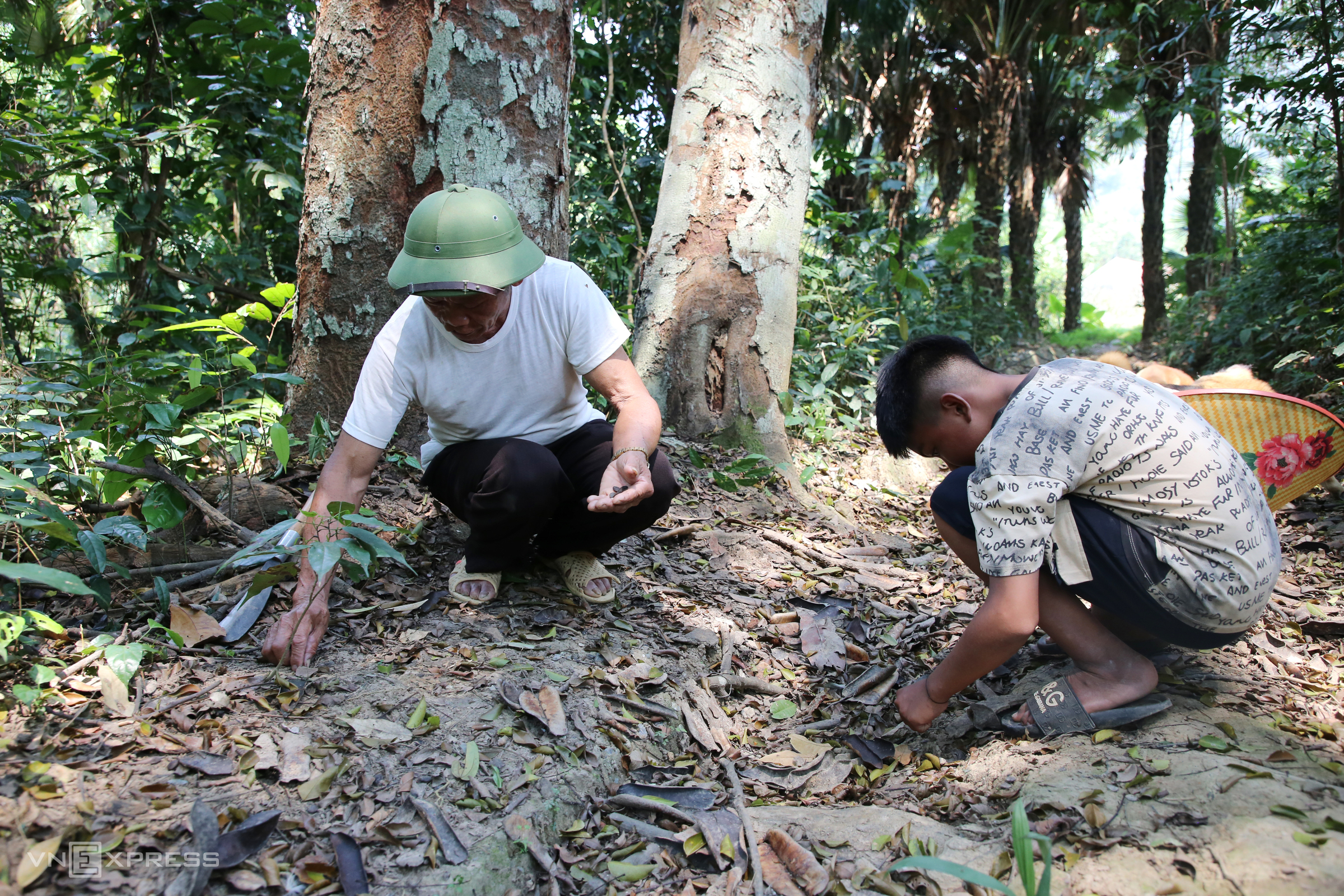 |
Ironwood seeds that fall to the ground are collected by Mr. Do and his grandchild, then sown in empty spaces to promote natural regeneration. He has 13 children and many grandchildren, several of whom help him care for the forest.
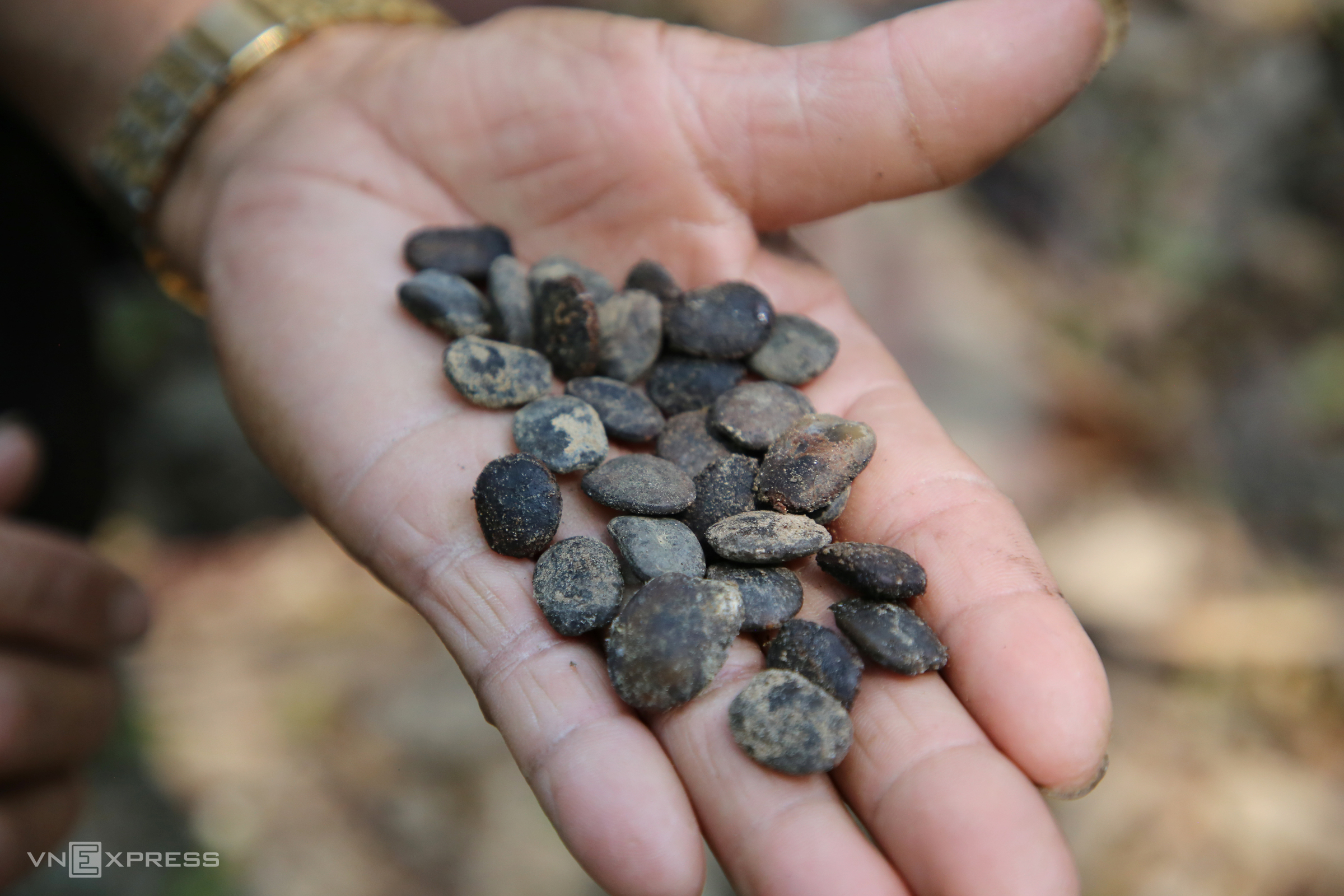 |
Searching beneath the undergrowth, Mr. Do retrieved dozens of ironwood seeds, which can be used for propagation.
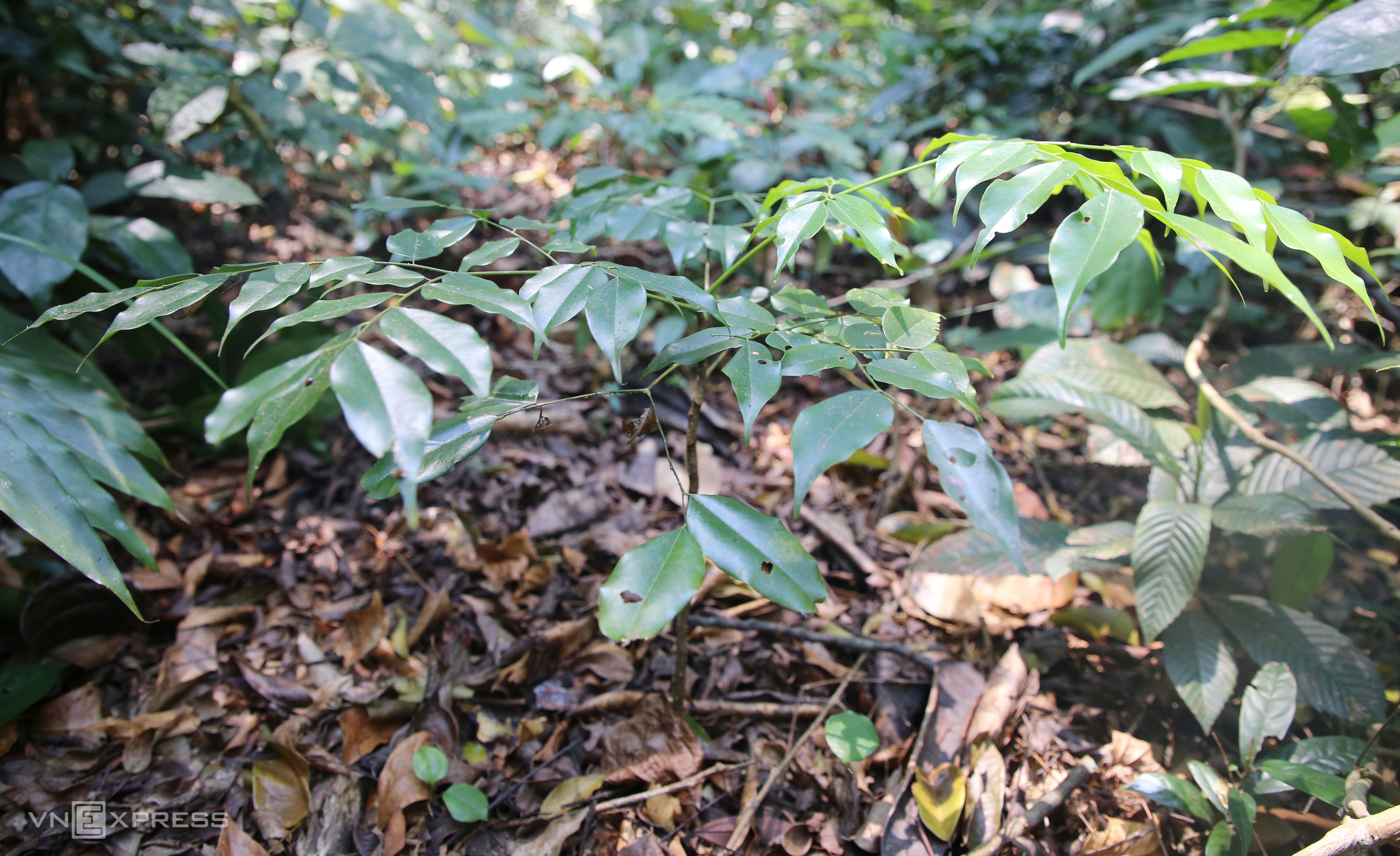 |
Besides the mature ironwood trees with diameters of nearly one meter, the forest also contains numerous new saplings that have sprouted from fallen seeds. Thanks to diligent care and protection, these young ironwood trees are thriving. Whenever he finds a sapling, he removes vines and clears surrounding undergrowth to ensure optimal growing conditions.
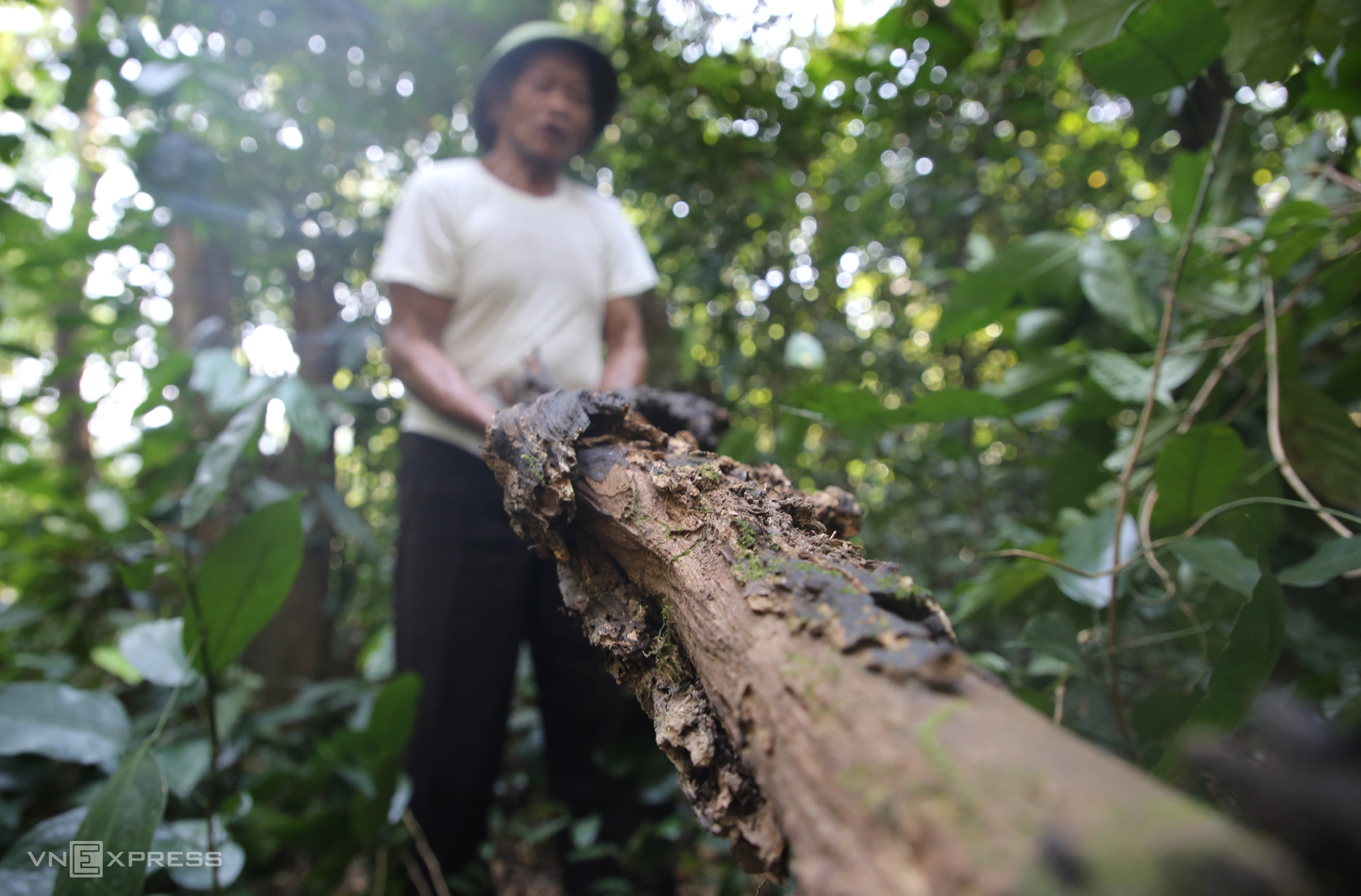 |
Tree trunks felled by storms remain in the forest. After years of exposure to the elements, the sapwood is eaten by termites, but the heartwood remains intact. Ironwood is known for being hard, durable, strong, and long-lasting.
During the dry season, Mr. Do's primary concern is the risk of forest fires. The thick undergrowth, combined with strong "Lao winds" (a hot, dry wind in Vietnam), means a single spark could incinerate the entire ironwood forest. Adjacent to the ironwood forest are acacia plantations. After each harvest, local residents often burn the undergrowth. Each time this happens, he stands guard until the fire is completely extinguished before leaving.
 |
A mushroom, 15 cm in diameter, is growing at the base of a dead ironwood tree. The forest is cool in the dry season and humid in the rainy season, allowing many mushroom species to thrive. He harvests the ironwood mushrooms for his own use.
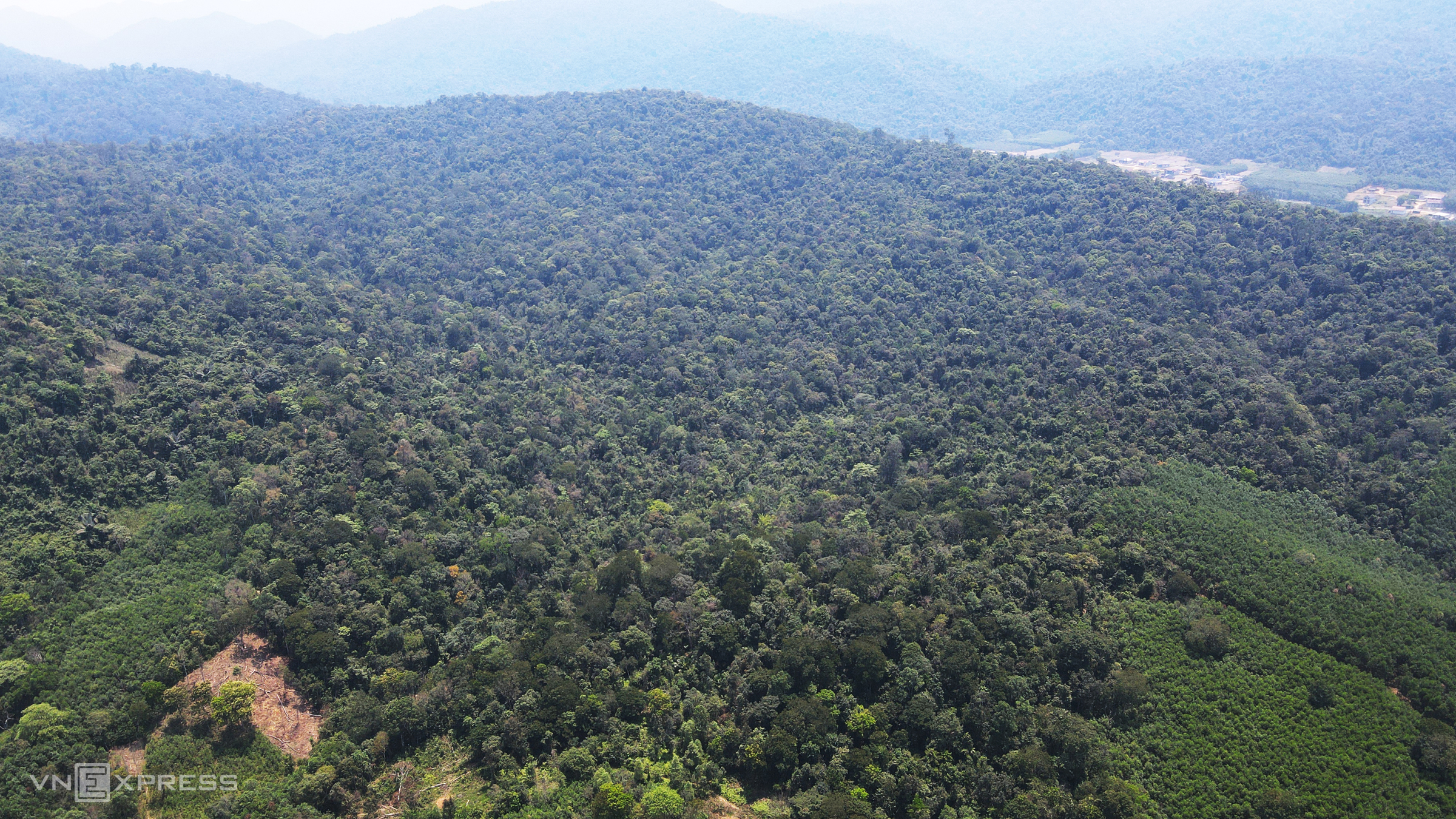 |
The forest contains hundreds of ironwood trees, nearly one meter in diameter, interspersed with various other tree species, creating a multi-layered canopy.
Tan Hoa previously had abundant ironwood growth. During the war, many trees were felled and cut to build bomb shelters. Before the forests were closed, ironwood was a valuable timber species that was heavily exploited.
Dinh Tien Huyen, deputy head of Minh Hoa Forest Protection Department, stated that Mr. Do has voluntarily protected the ironwood forest for over 30 years. As a result, the forest has remained untouched by human activity, with no logging or encroachment occurring. In the former Minh Hoa district, the forest preserved by Mr. Do is now the only area with a significant concentration of rare ancient ironwood trees.
"His persistent efforts not only contribute to forest resource conservation but also serve as an example, spreading awareness of forest protection to nearby residents," Mr. Huyen said. Video: Dac Thanh
Dac Thanh