On the afternoon of 19/4, Hanoi Party Secretary Tran Duc Thang chaired a meeting to review the progress of traffic and anti-flooding projects, following a two-day field inspection.
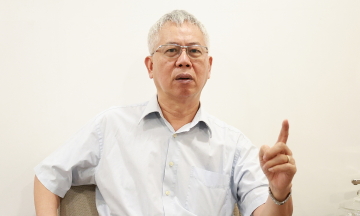
During the meeting, Nguyen Phi Thuong, director of the Hanoi Department of Construction, reported that the current drainage system meets only 20% of the master plan's requirements. Among the four main basins—Ta Day, Huu Day, To Lich River, and North Red River—only the To Lich River basin, covering an area of 77 km2, has received relatively complete investment. The remaining basins still suffer from a lack of synchronized sewer lines, pump stations, and regulating lakes.
 |
Nguyen Phi Thuong, director of the Hanoi Department of Construction, at the meeting on 19/4. Photo: Dinh Truong |
According to the master plan, Hanoi requires 48 main pump stations with a total capacity of approximately 1,325 m3/s. Currently, only nine large stations are operational, with six more under investment; the rest are smaller components. The city also needs 5,050 ha of regulating lakes, but only 1,010 ha, equivalent to 19% of the target, have been developed.
Due to these infrastructure limitations, heavy rains in October and November 2025, which exceeded design capacity, led to 220 flood points across Hanoi. Of these, 91 were managed by the city, while 119 fell within the jurisdiction of local wards and communes.
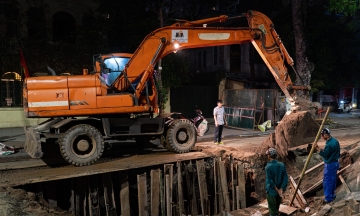
To address these challenges, the city is implementing 10 emergency anti-flooding projects. The Agricultural Technical Infrastructure Board is the investor for five pump stations, regulating lakes, and two systemic projects. Notably, the Thuy Phuong canal improvement project will not only drain water from the area but also replenish the To Lich River and support irrigation for approximately 300 ha of agricultural land.
The City Technical Infrastructure Center is undertaking eight additional items to connect underground systems and pump stations from Phu Thuong through Hoang Quoc Viet. These efforts aim to alleviate flooding in areas such as Ecopark and Ciputra. The city has directed the Ciputra urban area developer to complete the Phu Thuong pump station, with a capacity of 9 m3/s, before 30/4 to enhance drainage in the vicinity.
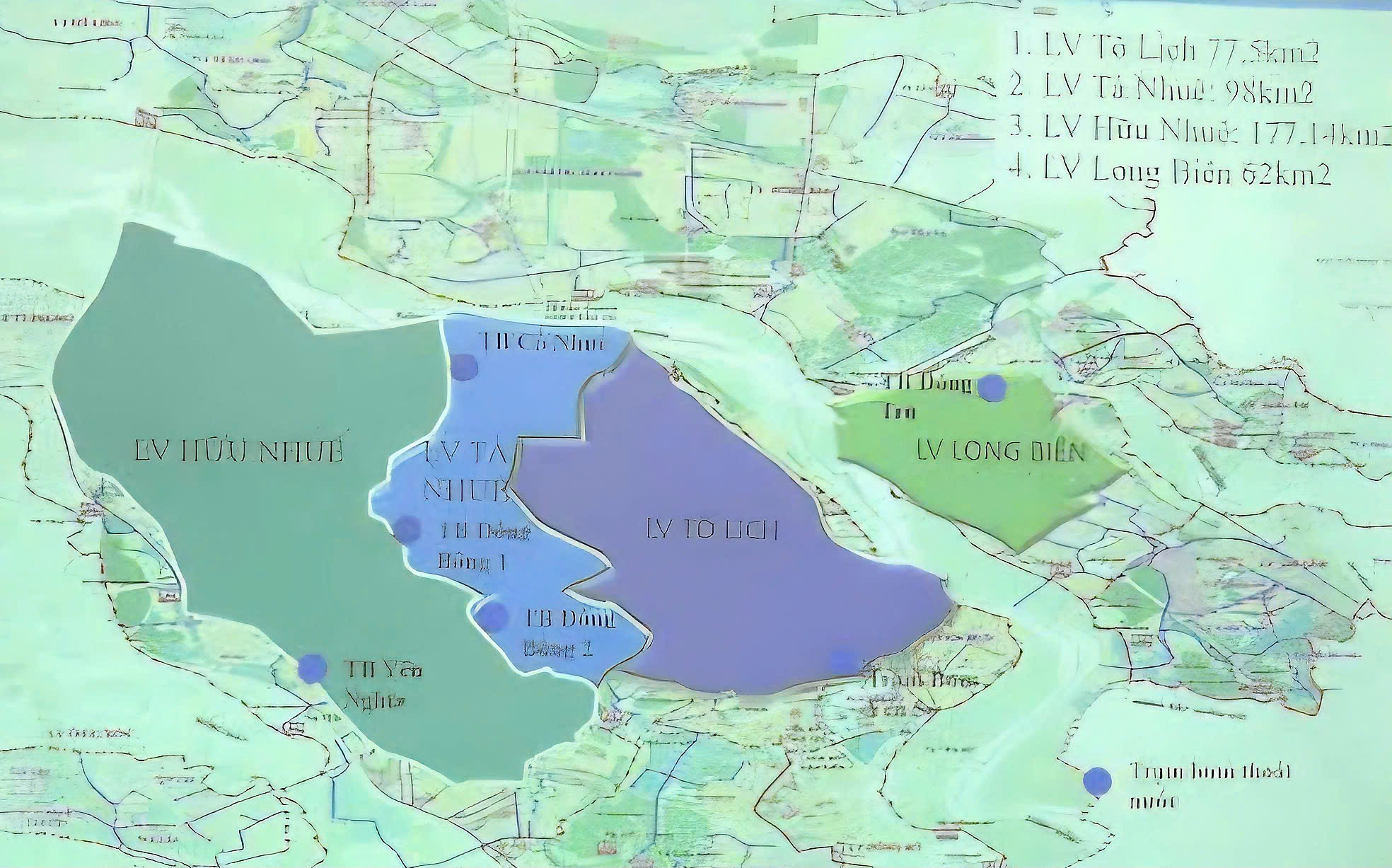 |
Hanoi City's main drainage basins. Source: Department of Construction |
Following the heavy rains in 2025, 52 new flood points emerged in the inner city. The city has since installed pump stations for 12 regulating lakes, adding approximately 800,000 m3 of regulatory capacity. Combined with six publicly funded regulating lakes, the total additional capacity reaches about 1,4 million m3. By 30/4, all lakes will be dredged and equipped with pump stations to proactively lower water levels before rainfall.
Specific localized flooding points, such as Thang Long Avenue, are also receiving regulating pump stations. In the Hang Da market area, the city is constructing an underground rainwater tank with a capacity of 2,500 m3—the largest in Hanoi—to mitigate flooding at the Bat Dan - Nha Hoa - Duong Thanh intersection.
Hanoi has also approved additional emergency projects, including Chem Lake (9 ha), Lien Mac Lake (22 ha), and a city-wide sensor system for flood warnings.
According to the director of the Department of Construction, these initiatives will collectively add approximately 4,8 million m3 to the city's drainage capacity, significantly reducing flooding during heavy rains. The projects are expected to be completed before 30/4, with landscaping finished by 30/6. This will boost the city's overall drainage capacity by 25-30% and address about 60% of previously identified flood points.
10 emergency anti-flooding projects in Hanoi City
Vo Hai