The National Assembly commenced the second phase of its first session on 20/4, with a comprehensive agenda centered on socio-economic development, state budget management, and the overarching five-year plan for 2026-2030. This critical session aims to define the nation's strategic objectives and allocate resources for the next phase of development.
The morning began with discussions on the proposed 2027 supervision program. In the afternoon, the National Assembly convened to conduct a supplementary assessment of the 2025 socio-economic and state budget plan implementation, review the situation in early 2026, and deliberate on the 2026-2030 five-year socio-economic development plan. These discussions extended beyond macroeconomic trends to include thrift practices, anti-waste efforts, and the implementation of national gender equality goals. Government members were present to clarify issues raised by delegates.
Discussions on socio-economic matters and the budget will continue on the morning of 21/4. Following this, the session will address other key topics, including the medium-term public investment plan for 2026-2030, the national five-year financial plan, the public borrowing and debt repayment plan, and the approval of the 2024 state budget settlement.
On 22/4, the National Assembly is scheduled to vote on a series of important draft laws and resolutions. These include the amended Capital Law, the amended Law on Access to Information, the amended Civil Status Law, and various other laws pertaining to justice, emulation and commendation, and religion. The National Assembly will also pass a resolution on the 2027 supervision program and the mechanism for handling international investment disputes. Subsequently, members will hear a synthesized report of voter opinions and monitor the resolution of voter petitions.
The National Assembly will vote on fundamental resolutions for the upcoming period on 23/4. These include the five-year socio-economic development plan, the medium-term public investment plan, the national financial plan, and the public borrowing and debt repayment plan. During this session, the National Assembly will also consider and pass a resolution on the establishment of Dong Nai city directly under the Central Government. The closing session is expected to take place on 23/4.
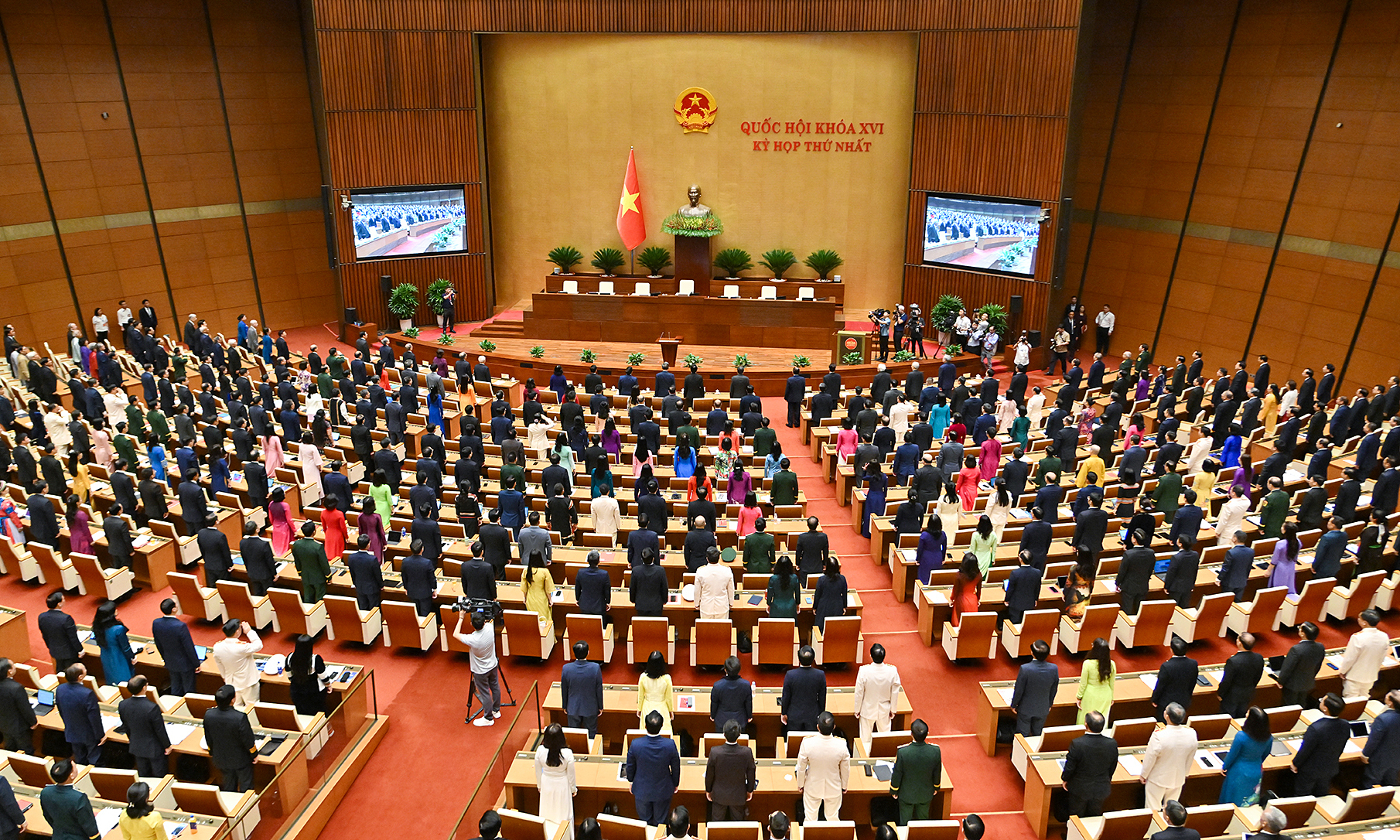 |
The first session of the 16th National Assembly. Photo: Hoang Phong |
Earlier, on the afternoon of 9/4, Prime Minister Le Minh Hung reported to the National Assembly on the socio-economic situation. The Government identified 2026 as a pivotal year for enhancing the quality of grassroots officials, requiring civil servants to be evaluated based on work results. Cases of weak performance or lack of responsibility will be resolutely addressed.
The Government further called for the efficient use of existing public headquarters, the management of surplus public assets, and increased budget expenditure savings. Resources will be prioritized for social security and development investment. Anti-corruption and waste prevention efforts were intensified, improving the effectiveness of inspections, audits, and asset recovery.
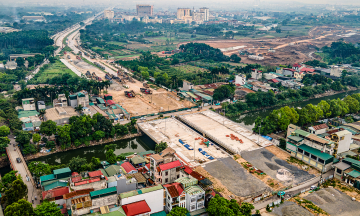
For 2026, the Government aims to complete over 110,000 social housing units, implement free periodic health check-ups for citizens, and apply electronic medical records at all healthcare facilities. Transport infrastructure development continues, with projects for urban railways, airports, and seaports receiving a boost.
According to the Government, GDP for Q1/2026 is estimated to have increased by 7,83%, indicating a stable macroeconomy. However, external fluctuations, rising transport and energy costs, along with administrative procedural limitations and the capacity of grassroots officials, remain significant challenges for the period ahead.
Xuan Hoa