Ho Chi Minh City People's Committee Vice Chairman Bui Xuan Cuong presented this proposal at the third conference of the Ho Chi Minh City Party Committee Executive Board on the morning of 7/1. The proposal from the Standing Committee of the City Party Committee outlined the policy for implementing the project.
According to the Ho Chi Minh City People's Committee, current headquarters of Party and government agencies are scattered and many buildings are dilapidated. This decentralization hinders inter-agency coordination, affecting administrative efficiency and the quality of services provided to residents and businesses. In contrast, Thu Thiem offers a concentrated land fund, synchronized infrastructure, and convenient connections to the existing city center and the financial-commercial axis.
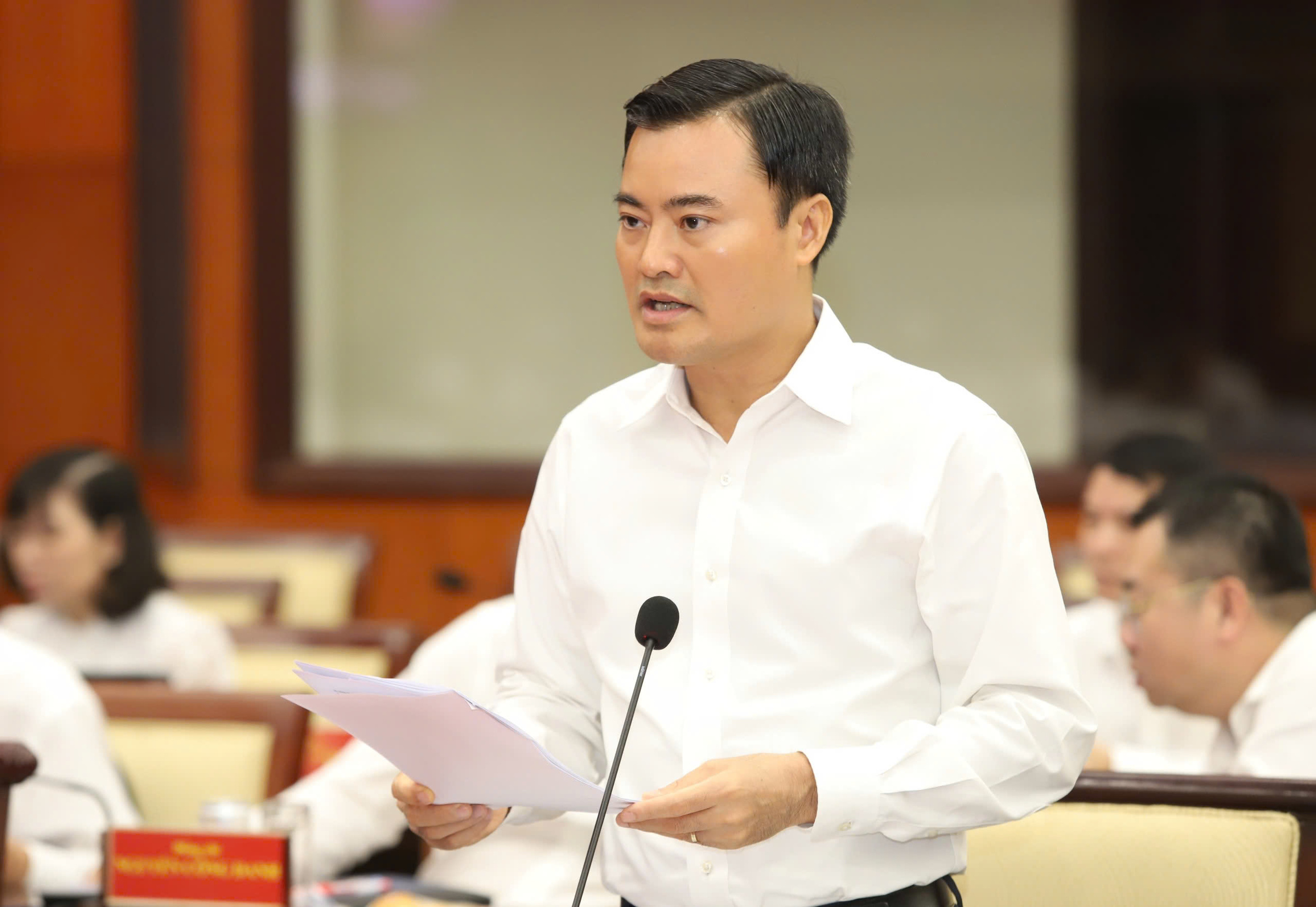 |
Ho Chi Minh City People's Committee Vice Chairman Bui Xuan Cuong presents the proposal at the Ho Chi Minh City Party Committee Executive Board conference, on the morning of 7/11. *Photo: An Phuong* |
The proposed plan envisions a new political and administrative center of approximately 26 stories, comprising a six-story podium and a 20-story tower. Its arc-shaped architecture will embrace a central spatial axis, connecting to the main square and theater area, creating an urban landmark. The building is designed as a green, environmentally friendly model, featuring open spaces to facilitate public access to administrative services.
Functional areas will be multi-purpose, sharing infrastructure such as meeting rooms, conference facilities, and flexible workspaces to prevent waste and meet the operational demands of a major city.
Regarding funding, the political and administrative center and its accompanying green park system will utilize public investment capital. The theater, performance, and conference center will also be funded by public capital, while the pedestrian bridge and some auxiliary items will be implemented through socialized investment (public-private partnerships). Commercial land plots in the area will be auctioned to generate financial resources.
According to the plan, Ho Chi Minh City aims to complete planning and investment procedures in Q1/2026, with construction starting concurrently and the project targeted for completion and use in 2027.
To synchronize the project, the city plans to adjust the Thu Thiem Urban Area master plan, swapping the locations of some cultural and public facilities. Specifically, the Ho Chi Minh City Ballet, Symphony Orchestra and Opera House is proposed to move from the Ba Son area to a location adjacent to the administrative center, with its former site becoming a green park. The Ho Chi Minh City Children's Palace is also expected to change its location, prioritizing green spaces and waterfront areas for community use.
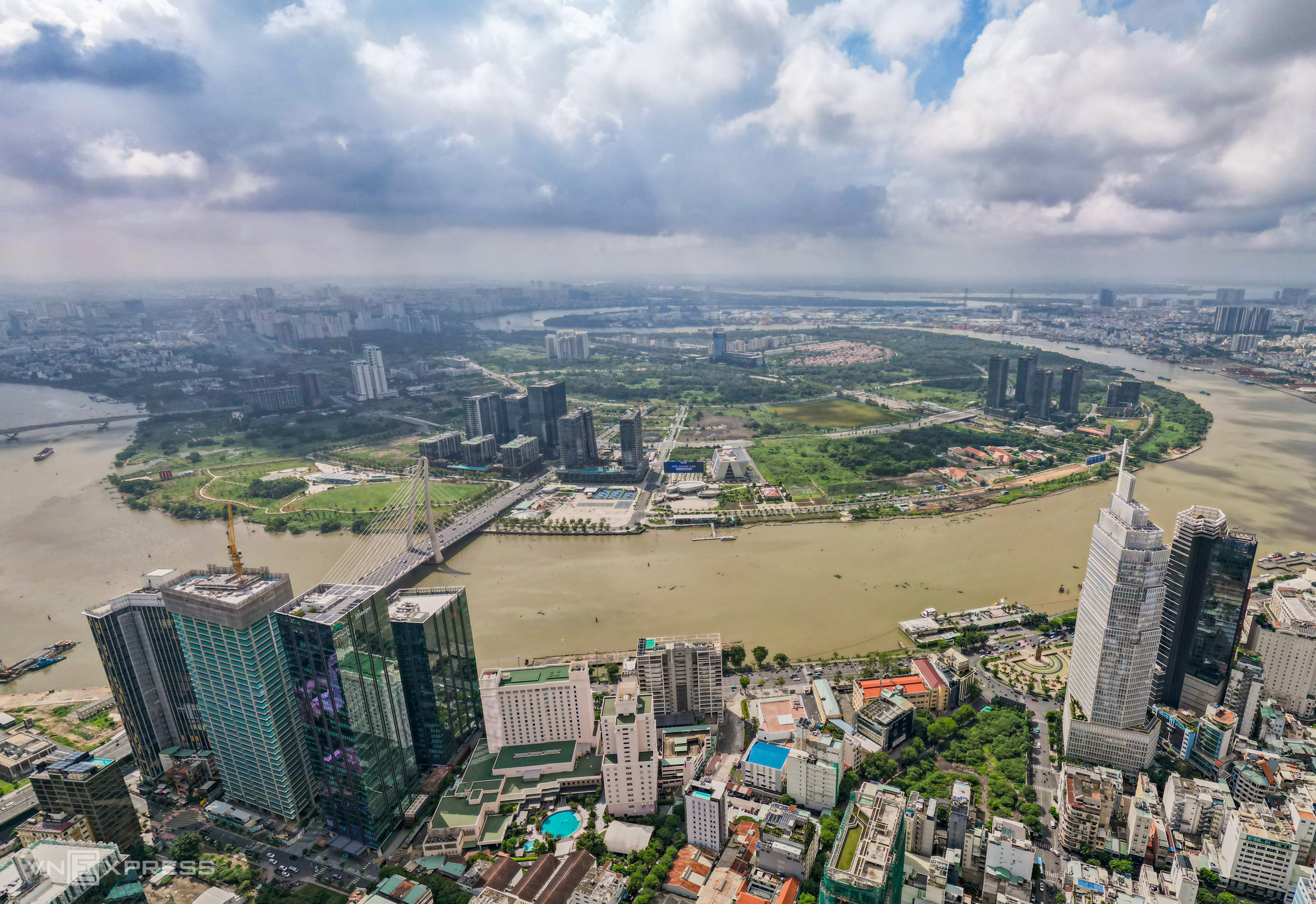 |
Thu Thiem Urban Area in 7/2025, viewed from Ho Chi Minh City center. *Photo: Quynh Tran* |
Speaking at the conference, Ho Chi Minh City Party Committee Secretary Tran Luu Quang emphasized that the new center must be a worthy landmark, yet remain accessible to the public, featuring open spaces, strong connections to surrounding structures, and a vibrant "nightlife."
The Standing Committee of the City Party Committee recommended that the Ho Chi Minh City Party Committee Executive Board review and approve the investment policy and related planning adjustments, assigning the Ho Chi Minh City People's Committee to organize implementation within its authority, ensuring progress and effectiveness.
The Thu Thiem New Urban Area master plan was approved by the Prime Minister in 1996, covering an area of 930 hectares (including 770 hectares for the new urban area and 160 hectares for resettlement). It is located on the east bank of the Saigon River, opposite District 1. The area is designed for a population of approximately 200,000 people, with 45,000 for resettlement. Thu Thiem has long been considered Ho Chi Minh City's "golden land," boasting complete infrastructure, a central location near the Saigon River, and direct connections to the city center via modern roads.
Previous plans had envisioned the city's centralized administrative area in the existing city center or the Binh Quoi - Thanh Da peninsula. Before the merger, the Department of Construction had proposed building an administrative center at 86 Le Thanh Ton, covering 1,8 hectares and serving approximately 1.692 officials and civil servants. However, this scale was deemed insufficient for personnel needs and had limitations regarding key transport connections.
Le Tuyet