Working with the Vien Han Lam Khoa Hoc Xa Hoi Viet Nam on the morning of 24/2, Prime Minister Pham Minh Chinh affirmed that social sciences are not only an important academic research field but also a foundation of thought and a guiding principle for planning the nation's comprehensive development policies.
The head of the Government stated that many leading scientists worldwide believe that technical science is only meaningful when accompanied by an understanding of social sciences. Albert Einstein once said, "not everything that counts can be counted, and not everything that can be counted counts". This serves as a reminder of the intangible but core values that only social sciences can address.
Throughout the nation's history of founding and defending the country, the Vietnamese people have forged a rich treasury of cultural, ideological, and spiritual values. This forms a precious foundation and resource that the social sciences and humanities sector is tasked with researching, preserving, developing, and disseminating in the new era.
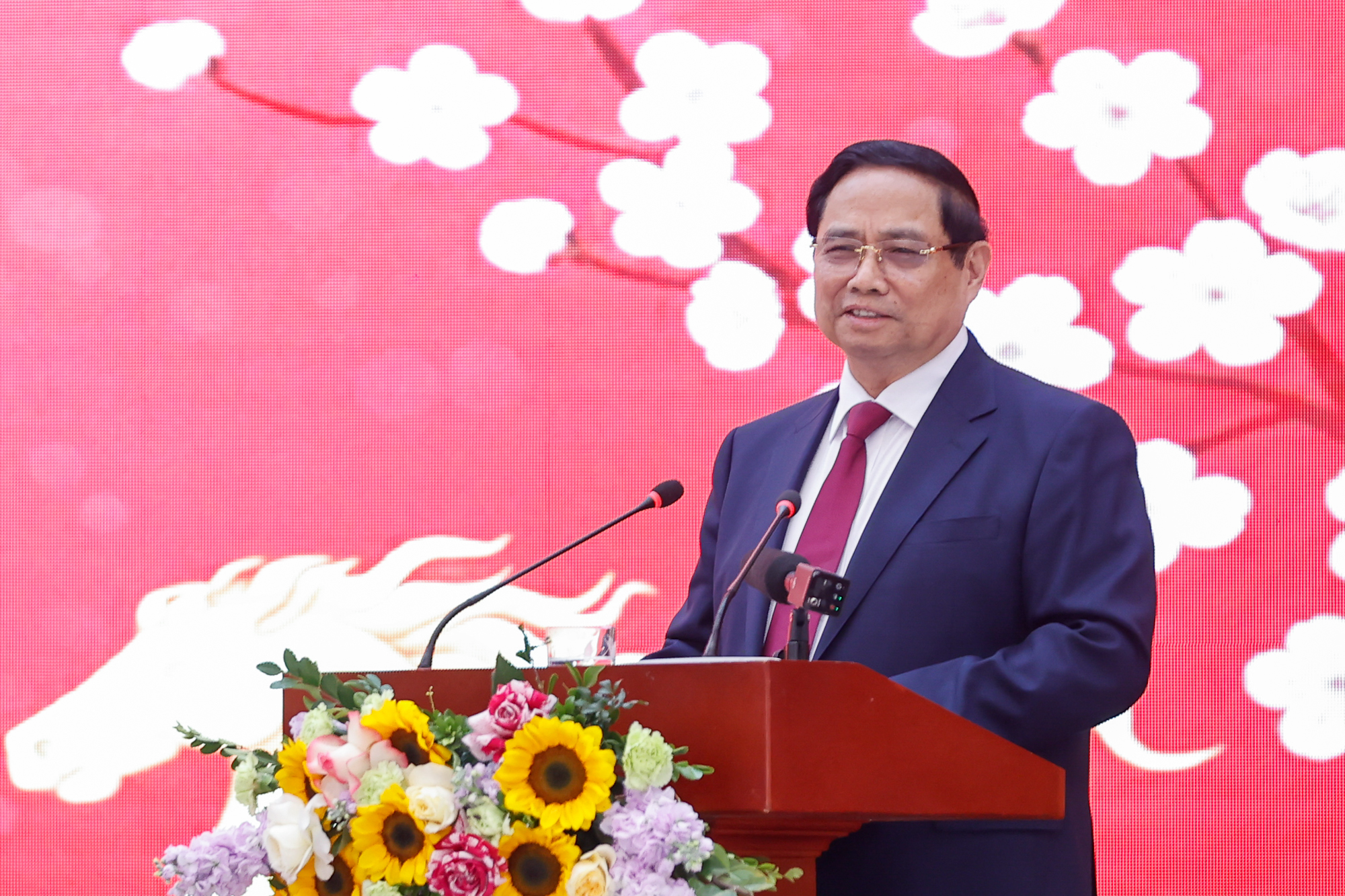 |
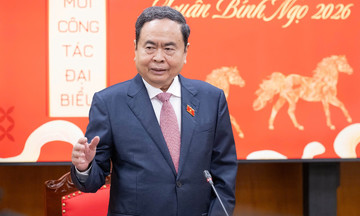
Prime Minister Pham Minh Chinh spoke at the Vien Han Lam Khoa Hoc Xa Hoi Viet Nam on the morning of 24/2. *Photo: Nhat Bac*
In the nation's era of development, social sciences and humanities play a vital role in nurturing ideological foundations, orienting value systems, developing culture and social knowledge, fostering national unity, and enhancing the effectiveness of international cooperation. Social scientists contribute the "soul" to development, promoting identity, strengthening endogenous power, and elevating national soft power.
The Prime Minister affirmed that the Vien Han Lam Khoa Hoc Xa Hoi Viet Nam is a "strategic advisory body" for the Party and the State on social sciences and humanities, and on building the Vietnamese people. It is a place where the wisdom of many generations of scientists converges, a center for interpreting the nation's major issues, and for fostering thinking, methodology, and approaches to solve practical problems.
The Prime Minister expressed concern that "satisfactory answers must be found for major questions", such as: How can the middle-income trap be escaped? How can modern productive forces be developed while simultaneously perfecting appropriate production relations? Which national governance model is suitable for the digital era? How can a national value system be built that both preserves identity and absorbs the essence of human civilization? How can rapid yet sustainable growth be achieved, human development fostered, and social progress, equity, and a clean, green environment be ensured? How can deep, substantive, and effective international integration be pursued while maintaining independence and self-reliance?
The Institute needs to participate in answering the aforementioned questions, aligning with the 24-character motto: "developing theory - preserving identity - promoting tradition - absorbing essence - sharp critique - building the future".
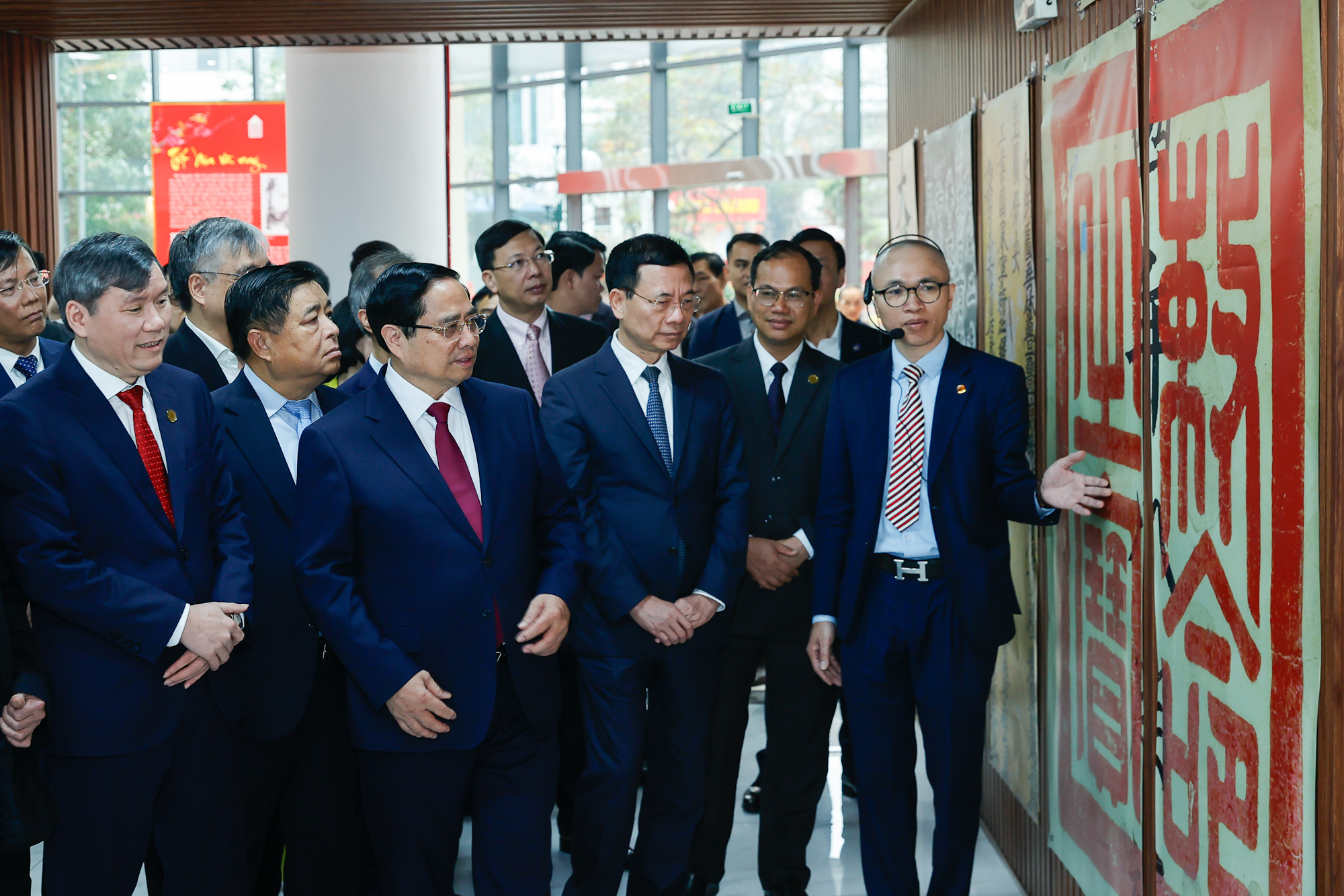 |
The Prime Minister visited the Han Nom exhibition space at the Vien Han Lam Khoa Hoc Xa Hoi Viet Nam on the morning of 24/2. *Photo: Nhat Bac*
Alongside implementing the Party's Resolution of the 14th National Congress and the specialized resolutions of the Politburo, the Institute needs to participate in summarizing 100 years of the Party leading the Vietnamese revolution, and 40 years of implementing the Platform for national construction and development during the transitional period to socialism in Vietnam.
The Institute should lead research and interpretation of a socialist development path and model suitable for Vietnam's conditions; build a socialist democracy and a socialist rule-of-law state; and develop a socialist-oriented market economy.
The Institute must enhance the quality and effectiveness of its policy advice with the spirit of "timely consultation, profound analysis, accurate forecasting, and feasible and practical recommendations". The Institute must increase training for high-level human resources in social sciences to meet the nation's needs in the new situation. The Institute should promote effective cooperation among the state, scientists, and businesses with a spirit of converging intellect and spreading benefits.
The Prime Minister assigned the Ministry of Home Affairs to coordinate with the Institute on mechanisms for attracting, recruiting, and compensating high-quality human resources. The Ministry of Science and Technology and the Ministry of Justice are to refine policies for developing social sciences and humanities towards autonomy, linked with accountability; mechanisms for ordering, product-based contracting, public-private cooperation mechanisms, etc. The Ministry of Finance is to allocate commensurate resources, enabling the Institute to invest in high-quality research and technical infrastructure. The Government Inspectorate is to assist the Institute in resolving long-standing issues beyond its self-remediation capabilities.
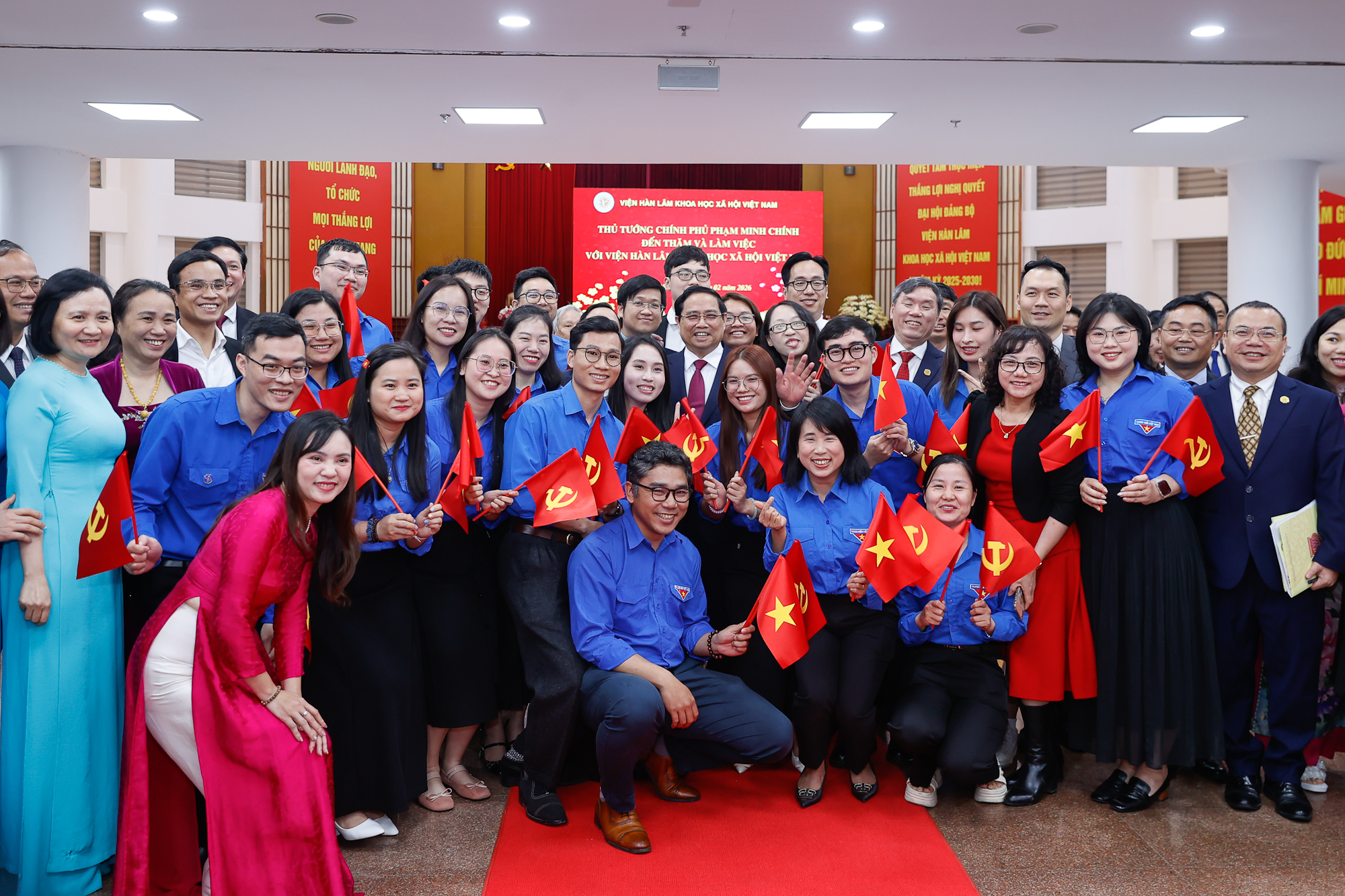 |
The Prime Minister with the younger generation of the Vien Han Lam Khoa Hoc Xa Hoi Viet Nam on the morning of 24/2. *Photo: Nhat Bac*
According to the report at the meeting, over the past years, the Institute has had 48 scientists whose works or clusters of works received the Ho Chi Minh Prize and the State Prize. Many of the Institute's scientists have been recognized as academicians of foreign academies, and have had streets and schools named after them, such as Professor Tran Huy Lieu, Dang Thai Mai, Dao Duy Anh, Nguyen Khanh Toan, Tran Van Giau, Pham Huy Thong.
Vu Tuan