The directive comes as Ho Chi Minh City (HCMC) implements power-saving solutions to ensure a safe, stable supply during the 2026 dry season. According to the Ho Chi Minh City People's Committee (HCMC People's Committee), energy supply is affected by geopolitical fluctuations and unpredictable extreme weather, increasing pressure on the system.
The city has tasked the Ho Chi Minh City Power Corporation (EVN HCMC) with developing power supply plans, closely monitoring the load, and proactively preparing contingency plans for resource shortages or incidents. EVN HCMC must prioritize power supply for critical loads. Power units are also required to guide customers on efficient electricity use, encourage renewable energy development, and mobilize reserve resources when necessary.
Departments, sectors, and local authorities are to develop power-saving plans. For public lighting and outdoor advertising, energy-saving equipment should be enhanced, and automatic control technology applied.
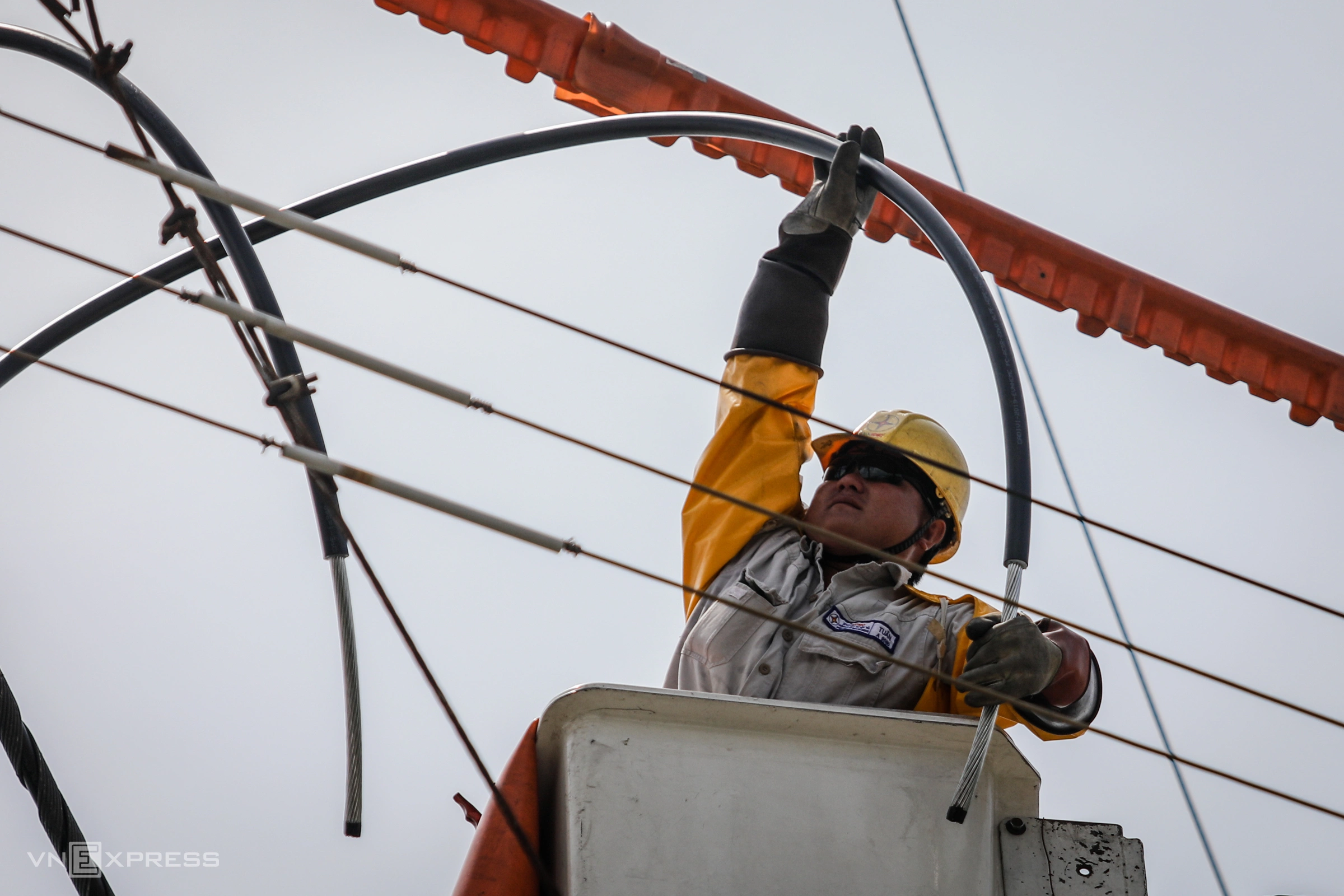 |
EVN HCMC workers perform live-line maintenance on a 22kV power line in Tan Thuan Export Processing Zone. Photo: Thanh Nguyen |
EVN HCMC workers perform live-line maintenance on a 22kV power line in Tan Thuan Export Processing Zone. Photo: Thanh Nguyen
Luan Quoc Hung, Deputy General Director of EVN HCMC, stated that the city's electricity demand is consistently high due to vibrant socio-economic activities, with a significant surge during heatwaves. However, power supply remains ensured; the power-saving program is a long-term solution implemented nationwide.
According to EVN HCMC data, the city's peak load could reach 9,556 MW and potentially climb to 10,059 MW. Under this scenario, the power system risks a deficit of approximately 354 MW during evening peak hours (5-8 PM). In extreme cases, the shortfall could increase to 723-1,226 MW.
Data from the National Power System and Electricity Market Operating Company indicates that, under an extreme operating scenario, the load for the Southern Power Corporation could exceed its allocated available capacity, particularly during peak months such as May, June, July, and November.
Electricity supply pressure is also increasing in many areas. Forecasts show that the load in the Northern and Southern regions will continue to rise sharply during peak months, creating significant pressure on system operations.
Le Tuyet