According to the investment policy decision recently issued by the Ho Chi Minh City People's Committee, the project includes several main components. These are an 80 m wide tidal control sluice gate, comprising two compartments, which uses steel gates operated by hydraulic cylinders. Accompanying this is a 15 m wide navigation lock, with a reinforced concrete structure, also operated by a hydraulic system. Additionally, the project includes a management and operation building spanning about 300 square meters.
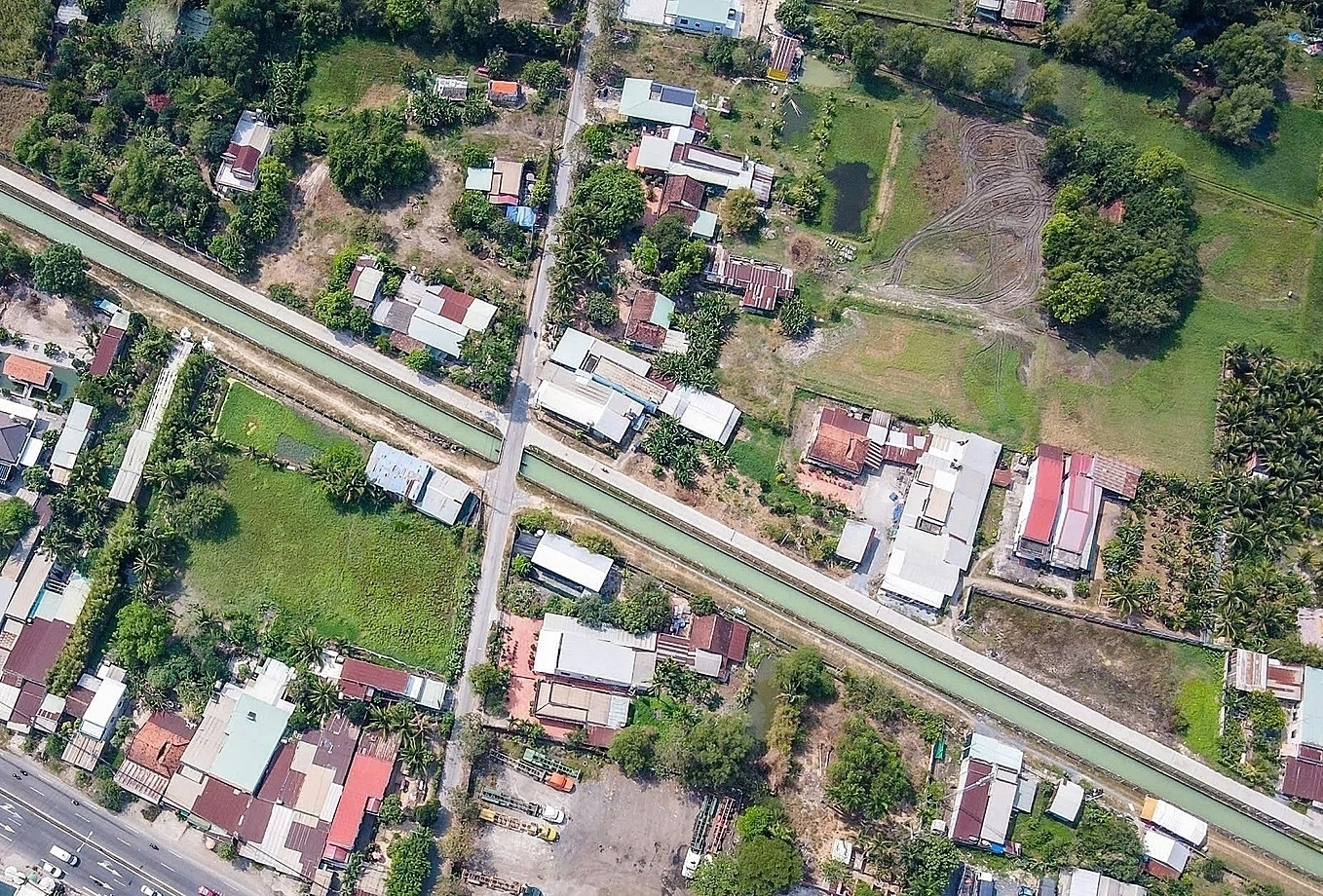 |
A section of the irrigation system in Cu Chi district (former), 2025. Photo: Giang Anh |
The Ho Chi Minh City Urban Infrastructure Investment Project Management Board has been assigned as the investor, implementing the project during giai doan 2026-2029. When completed, the structure will integrate with the existing irrigation system to control tides and drain water for approximately 37,162 hectares in 10 communes of Cu Chi district (former). These communes are: Dong Thanh, Binh My, Hoc Mon, Phu Hoa Dong, Cu Chi, Xuan Thoi Son, Ba Diem, Vinh Loc, Tan Vinh Loc, and Binh Loi.
Beyond flood prevention, the project will also regulate water sources by storing water in canals, serving irrigation and agricultural production during the dry season. The regulation of water flow will also reduce pollution in the Hoc Mon - Bac Binh Chanh irrigation system and the Tham Luong - Ben Cat - Nuoc Len canal routes.
Simultaneously, Ho Chi Minh City has approved the policy to upgrade the Dong Cu Chi canal system (giai doan 2) with a total capital of over VND 2,200 billion. This irrigation route draws water from Dau Tieng lake (Tay Ninh), distributing it through a canal network approximately 630 km long. After the upgrade, the system will provide stable water to 7,000-11,500 hectares of agricultural land, green spaces, aquaculture, and drain water for over 5,800 hectares.
Giang Anh