Each day, herds of cattle wander along roads, vacant lots, and green areas within the Nhon Hoi economic zone, Quy Nhon Dong ward, searching for food and water. By the end of the day, they return to temporary shelters or lie scattered along roadsides, sometimes even in the middle of the road.
The area where these herds frequently appear is near the roundabout adjoining Thi Nai bridge, close to the Quy Nhon Dong Ward People's Committee headquarters. This location experiences heavy traffic, especially during peak hours.
Free-roaming cattle trample grass, destroy greenery, and defecate on roads, requiring sanitation workers to clean up frequently. Many median strips and flower beds, fenced with barbed wire to deter livestock, are still damaged. The presence of cattle on roads also poses a risk of accidents, particularly at night.
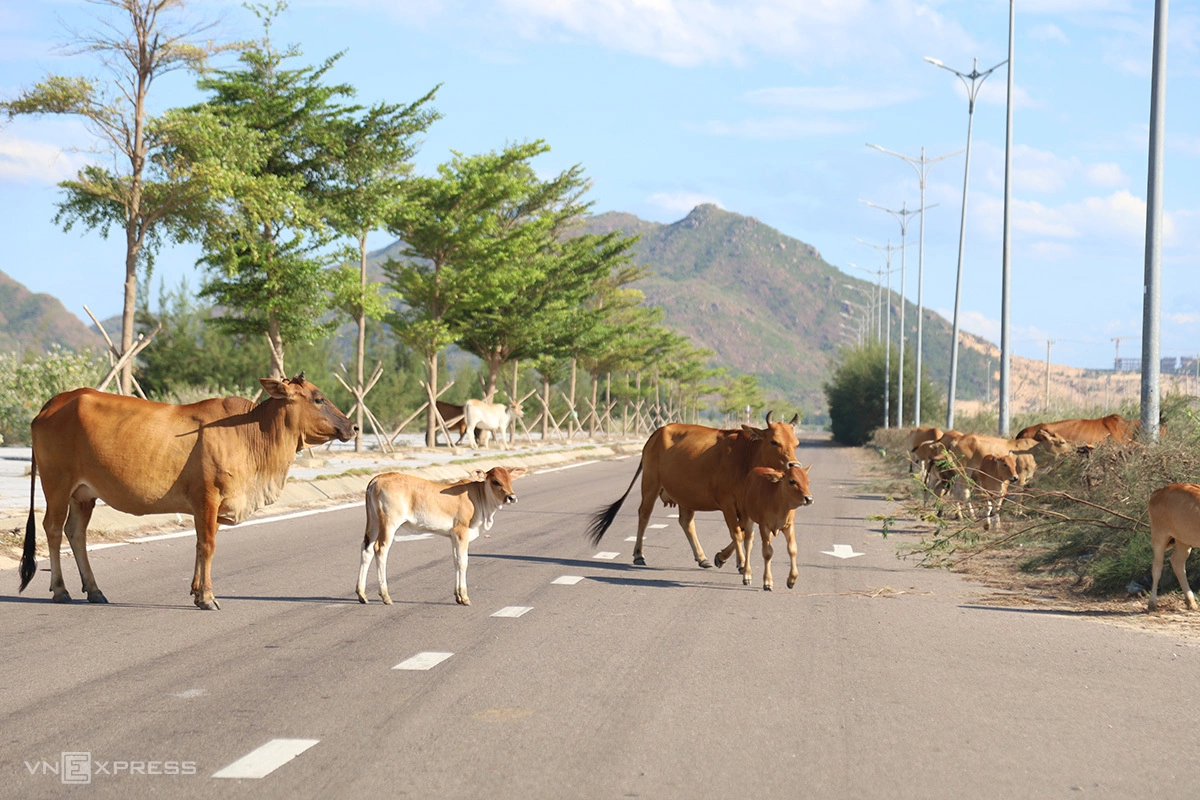 |
A herd of cows crosses a road in the Nhon Hoi economic zone, posing a risk of traffic accidents. *Photo: Tran Hoa* |
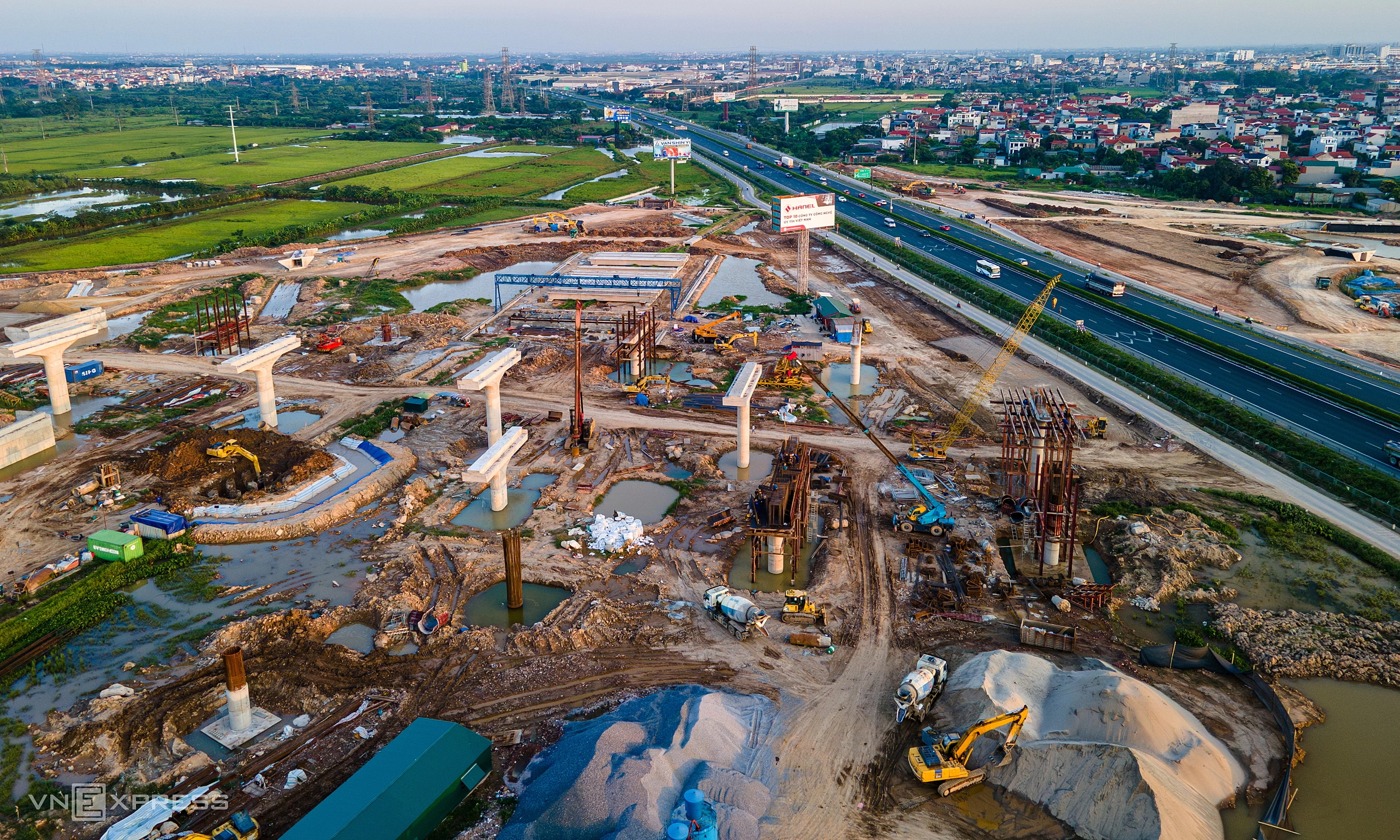
The Nhon Hoi economic zone, established in 2005, spans over 12,000 hectares on the Phuong Mai peninsula, encompassing industrial parks, urban areas, tourism sites, and residential zones. Many roads here also connect Quy Nhon city center with tourist attractions such as Eo Gio and Ky Co.
While infrastructure and urban development continue to advance, the traditional free-range farming method, practiced for decades, persists among many households. According to local authorities, land available for livestock farming is shrinking, and the area lacks suitable land for organized concentrated farming.
Residents, therefore, utilize vacant lots and roadside green areas to graze their livestock. Most households do not have regular herders, allowing their cows to find food independently before returning. In some cases, cows give birth in the fields, with owners only discovering this when the herd returns.
Livelihood tied to the cattle herd
Nguyen Thi Tra, 65, residing in Nhon Hoi residential group, currently raises about 40 cows. For over 25 years, the cattle herd has been her family's primary source of income.
Previously, when more vacant land was available, the cattle could forage freely. As roads, factories, urban areas, and tourism projects gradually developed, grazing space diminished. Her family also lacks the resources to invest in barns and feed to transition to confined farming.
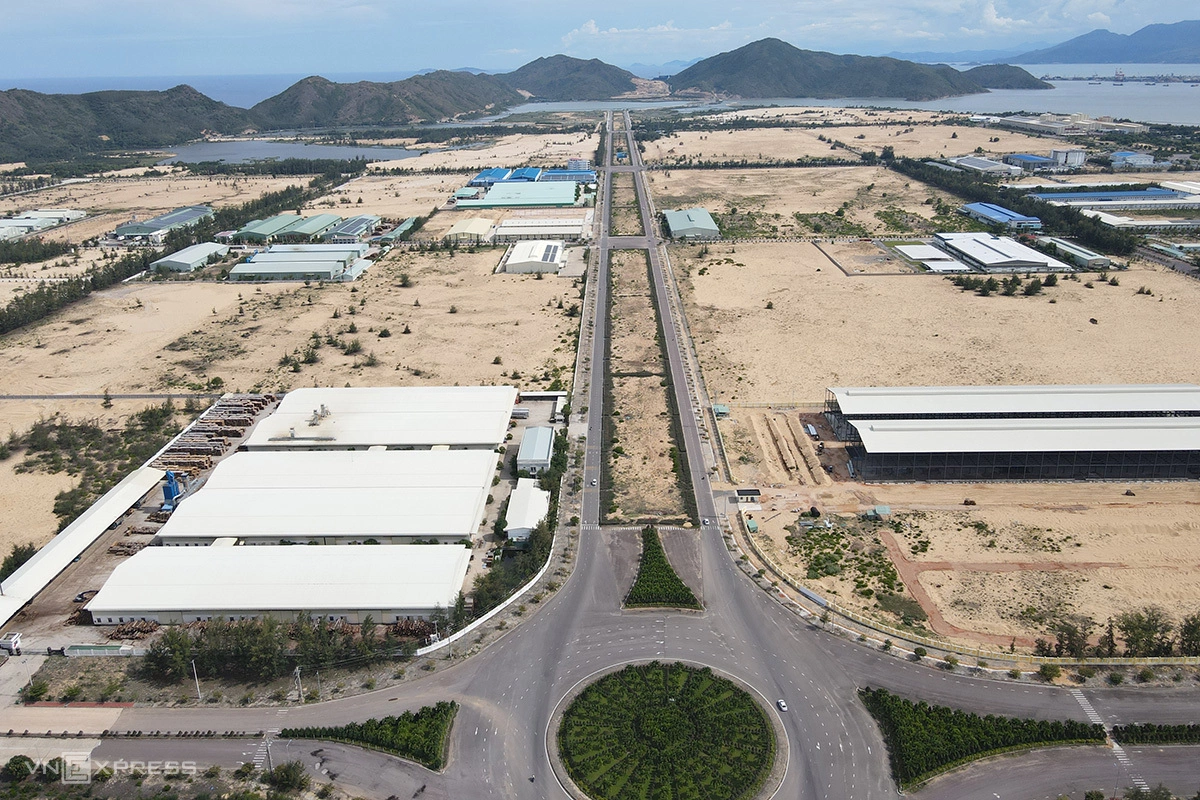 |
A corner of the Nhon Hoi economic zone. *Photo: Tran Hoa* |
According to Ms. Tra, while she understands that allowing cows to roam freely impacts traffic and environmental sanitation, her family has no alternative livelihood. When authorities urged her to sell the livestock to end free-range grazing, she agreed.
However, at 65, she finds it difficult to find a new job, especially since her family's income has depended on raising cows for many years. "Raising cows is our family's main source of income. If we sell the herd, we hope for additional capital support to switch to small businesses, ensuring a stable income," Ms. Tra said.
Her situation is common among many farming households in Nhon Hoi. Most household heads are elderly, making it challenging to transition to working in industrial parks, factories, or production facilities.
Previously, authorities had encouraged residents to build barns and fences to manage their livestock. However, the cattle were accustomed to foraging over wide areas, and households lacked land and resources to switch to confined farming, so the free-roaming situation remained unresolved.
Agreeing to sell cattle but lacking livelihood transition support
In early 2025, the local government considered a plan to encourage 17 households to sell their livestock at market prices, while also providing a livelihood transition support of 500,000 VND for each cow or buffalo sold. This fund aimed to help residents gain capital to transition to other livelihoods and was agreed upon by the households.
With over 400 cattle, the total estimated support cost is about 200-250 million VND. However, this plan cannot yet be implemented using state budget funds due to a lack of regulations and legal basis for this expenditure. The locality subsequently sought socialized funding, but efforts to mobilize businesses faced difficulties as the production and business activities of many entities in the area slowed down.
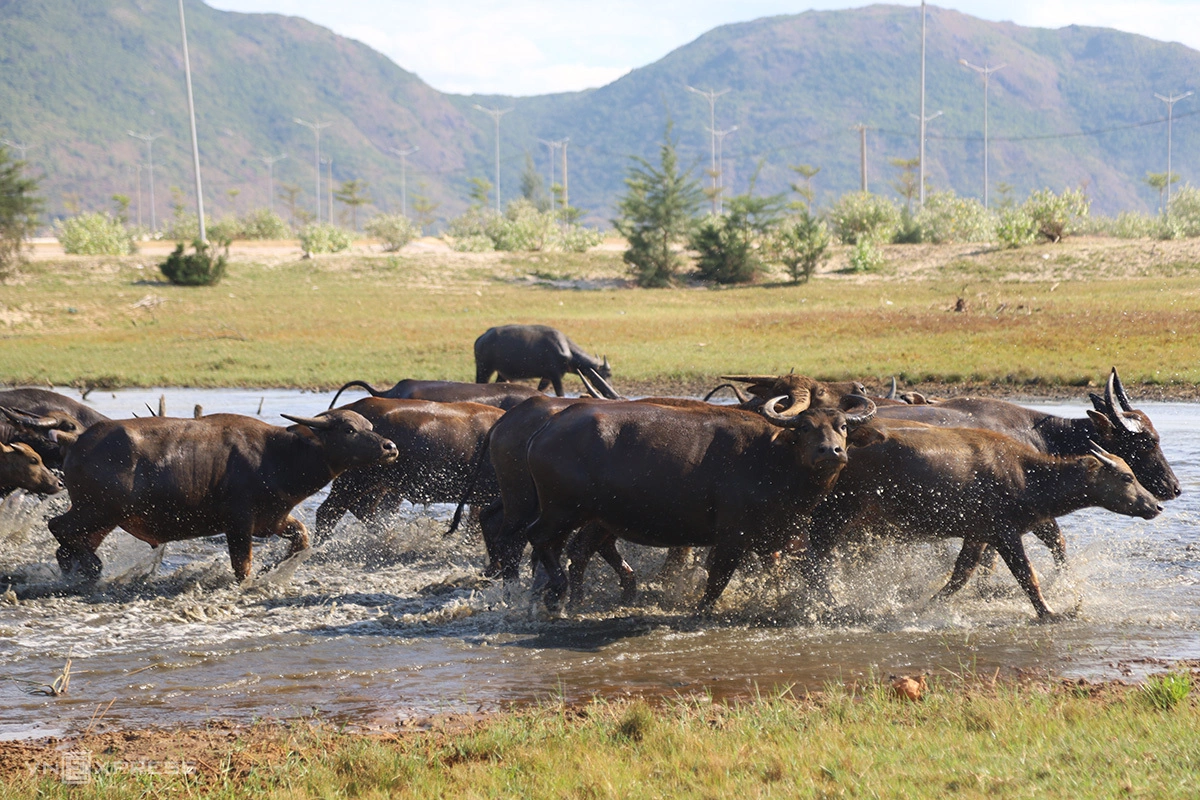 |
A herd of buffaloes freely grazes in the Nhon Hoi economic zone. *Photo: Tran Hoa* |
Tran Viet Quang, Chairman of Quy Nhon Dong Ward People's Committee, stated that after several meetings, households have generally agreed to sell their livestock. The current challenge is finding buyers for the cattle and securing support funds for residents to transition to other livelihoods.
The Ward People's Committee is calling on businesses and consumption facilities to participate in purchasing cattle at market prices, while also mobilizing resources for livelihood transition support. The goal is to provide an outlet for the livestock, stabilize household livelihoods, and ultimately end free-range grazing in the economic zone.
While a funding source for the plan has not been found, over 400 cattle continue to be released daily to forage. The problem in Nhon Hoi, therefore, is not just about removing livestock from the roads but also about finding alternative livelihoods for households that have depended on farming for decades.
Tran Hoa