Today, northern Vietnam was affected by a cold spell, bringing rain to many areas. Temperatures steadily decreased towards the evening as the cold air continuously intensified.
By evening, Mau Son peak dropped to 3,8 degrees Celsius, a 10-degree decrease from yesterday. Several high-altitude mountainous areas recorded temperatures below 10 degrees, including Tam Dao (Phu Tho) at 7 degrees, Sa Pa (Lao Cai) at 8 degrees, and Pha Din (Dien Bien) and Moc Chau (Son La) at 9 degrees Celsius.
Hanoi's lowest temperature tonight reached 13 degrees, recorded at Ba Vi station, nearly an 8-degree drop compared to yesterday. Stations in Hoai Duc, Son Tay, Ha Dong, and Lang reported temperatures above 13 degrees Celsius. In the delta region, Chi Linh (Hai Phong) saw the lowest at 11 degrees Celsius.
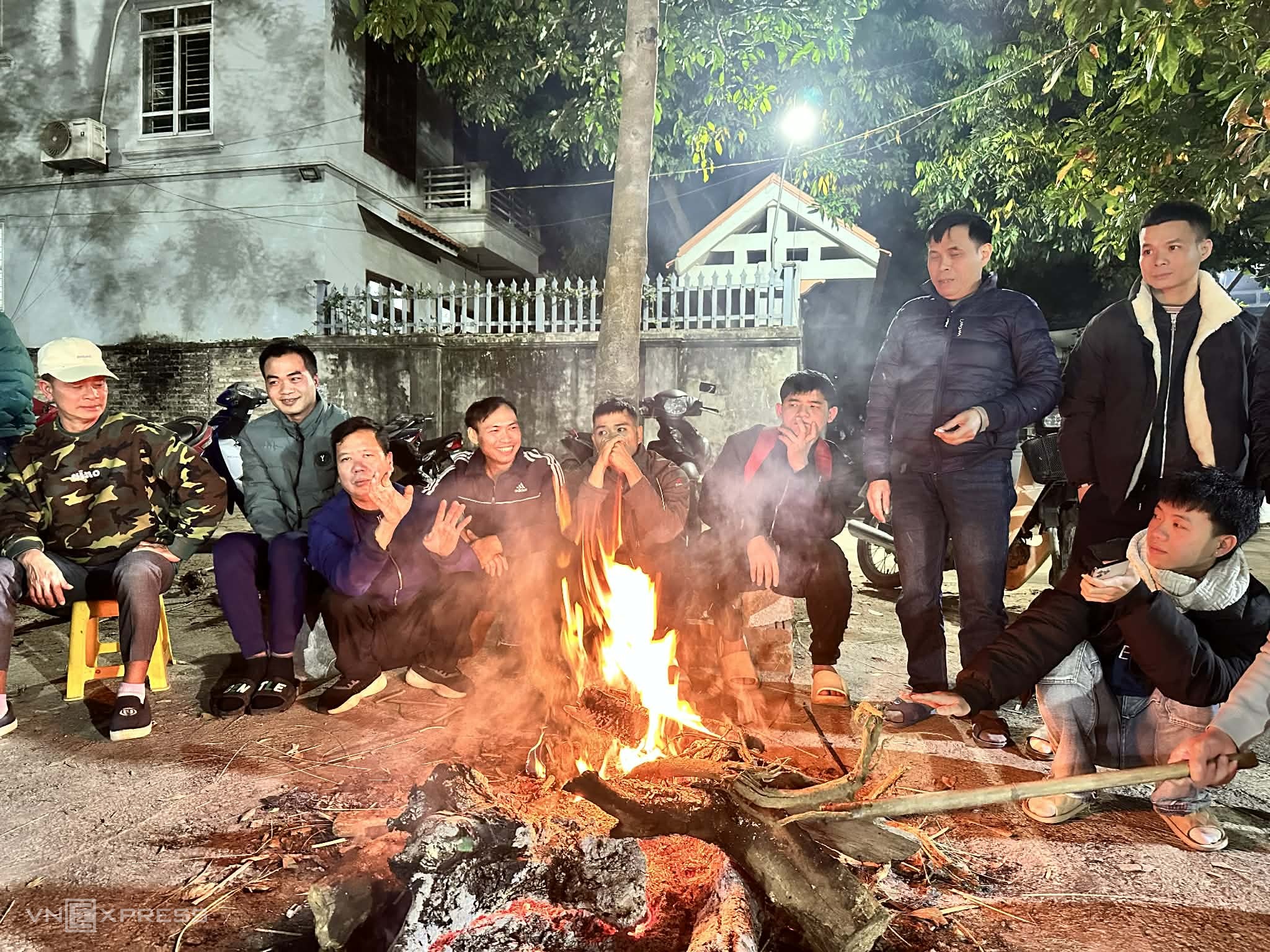 |
Hanoi residents use heaters to combat the cold in 2026. *Photo: Gia Chinh* |
Accuweather, a US-based platform, forecasts Hanoi's temperatures to be 14-16 degrees tomorrow, with weekly highs of 22-26 degrees and lows of 16-19 degrees Celsius. High-altitude areas above 1.500 m, like Sa Pa (Lao Cai), will see 9-11 degrees early in the week, rising to 18 degrees Celsius by the weekend.
Central Vietnam also began to feel the effects of the cold spell. In Thanh Hoa, a temperature of 14 degrees Celsius was recorded in many areas, including Yen Dinh, Sam Son, Bai Thuong, and Nhu Xuan. In Nghe An, the communes of Quy Chau, Quynh Luu, and Hon Ngu reported 18 degrees Celsius.
The National Center for Hydro-Meteorological Forecasting announced that tonight and tomorrow morning will be the peak of this cold spell, with temperatures in northern Vietnam generally ranging from 10-13 degrees, mountainous areas from 7-10 degrees, and some high-altitude mountain regions dropping below 3 degrees Celsius. North Central Vietnam will generally see 12-15 degrees, and Quang Tri to Hue will experience 15-18 degrees Celsius.
Due to the cold spell, rain is expected from Ha Tinh to Da Nang and the eastern parts of Quang Ngai to Gia Lai from tonight through tomorrow. High-altitude mountainous areas in northern Vietnam need to be cautious of the possibility of frost and snow.
The meteorological agency warns that severe cold, frost, and snow could potentially affect livestock, poultry, and the growth and development of crops. Localized heavy rain may cause flooding in low-lying areas, flash floods in small rivers and streams, and landslides on slopes.
Gia Chinh
>>See detailed 7-day weather forecast here.