The National Center for Hydro-Meteorological Forecasting announced that a weak cold air mass is moving, compressing, and pushing a low-pressure trough, centered around 24-26 degrees north latitude, gradually southward. Forecasts indicate that from this afternoon until the morning of 4/4, the northern region (excluding Dien Bien and Lai Chau) will experience thunderstorms with rainfall of 10-20 mm, and some areas may see heavy rain exceeding 40 mm.
During the thunderstorms, there is a possibility of whirlwinds, lightning, hail, and strong gusts. Localized heavy rain could cause flash floods in small rivers and streams, landslides on slopes, and inundation in low-lying areas.
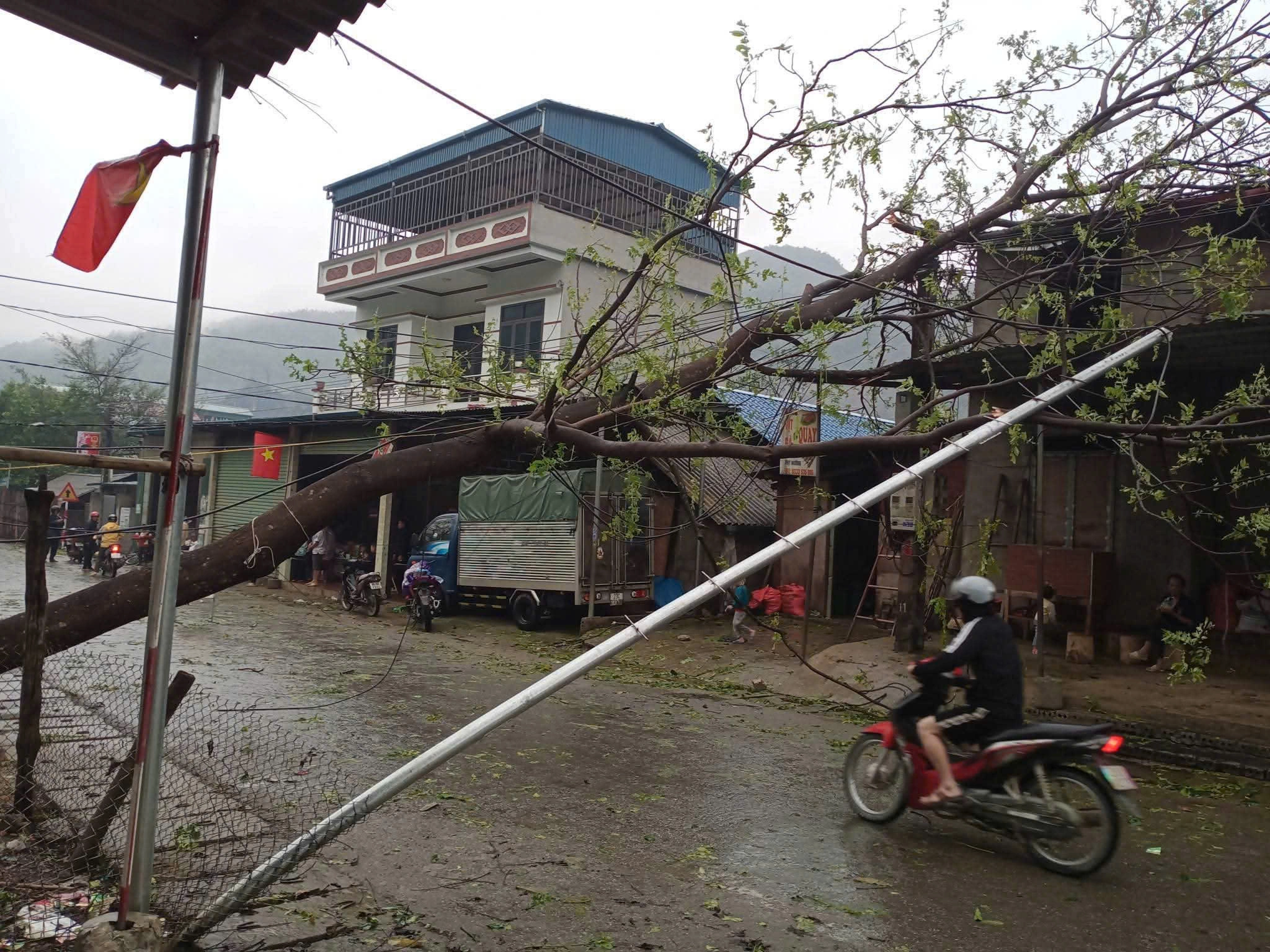 |
Hail and whirlwinds in Quan Ba, Tuyen Quang on 23/3. *Photo: Thuy Truong* |
Forecasting whirlwinds is only possible 30 minutes to 3 hours in advance, with an accuracy of 70-90%. Therefore, the meteorological agency advises residents to closely monitor weather reports, limit outdoor activities during thunderstorms, proactively secure homes, and protect property and vehicles to minimize damage.
When whirlwinds occur, residents should stay indoors in sturdy homes, close all doors, and stay away from windows and objects easily carried by wind. Avoid sheltering under large trees or utility poles, or standing in open areas. Limit the use of electrical appliances and disconnect power when not necessary to prevent lightning-related incidents.
In the event of hail, residents should quickly find sturdy shelter, prioritizing personal safety, and avoid standing under weak corrugated iron roofs or temporary structures. If outdoors, find a low position, and stay away from metal objects and dangerous areas.
The northern region is currently in a transitional period from spring to summer. Weak cold air masses from the north move down, clashing with the region's high temperatures, leading to unusual weather phenomena such as whirlwinds, hail, and lightning.
Previously, from 29/3 to 31/3, hail, whirlwinds, and lightning caused 6 deaths, 9 injuries, 13 collapsed homes, and over 8,400 damaged or unroofed homes. More than 1,150 hectares of crops and fruit trees were affected, along with over 500 hectares of forest damaged; nearly 1,500 livestock and poultry died. The damage primarily occurred in Tuyen Quang, Son La, and Quang Ninh.
Gia Chinh