On the morning of 23/4, the National Assembly debated a draft law amending and supplementing several articles of tax laws. During the discussion, many delegates offered opinions on the special consumption tax policy for battery electric vehicles.
According to the government's proposal, the tax incentive policy for passenger oto with fewer than 24 seats powered by batteries will be extended until the end of 2030. The drafting agency believes this extension aims to gradually shift consumer habits from fossil fuel vehicles to electric vehicles, thereby reducing greenhouse gas emissions, limiting urban pollution, and decreasing reliance on traditional fuel sources amid fluctuating prices and supply.
Delegate Doan Hung Vu, Deputy Director of the Dong Thap Department of Science and Technology, agreed with continuing the tax incentives but highlighted the risk of environmental pollution from electric vehicle batteries when damaged or expired. According to him, consumption encouragement policies must be accompanied by the development of charging station infrastructure, the completion of technical infrastructure, and the promotion of technology transfer for environmentally friendly battery production.
He proposed adding a regulation mandating that electric vehicle manufacturers, assemblers, and importers must recall and recycle used batteries, while also establishing a professional collection and processing system. Additionally, there needs to be a mechanism to encourage investment in research for recycling technology, replacing older battery technologies with safer new-generation batteries to prevent new forms of pollution during processing.
According to the delegate, encouraging the use of battery-powered vehicles aligns with Vietnam's green growth orientation, energy transition, reduction of greenhouse gas emissions, and the net-zero emissions target by 2050. Extending special consumption tax incentives not only helps reduce air and noise pollution in urban areas but also opens opportunities for developing new industries, creating jobs, and boosting economic growth.
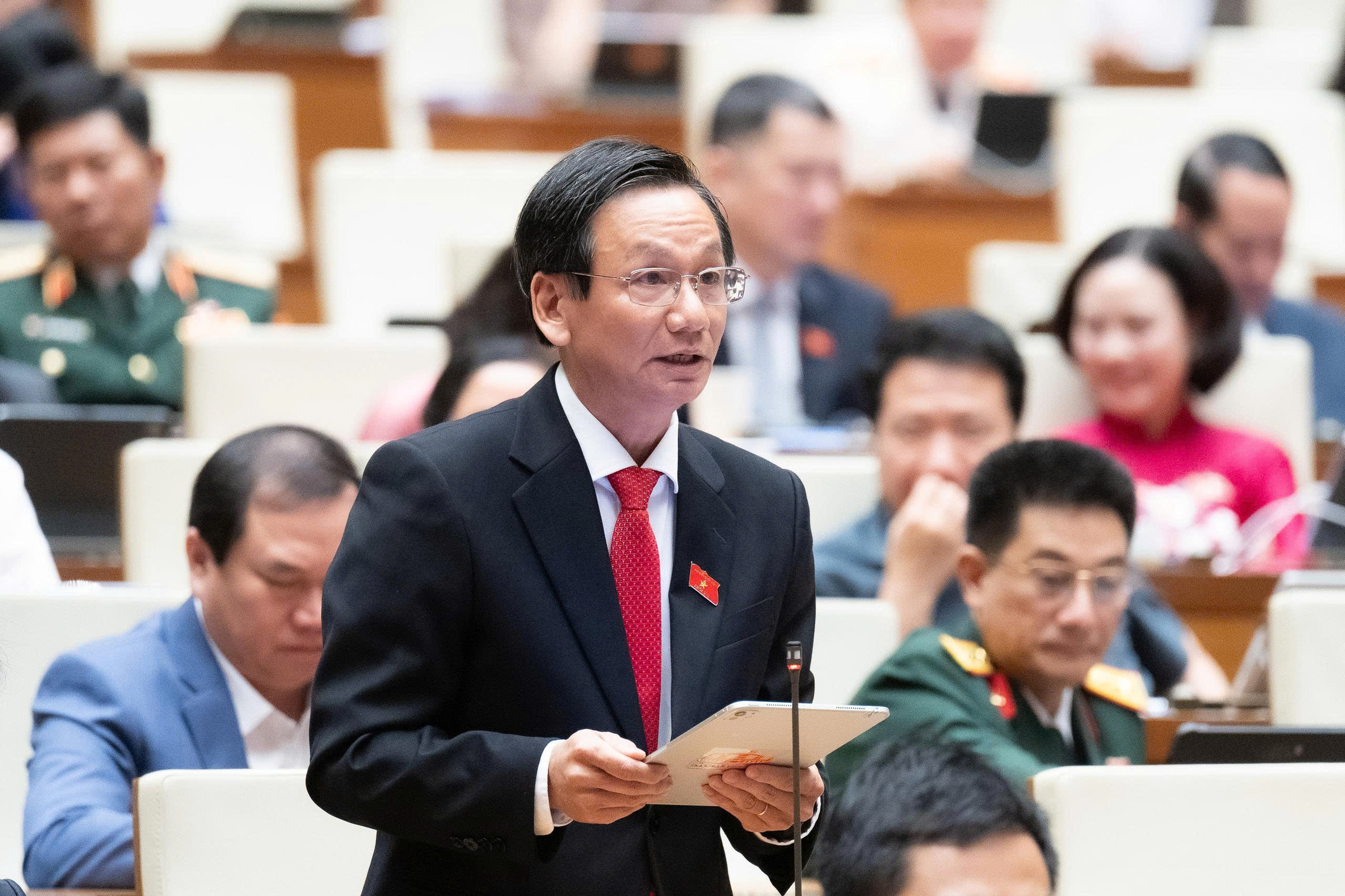 |
Delegate Doan Hung Vu, Deputy Director of the Dong Thap Department of Science and Technology. Photo: Hoang Phong |
Sharing a similar view, Delegate Nguyen Thi Viet Nga, Deputy Head of the Hai Phong National Assembly Delegation, stated that tax incentive policies help reduce reliance on fossil fuels and create market stability. However, she emphasized that these policies will only be effective when implemented concurrently with charging station infrastructure, the capacity of the distribution power grid, waste battery treatment solutions, and an increased localization rate.
She also noted risks such as localized power grid overload, difficulties in processing used batteries, and a potential reduction in budget revenue when limiting fossil fuel vehicles. Therefore, after the law is passed, the government needs to implement comprehensive non-tax solutions to ensure the policy not only stimulates consumer demand but also contributes to forming a sustainable green transportation ecosystem.
According to Decree 110/2026, the mandatory recycling rate for electric vehicle and hybrid vehicle batteries is currently temporarily adjusted to 0%. The drafting agency explained that electric vehicle batteries have a long lifespan, the volume of waste generated is not yet significant, and the market is still new with limited sources of waste batteries, making it difficult for businesses to meet recycling requirements.
The National Assembly is expected to review and approve this content on 24/4, the final day of the first session.
Son Ha