Hundreds of Asian openbill storks, a rare species listed in Vietnam's Red List, have been sighted over the past 10 days in the abandoned rice fields of Khu Bap, Tay Trinh residential group, Song Tri ward, Ha Tinh province. The Hoanh Son Forest Protection Department confirmed the presence of these birds on 23/4, noting their significant numbers suggest a healthy local ecosystem suitable for wild birds.
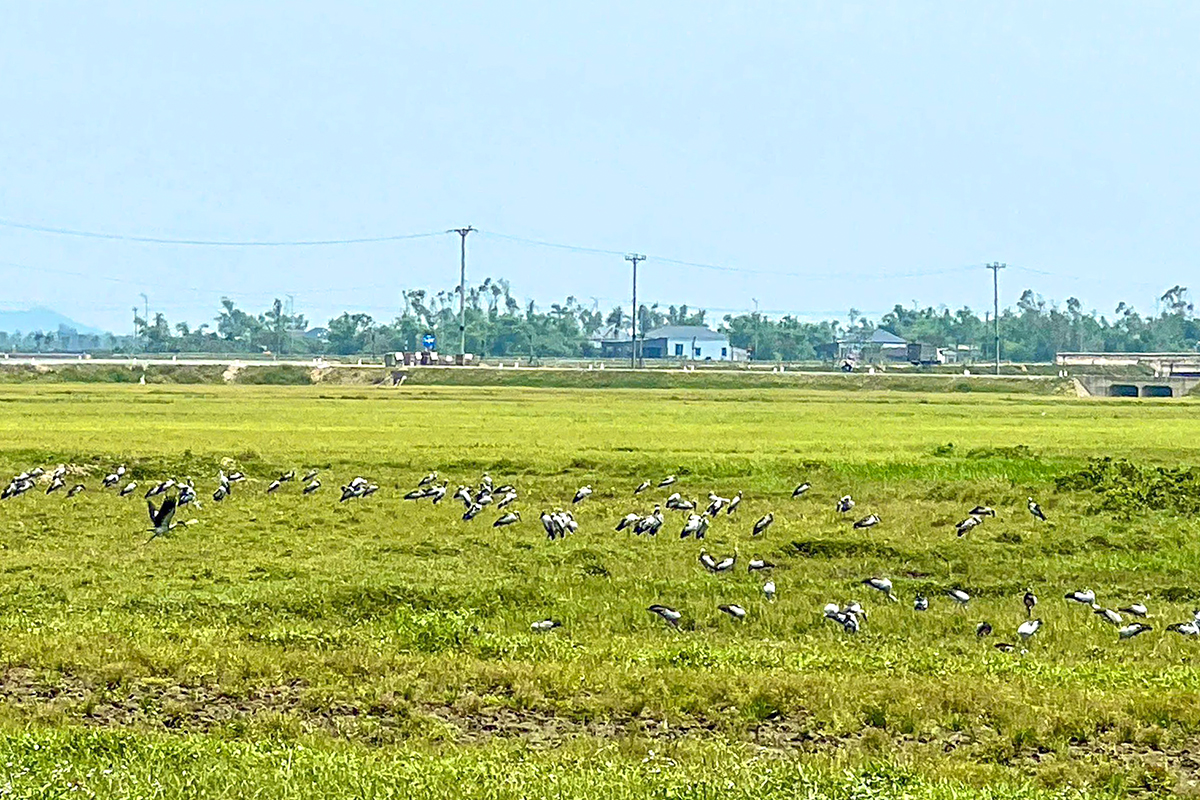 |
Asian openbill storks often forage in flocks, appearing over the past 10 days in Song Tri ward. *Hung Le*. |
Known locally as snail storks, these tall, long-legged birds have white and black plumage with a greenish sheen. They typically visit the Khu Bap fields during early mornings and late afternoons to forage in groups, hunting golden apple snails and insects, before departing after a few hours. Many residents have visited the fields, observing the flock from several hundred meters away and sharing photos on social media.
In response to the sighting, Song Tri ward authorities are collaborating with forest rangers to monitor the birds. They are advising residents against disturbing or hunting the storks, emphasizing the importance of minimizing human impact to protect the flock and the local ecosystem.
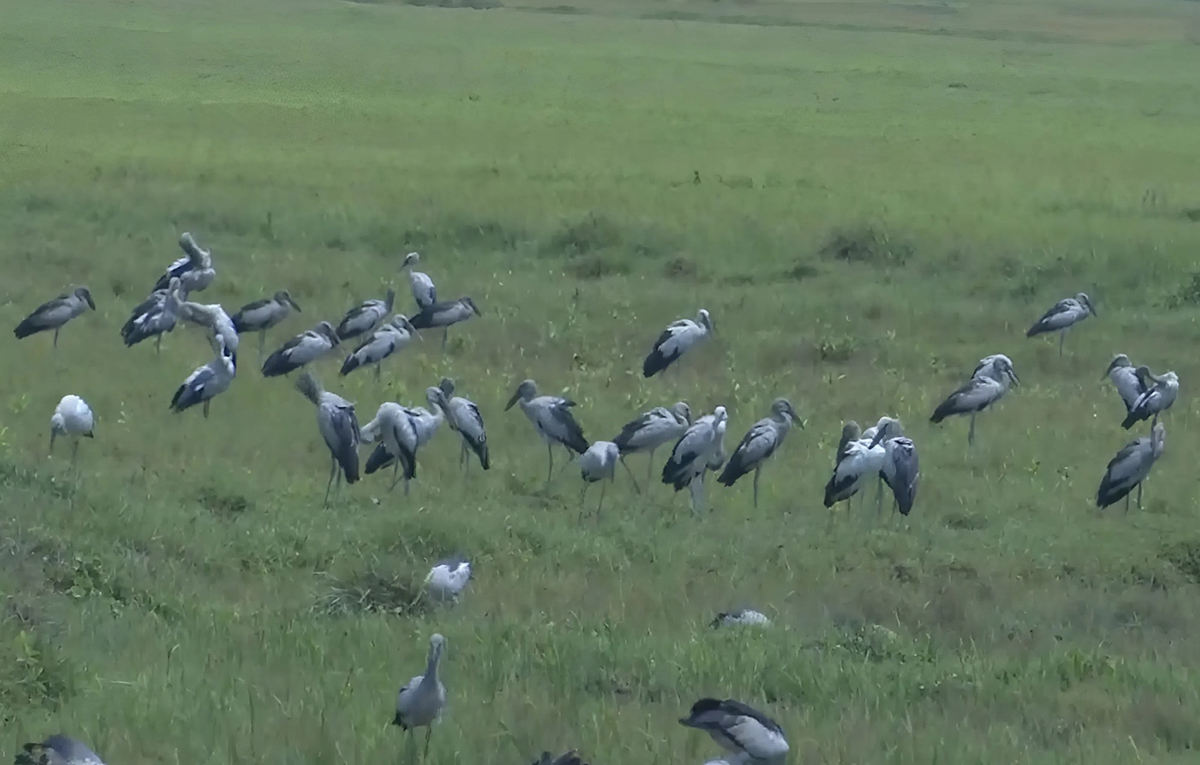 |
Asian openbill stork flock in Khu Bap fields, Song Tri ward, 22/4. *Trang Tuan*. |
The Asian openbill stork (Anastomus oscitans) has a wingspan of 0,6-1 m and weighs 1-1,5 kg. This species typically inhabits flooded areas and riverine or coastal tidal flats. Their diet primarily consists of snails, crabs, frogs, and insects. In Vietnam, they are common in the Southwest region and appear in other localities when habitat conditions are suitable.
Duc Hung