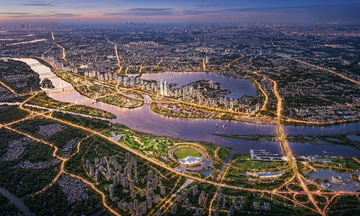
National Assembly Chairman Tran Thanh Man recently signed a resolution on urban classification, which took effect on 1/1. Under the resolution, Hanoi and Ho Chi Minh City are designated as special-class urban areas, while Hai Phong, Hue, Da Nang, and Can Tho retain their status as type 1 urban areas.
The resolution establishes urban classification as a framework for organizing, managing, and developing national, regional, and provincial urban systems. It also guides the management of urban administrative units and the evaluation of planning implementation. This classification is rooted in urban planning, promoting green, smart, climate-adaptive, and sustainable development across various socioeconomic stages.
Special-class urban areas are designated as comprehensive national and international hubs, possessing unique socioeconomic development roles and conditions. The resolution exempts Hanoi and Ho Chi Minh City from re-evaluation or reclassification mechanisms, acknowledging their distinct nature and the inapplicability of standard criteria.
For type 1 urban areas, the resolution introduces a "pass or fail" mechanism, replacing the previous scoring system. This requires full compliance with all mandatory standards. The population threshold has been raised to 2,5 million people. Furthermore, type 1 urban areas must demonstrate a per capita income exceeding the national average, a gross regional domestic product (GRDP) growth rate not lower than the national gross domestic product (GDP), and rank among top localities for investment attraction. Crucially, they must not receive supplementary allocations from the central budget.
The resolution also significantly enhances criteria reflecting national and international roles for type 1 urban areas. These areas must host national or international functional zones, possess the capacity to organize regional-level international events, and feature vital transportation infrastructure hubs that connect regional and inter-regional networks. Moreover, criteria related to smart city development, resilience, and adaptability to climate change are now mandatory requirements.
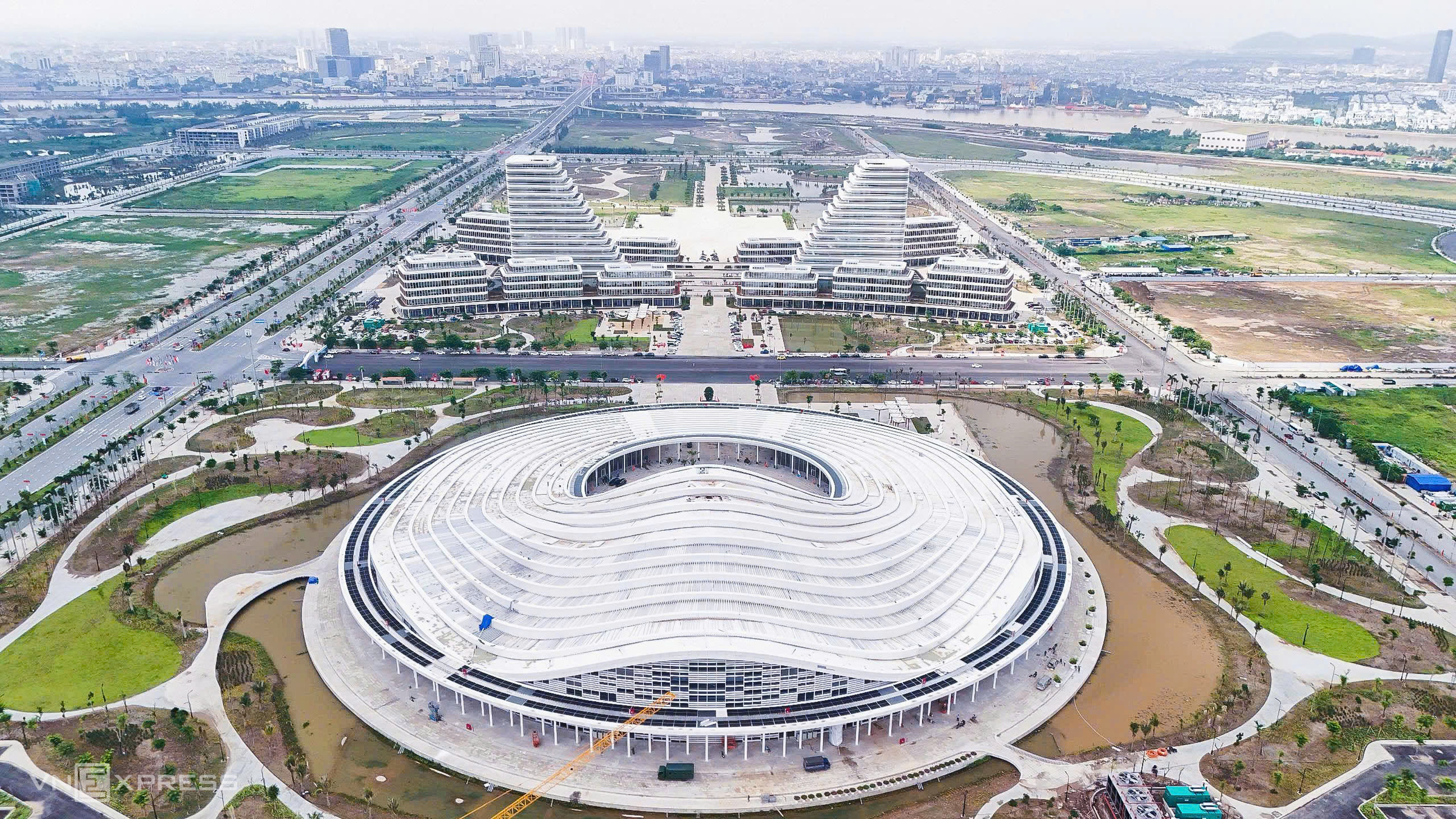 |
Hai Phong City Convention and Exhibition Center. *Photo: Le Tan* |
For type 2 urban areas, the resolution maintains the scoring method, requiring a minimum score of 75 out of 100 points and no deficiencies across any criterion group. These urban areas must have a population of 500,000 or more, a minimum density of 1,500 people per square kilometer, and a non-agricultural labor force comprising 95% of the total. Additionally, they must satisfy new criteria related to wastewater treatment, source-separated waste collection, underground cabling, renewable energy utilization, and comprehensive online public services.
The resolution also establishes urban governance as an independent assessment category. Key considerations for classification in this category include resident satisfaction levels, the quality of public services, traffic safety, and fire prevention and fighting measures.
Under the new regulations, an urban area can only be upgraded if its subordinate urban areas meet the corresponding standards. This measure aims to address uneven development between central urban areas and their satellite regions.
Type 3 urban areas function as sub-regional centers within provinces or cities, serving as either comprehensive or specialized hubs for their respective sub-regions. While the resolution retains the scoring assessment method, it introduces stricter conditions for achieving standards across the entire urban area and its subordinate commune-level administrative units. This includes additional detailed criteria for social infrastructure, urban environment, flood drainage, order management, and resident satisfaction.
Son Ha